Akwa Ibom oil-bearing communities in Esit Eket, Eket, Ibeno,Onna, Mbo, Mkpat Enin and Ikot Abasi local government areas have expressed concern over the devastating impacts of oil and gas explorations, lamenting the attendant deaths and other life – threatening ailments afflicting the local residents.
According to the community leaders and stakeholders, gas flaring and other pollutants arising from extractive activities of oil firms operating in the areas have caused respiratory issues, barrenness and early menopause in women and men’s infertility.
Consequently, a coalition of Non Governmental Organisations (NGOs), Civil Society Organisations (CSOs) and other partners have petitioned the Nigerian Upstream Petroleum Regulatory Commission (NUPRC), threatening lawsuit over alleged non-payment of gas flaring remediation funds running into $270 million dollars to the Akwa Ibom host communities.
The petition notice addressed to the NUPRC chief executive on behalf of the communities by the law firm of Liberty Gate Chambers (LGC), Eket LGA, is entitled; Demand for Payment of the Sum of $270m USD Being Outstanding Gas Flare Penalty To Host Communities In Akwa Ibom State.
In it, the petitioners including the Network Advancement Program for for Poverty and Disaster Risk Reduction (NAPPDRR), Ibom Peer Foundation (IPF), Policy Alert (PA), Linc Green Climate Initiative (LGCI), YEAC Nigeria, and Community Right Education Advancement Pathway Initiative (CREAPI), argued that the extractive activities in the affected locations have not been carried out in line with international best practices.
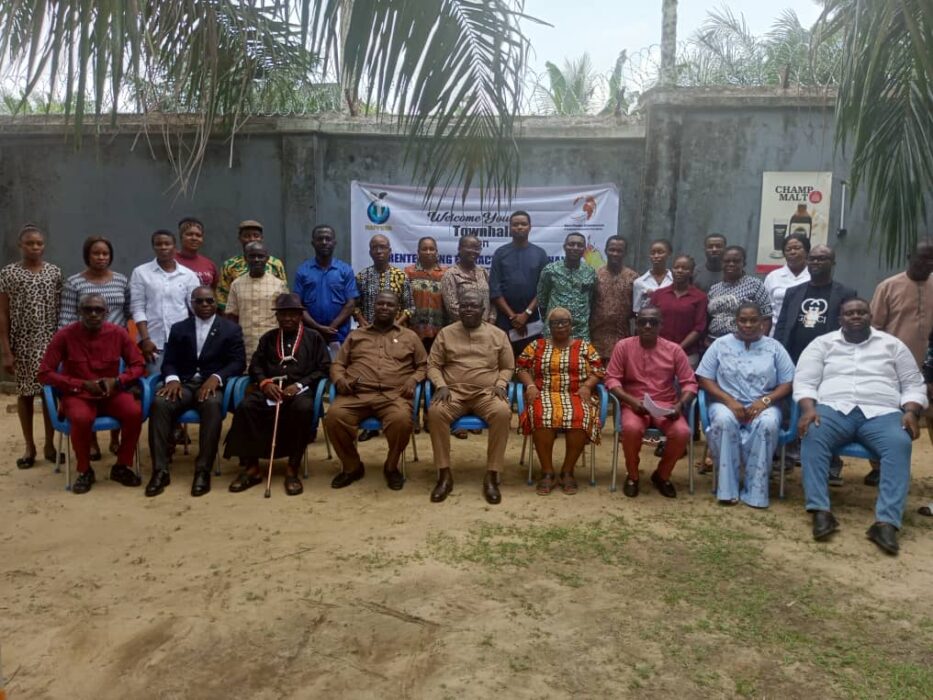
A communique at the end of the stakeholders meeting on Strengthening Extractive Governance and Accountability in Nigeria organised by NAPPDRR, and other partners in Eket LGA on the theme; Executive Order on All Oil and Gas Revenue to the Federation Account: Legal and Constitutional Context of the Reform on the HostCom, tasked the federal government on quick remedial measures to safeguard lives, agricultural and aquatic ecosystems.
The NAPPDRR executive director, Hon. Emem Edoho, who convened the forum with other partners, signed the communique, calling on the federal government to impress on concerned agencies to release the funds in order to assuage the pains currently faced by the host community residents.
“The meeting aimed to sensitise local community actors and other stakeholders in oil and gas producing communities of Akwa Ibom State on the overarching implication of the Executive Order 9, signed by President Bola Tinubu, on the February 16, 2026 and gazetted.
“And what this means in terms of development, environment, and social well being. That’s why we are galvanising their voices to demand the unlocking of the gas flare penalties for oil and gas host communities’ environmental remediation, and greater accountability and transparency in resources receipts generated.
“Other issues raised at the meeting has to do with revenue leakages with the collection of oil and gas revenue receipts, reasons for the billions of dollars and trillions of naira unremitted and unaccountable funds that should acrrue to the federating units.
“Nigeria National Petroleum Company (NNPC) has historically operated with weak financial accountability; oil proceeds frequently retained and spent before remittance to the Federation Account; opaque operational expenditures and deductions.
“Federation allocations treated as residual transfers rather than first charge revenue; limited public scrutiny of cost structures and retained earnings
“The key causes for this non-remittances and lack of accountability are due to government-backed initiatives: such as infrastructure financing arrangements, which allowed companies to invest in public projects in exchange for tax credits,” the communique stated.
The forum also noted the “Petroleum Industry Act (PIA), which allows the NNPC Ltd to retain 30 per cent of profit oil, and profit gas, for management fees and another 30 per cent for the Frontier Exploration Fund; and Subsidy Costs which the federal government have removed but still fund, and allowing NNPCL to tamper with revenue due to the Federation unaccountably.”
The communique recalled “the recent writing -off of US$1.42Bn and N5.57Trillion in NNPCL debt owed the federation as an abuse of power by the President.”
“The debt is owed to the Federation, not the federal government. There was no consultation with other tiers of government before the President unilaterally took that decision.
“Whether the Midstream Downstream Gas Infrastructure Fund (MDGIF)or the Environmental Remediation Fund (ERF), none is revenue for the federal government or the federation, as the PIA Section 52(7) and Section 104(4) is clear on the utilization of gas flare funds.
“Sections 277, 297 and 302 of the PIA has made a change in Gas Flare Penalty regime. The Gas Flare Penalties collected by NUPRC on behalf of the Federation prior to the implementation of the PIA will no longer be a revenue of the Federation.
“Gas flare penalties is not mentioned as an income from petroleum operations in the new Nigerian Tax Act (NTA) chapter 3 Sections 65-119. The current policy shift to make gas flare penalties a revenue source for the government, undermines Nigeria’s climate commitments, creates incentives to tolerate continued gas flaring and weakens environmental accountability,” the communique stressed
The conferees, therefore, advocated that “all oil revenues must first be paid into the Federation Account, Legislatively amend the PIA to remove Frontier Exploration Fund, Profit Oil and Profit Gas as revenue streams for the NNPCL.”
“Operational spending by the national oil company can occur only after remittance Purpose: Restore constitutional revenue flow Improve fiscal transparency Reduce discretionary spending of oil proceeds.
“Reasserts the principle that natural resource revenues belong to the federation first, and the government should treat gas flare fines as environmental deterrence tools, sanctions to prevent the flaring of gas rather than the current policy of trying to make gas flare payments as a revenue sources for the governments.
“Penalties should drive behavioural change, not become a fiscal revenue streams. Remove gas flare penalties as a revenue source for the MDGIF by amending Section 52(7) of the PIA Create a clause in section 104 directing all gas flare penalties collected be paid directly to the accounts of host communities development trust (HCDTs) by the settlor flaring the gas
“The Arrears of Gas Flare Payments due to all host communities across the Niger Delta from 2021 to 2025 be released to all HCDTs in accordance to the payments made by their settlors. Penalties should drive behavioral change—not become fiscal revenue streams,” the petitioners added.
We’ve got the edge. Get real-time reports, breaking scoops, and exclusive angles delivered straight to your phone. Don’t settle for stale news. Join LEADERSHIP NEWS on WhatsApp for 24/7 updates →
Join Our WhatsApp Channel