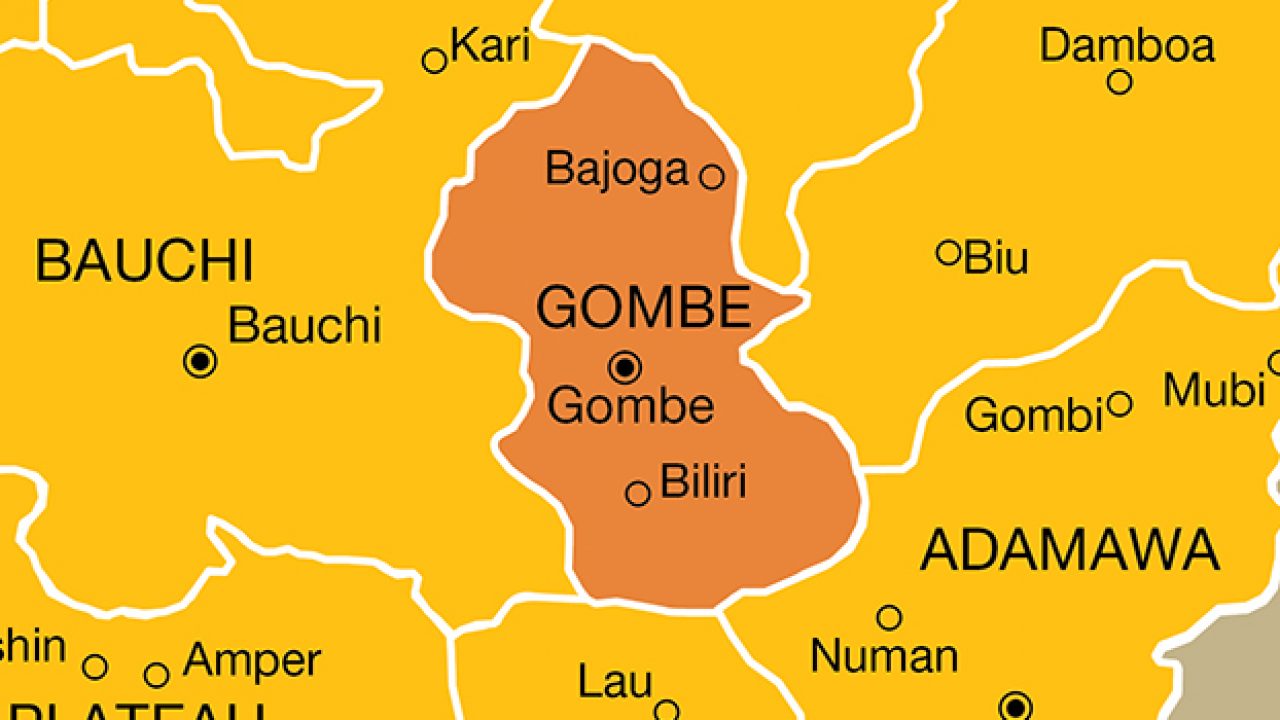
Gombe State has unveiled its 2026 Business Enabling Reforms Action Plan (BERAP), a blueprint aimed at strengthening service delivery and making the state more attractive destination for investors.
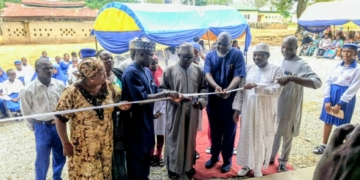
The plan was presented yesterday, at a stakeholders’ engagement session held in Gombe, bringing together government officials, private sector leaders, civil society groups as well as development partners.
Declaring the session open, the deputy governor, Dr. Manassah Daniel Jatau, said the 2026 BERAP represents the state’s commitment to sustaining the gains that earned Gombe the No. 1 position in ease of doing business nationally for two consecutive years.
He noted that reforms do not thrive on ad-hoc measures, but on deliberate planning, continuous review and strong collaboration.
“Today’s meeting is to present what government has done and is still doing in the economic sector. Our objective is to ensure a competitive, transparent and investor-friendly business environment that serves both large enterprises and the numerous small and medium businesses across our communities.”
Dr. Jatau highlighted ongoing efforts to digitalize government processes, enhance environmental sustainability, strengthen waste management systems, and reduce carbon emissions, initiatives he said are critical to building a modern economy capable of attracting long-term investments.
Earlier, the Commissioner for Finance and Economic Development reaffirmed the government’s determination to eliminate bottlenecks that slow down business activities.
He explained that BERAP provides a clear roadmap for addressing regulatory inefficiencies, high compliance costs, and weak institutional coordination.
“Our responsibility is to ensure that fiscal systems, budgeting frameworks and financial processes support these reforms. We are committed to digitalization, fiscal transparency and creating a predictable environment that encourages investment and innovation,” he said
While providing an overview of the reform plan, the State SABER Focal Person, Alhaji Kabiru Tsoho, outlined key priorities for 2026, including the establishment of an ICT development hub, improved legal enforcement, a one-stop shop for investor services, enhanced land administration processes, upgraded market infrastructure, and support for industrial clusters such as rice processing and groundnut milling.
He stressed that BERAP is a practical framework designed to remove barriers to investment and simplify interactions between citizens, businesses and government.
The stakeholders at the session reviewed proposed actions, identified gaps, and offered recommendations that will shape the final reform plan expected to be submitted to the National Coordination Team and the World Bank.
We’ve got the edge. Get real-time reports, breaking scoops, and exclusive angles delivered straight to your phone. Don’t settle for stale news. Join LEADERSHIP NEWS on WhatsApp for 24/7 updates →
Join Our WhatsApp Channel