To paraphrase a biblical passage, when the wicked come to power, the people suffer; but when the righteous rule, the people rejoice (Proverbs 29:2).
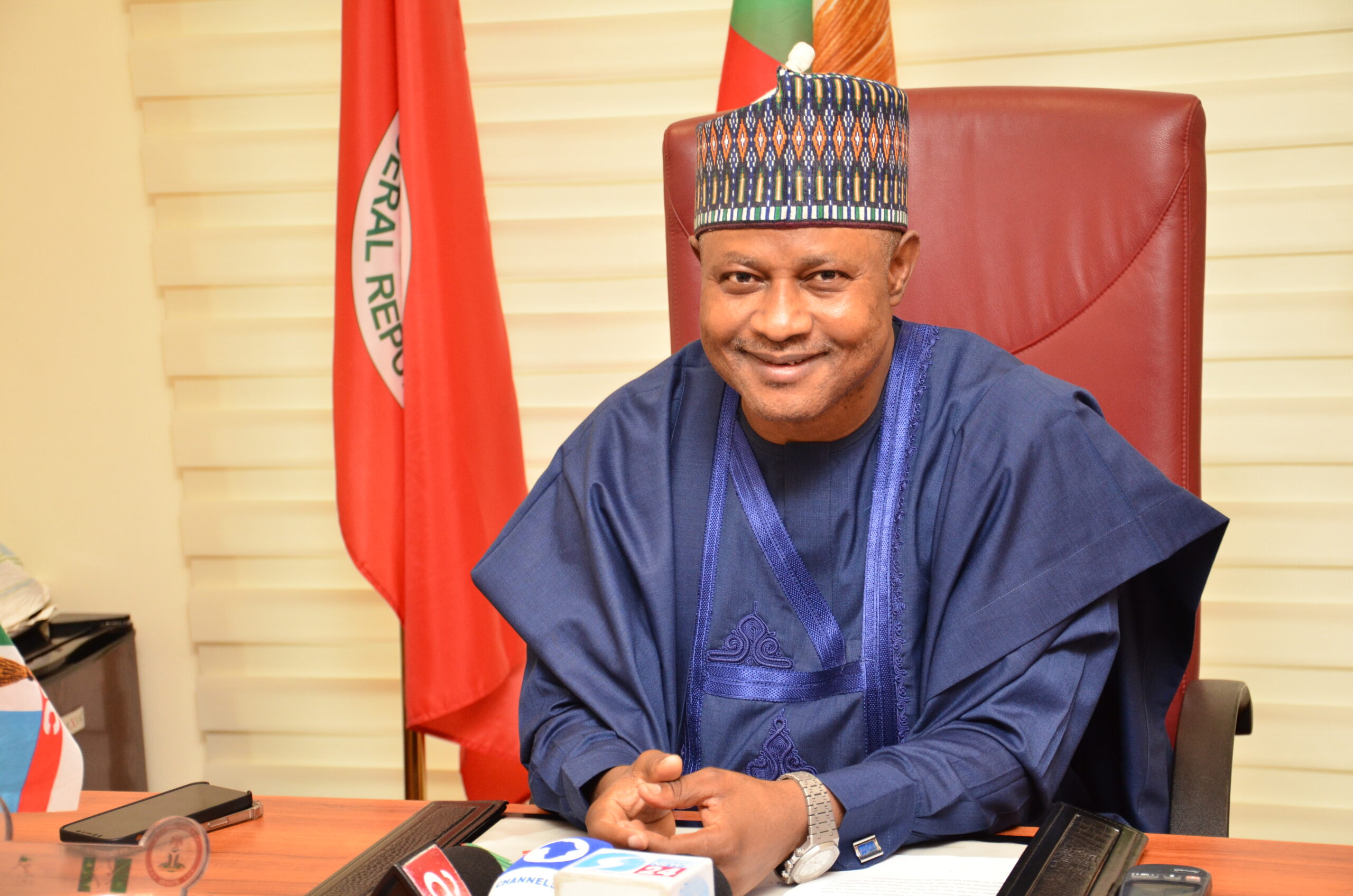
This increasingly appears to be the case in Kaduna State—a polity long defined by deep fault lines: religious, ethnic, regional and political. Governor Uba Sani has chosen an unfashionable yet consequential path: governance as reconciliation.
Before Uba Sani assumed office, tales of blood and tears—particularly from Southern Kaduna—often drowned out the infrastructural gains of the Mallam Nasir El-Rufai administration.
Uba Sani’s methods are not loud, theatrical or slogan-driven. Instead, they are deliberate, data-driven, and anchored in a simple yet radical idea in Kaduna politics: that no part of the state—especially Southern Kaduna—should feel like second-class citizens under his government.
For decades, Southern Kaduna occupied an uneasy place in the state’s power equation: politically mobilised yet structurally marginalised; vocal, but often excluded from the real levers of governance. What distinguishes Uba Sani’s tenure is not merely that Southern Kaduna is referenced in speeches, but that it is embedded—visibly and measurably—within the architecture of governance, budgeting and development.
Governor Sani’s integration of Southern Kaduna has been practical rather than symbolic. Key appointments, project distribution, institutional siting and budgetary priorities reflect a conscious balancing of the state’s three senatorial zones. The establishment of one of the three Institutes of Vocational Training and Skills Development in Samarun Katat is instructive. It signals that skills acquisition, job creation and human capital development are not Northern or Central privileges, but shared state commitments.
Education interventions have followed the same logic. The revitalisation of the College of Education, Gidan Waya; the expansion of Tsangaya bilingual schools; the near-completion of the Special School for Gifted Children; and the mapping and construction of schools in underserved communities directly address long-standing educational gaps in Southern Kaduna. By ensuring that no child treks more than one kilometre to access a school, the administration is dismantling exclusion at its most foundational level.
This philosophy also underpins the decision to slash tuition fees by 50 per cent across state-owned tertiary institutions. The policy disproportionately benefits indigent families across Southern Kaduna, where economic vulnerability often truncates educational aspiration.
Perhaps Governor Sani’s most understated achievement is the relative calming of Kaduna’s once-troubling insecurity. Banditry, communal violence and kidnapping had thrived in an atmosphere of mutual suspicion between communities and the state. Sani’s approach has been to rebuild trust—engaging traditional rulers, faith leaders and local stakeholders across Southern Kaduna, while strengthening intelligence-led security operations.
Security under his watch has been less reactive and more preventive. The reopening of roads, the revival of farming activities and the return of markets in previously volatile areas testify to a quieter but deeper form of stabilisation. Farmers are back on their land, now supported by unprecedented interventions: free fertiliser for smallholders, subsidised inputs for commercial farmers, and crop insurance against climate shocks. Security, in this context, is treated not merely as a military challenge, but as an economic and social one.
Infrastructure development under Governor Sani has followed a corrective logic—repair what was abandoned, complete what was stalled, and equitably spread what is new. Of the 82 road projects awarded, 32 have already been completed, linking farms to markets and communities to opportunity. In Southern Kaduna, road rehabilitation has reduced travel time, improved commerce and restored dignity to daily life.
The declaration of a state of emergency in the water sector, alongside the rapid injection of substantial resources to revive capacity utilisation, reflects the same urgency. Water—like roads and schools—is treated as a right, not a favour.
Health sector reforms are equally transformative. The upgrading of over 174 Primary Healthcare Centres to Level 2 status and the rehabilitation of general hospitals across all senatorial districts have brought quality care closer to rural populations. For Southern Kaduna communities long underserved by tertiary care, the completion of the 300-bed Specialist Hospital—after 16 years of abandonment—stands as a metaphor for this administration’s resolve: no more unfinished promises.
Governor Sani’s political style has also altered Kaduna’s partisan landscape. His calm, consultative approach has attracted seasoned politicians across divides, including prominent PDP figures from Kaduna North, Central and South. These defections appear driven less by opportunism than by credibility. Power, when exercised without arrogance, becomes magnetic.
This political realignment has reduced zero-sum hostility and allowed governance to breathe. The result is a rare phenomenon in Kaduna politics: opposition voices disagree without feeling excluded, while supporters defend policies rather than personalities.
Underlying all of this is a coherent economic vision. Agriculture has moved from rhetoric to industrial logic. Kaduna’s achievement in exceeding the Malabo Declaration’s 10 per cent agricultural budget benchmark—allocating over 12 per cent in 2025—places it in a league of its own among sub-national governments.
The launch of Nigeria’s first Special Agro-Industrial Processing Zone, the development of an Agricultural Quality Assurance Centre, and the $200 million mega poultry project with Chinese partners mark a transition from subsistence to value addition. These are not abstract investments; they promise jobs, markets and GDP growth that will directly benefit agrarian zones, including Southern Kaduna.
Governor Uba Sani’s legacy may ultimately be defined less by grandstanding achievements than by something rarer in Nigerian politics: the normalisation of fairness. By carrying Southern Kaduna along—not as a concession, but as an equal stakeholder—he is quietly stitching together a state long pulled apart by mistrust.
In a political culture addicted to noise, Uba Sani governs with restraint. In a state bruised by division, he leads with balance. And in a country searching for proof that inclusion can work, Kaduna is emerging as an unlikely yet persuasive example.
That, perhaps, is his most enduring contribution: not only building roads and hospitals, but rebuilding the idea of Kaduna as a shared project—one in which everyone belongs.
– Solomon Nda-Isaiah Is A Journalist/Administrator, Director Content Digitisation And Archiving LEADERSHIP Newspapers Group
We’ve got the edge. Get real-time reports, breaking scoops, and exclusive angles delivered straight to your phone. Don’t settle for stale news. Join LEADERSHIP NEWS on WhatsApp for 24/7 updates →
Join Our WhatsApp Channel