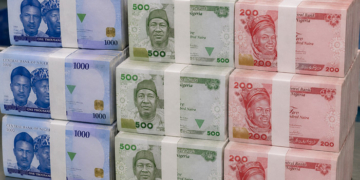
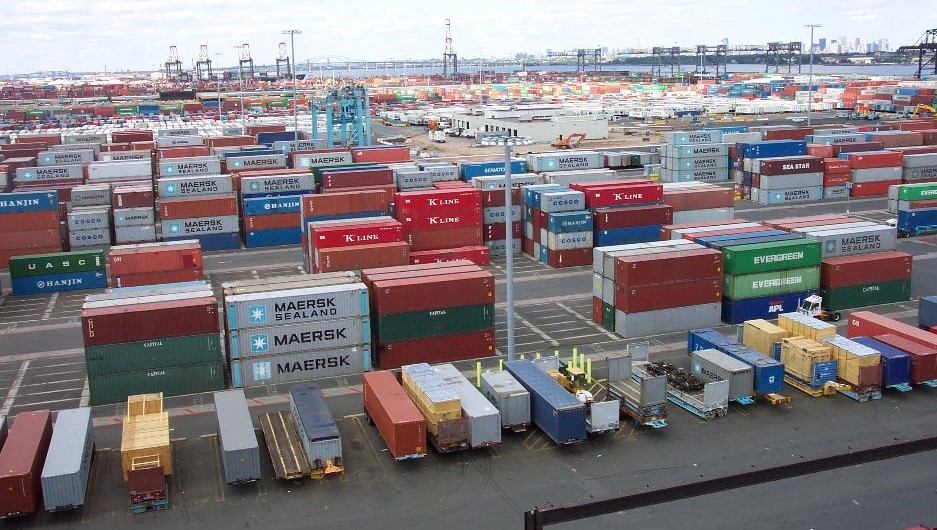
Nigeria’s non-oil export earnings rose to N3.73 trillion in the second quarter of 2026, but the increase has failed to translate into stronger manufacturing competitiveness, as high energy and logistics costs, expensive financing and cheap imports continue to undermine local producers.
Stakeholders said the country’s export growth remained largely driven by petroleum products and raw or semi-processed commodities, rather than manufactured goods capable of generating jobs, expanding industrial capacity and strengthening Nigeria’s position in global markets
According to the National Bureau of Statistics’ Q2 2026 Foreign Trade in Goods Statistics, total exports rose to N27.02 trillion during the quarter
Non-crude oil exports accounted for N14.11 trillion, while non-oil products alone stood at N3.73 trillion, representing 13.8 per cent of total exports
However, the growth in non-oil earnings did not come from factories. Much of it came from other petroleum products, which generated N10.38 trillion, and from raw and semi-processed commodities such as cocoa, sesame, cashew and minerals.
Manufactured exports, which should be the real measure of industrial competitiveness, fell sharply by 51.1 per cent year-on-year to N393.03 billion from N803.81 billion in Q2 2025.
In contrast, manufactured goods imports rose 20.65 per cent year-on-year to N9.51 trillion from N7.88 trillion recorded in the same quarter last year. The result is a manufactured-goods trade deficit of about N9.12 trillion in just three months.
Speaking recently, the director-general of Manufacturers Association of Nigeria (MAN), Segun Ajayi-Kadir, said producing for export is no longer enough, as Nigerian goods must also compete on price and quality in destination markets.
He noted that energy, finance, transportation, taxes, raw materials and other operating expenses have remained major constraints on export competitiveness.
“The challenge is not just for you to produce and export, but for you to export competitively,” Ajayi-Kadir said, stressing that the high-cost environment could prevent Nigerian products from displacing competing goods in target markets.
According to him, many manufacturers with export potential are unable to take advantage of the African Continental Free Trade Area (AfCFTA) because their cost structure makes their goods uncompetitive even in neighbouring West African markets.
The director-general of the Lagos Chamber of Commerce and Industry (LCCI), Dr Chinyere Almona, said the headline non-oil export figure masks a lack of value addition.
“The N3.73 trillion non-oil export figure is welcome, but it is largely driven by raw and semi-processed commodities, not manufactured goods. We are growing in value, not in value addition,” Almona said.
She explained that manufacturers are struggling because the cost of production in Nigeria is significantly higher than in peer countries, stating that “manufacturers are struggling because our cost of production is simply not competitive. Energy, logistics, high interest rates and port delays make Nigerian goods 25 to 30 percent more expensive than our peers in Ghana and Egypt before they even leave our shores.”
Almona said, boosting non-oil exports will require, fixing export logistics with dedicated export terminals, functional rail cargo and a true single window for inspection and reforming export incentives.
She also said the Export Expansion Grant (EEG) and other incentives must be made transparent, cash-backed and accessible to small and medium enterprises, not just large corporations.
She warned that the current Band A electricity tariff of over N230 per kilowatt-hour and the self-generation cost of over N350/kWh are unsustainable for manufacturers who want to export.
The director-general of the Nigerian Textile Manufacturers Association (NTMA), Hamma Kwajaffa, said Nigerian textile goods are globally uncompetitive due to structural disadvantages.
“Nigerian goods, especially textiles, are not globally competitive because we produce at a huge structural disadvantage. Energy is our biggest killer. While our competitors in Bangladesh and Ethiopia pay less than $0.08 per kilowatt-hour, our members pay over N230/kWh on Band A and run generators at N350/kWh,” Kwajaffa said.
He also decried the influx of smuggled and undervalued imports, noting that the market is flooded with substandard fabrics from Asia declared at $1 per yard at the port, while local production cost is over $3.50 per yard.
According to him, the broken raw material value chain means Nigeria exports cotton at $1.5 per kilogram and re-imports it as finished fabric at $12 per kilogram, thereby exporting jobs and importing poverty.
“Until government implements a zero duty on textile machinery and spare parts, gives us gas at a competitive industrial rate, and enforces anti-smuggling at our borders, Nigerian goods will continue to be uncompetitive globally,” he said.
The former director-general of National Chamber of Commerce Industry, Mines and Agriculture (NACCIMA) and an international trade expert, John Isemede blamed Nigeria’s lack of global competitiveness on unstable policies, noting that government often takes major trade and industrial decisions without involving MAN and the Organized Private Sector, leading to policy somersaults.
He said, “once private sector representatives join government boards, they chase sitting allowances instead of protecting manufacturers, while most businesses jump into exports without research or data on target markets.”
He added that government is fixated on imports, with only Customs given revenue targets from import duties while no MDA has targets for production or exports, and financing remains hostile with loans at 25-35 percent compared to 0-3 percent for Chinese competitors.
He questioned the roles of BOI and NEXIM which were set up to promote industry and exports, not to declare profits, and lamented that Nigeria has no institution training export managers despite signing over 700 trade agreements.
Isemede decried the lack of infrastructure and logistics, stating that without a national carrier and shipping line, functional rail, warehouses and dry ports, it is cheaper to import from Australia than to move goods from Lagos to Ghana, while ECOWAS trade remains at 5 percent after 51 years.
He noted that Nigeria, the world’s largest producer of yam, cassava and shea nuts, still exports raw commodities because Commodity Boards were abolished and value addition collapsed, with cocoa taken cheap and returned as chocolate at 500 times the price.
He also cited multiple taxation, border closures, lack of commercial officers in embassies and weak trade information as major constraints, contrasting Nigeria with India and China which have strong export networks.
He called for a national export policy with clear targets, reserved sectors for locals like Ghana and South Africa, industrial clusters, and proper commercial diplomacy in line with the Vienna Convention to link Aba shoe makers to markets like Brazil.
We’ve got the edge. Get real-time reports, breaking scoops, and exclusive angles delivered straight to your phone. Don’t settle for stale news. Join LEADERSHIP NEWS on WhatsApp for 24/7 updates →
Join Our WhatsApp Channel