
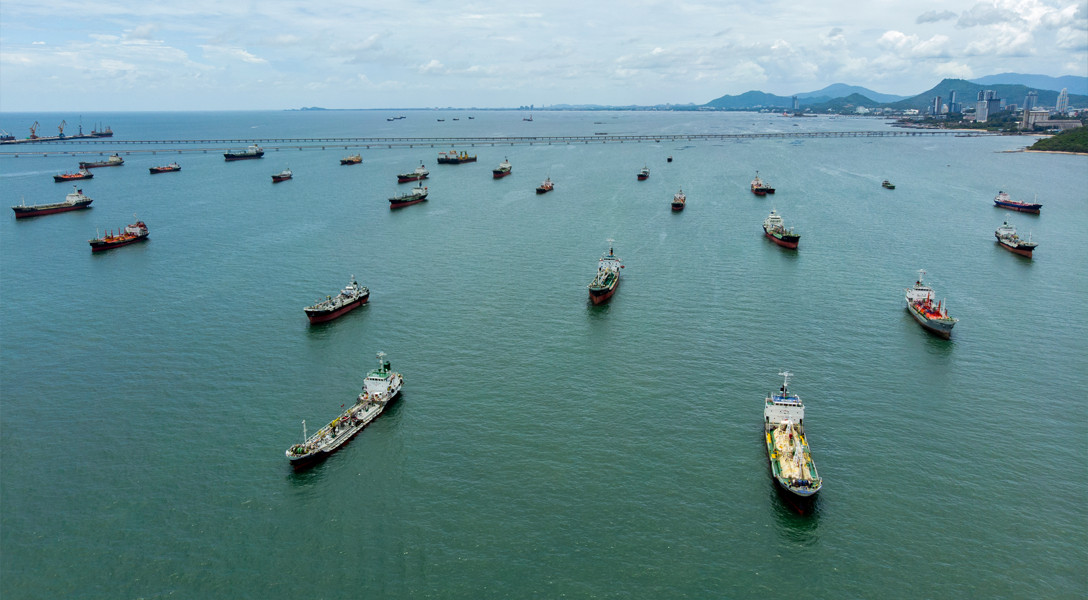
Shippers and vessel owners breathed a brief sigh of relief when the Strait of Hormuz reopened after weeks of closure due to regional tensions, only for Iran authorities to announce a fresh shutdown Friday, prolonging supply chain chaos and spiking freight costs.
The brief reopening of the Strait of Hormuz has proven short-lived, renewing concerns among global shipping operators and Nigerian importers after another disruption threatened cargo movement across key transit hubs, particularly Jebel Ali Port.
Industry players who spoke to LEADERSHIP following the brief reopening, recounted harrowing struggles, including stranded cargoes worth millions and desperate rerouting efforts amid fears of broader disruptions to global oil flows.
Recall that on April 17th, Seyed Abbas Araghchi, Iran’s foreign minister, declared that commercial passage through the Strait of Hormuz was “completely open”.
But, less than 24hours after, a tanker in the Strait of Hormuz says it has come under fire from two gunboats operated by Iran’s Islamic Revolutionary Guard Corps.
According to the UK Maritime Trade Operations (UKMTO), the incident took place 20 nautical miles north-east of Oman. The tanker and crew have been reported safe, UKMTO adds.
They said the reopening of the Strait of Hormuz has brought relief to global shipping operators and Nigerian importers after days of disruption that left millions of containers stranded across key transit hubs, particularly Jebel Ali Port.
Speaking, the president-general of the National Shippers’ Association of Nigeria, Dr. Jamilu Garo, said the earlier closure of the critical maritime corridor had already inflicted severe losses on Nigerian shippers and the global supply chain, warning that renewed uncertainty could worsen the situation.
According to him, Dubai’s Jebel Ali Port, a major consolidation hub for cargo bound for the Middle East and Africa, became heavily congested as shipments from across the world were unable to move onward to their destinations.
“Millions of containers were stuck, including perishable goods that have now been lost. The cost of storage alone has become a heavy burden on shippers,” Garo said.
Providing further insight into the disruption, he added: “Most cargoes going to the Middle East are first assembled in Dubai as a transit point. From there, they are distributed to different destinations. Once that chain is broken, everything is affected globally.”
Garo lamented the financial strain on operators, noting: “You may project a profit of about $34,000 on a shipment, but because of delays, demurrage and storage charges, you end up losing as much as $10,000. That is a serious setback for any business.”
He also highlighted the liquidity crisis facing many shippers: “Our funds are tied down in cargo sitting in transit ports like Jebel Ali. We cannot rotate capital, we cannot repatriate earnings, and that has left many operators financially stranded.”
On the broader impact, he said: “A lot of our members are under serious pressure. Some are unable to meet obligations because their goods have not been delivered. It is not just about cargo; it is about livelihoods.”
Although the strait was briefly declared open on April 17 by Iran’s Foreign Minister, Seyed Abbas Araghchi, and echoed by U.S. President, Donald Trump, fresh uncertainty has dampened initial optimism among stakeholders.
The earlier reopening had calmed global energy markets, with Brent crude prices dropping by more than 10 percent to $89 per barrel, reflecting renewed confidence in oil and gas supply chains. The strait handles between 15 and 20 percent of global oil shipments, making it one of the most critical chokepoints in international trade.
Also speaking, President of the Nigerian Shipowners Association, Sola Adewunmi, said the situation remains a major concern despite the temporary relief.
According to him, the closure of the Strait of Hormuz contributed significantly to rising energy costs across the world, including Nigeria. He noted that although the passage had been shut by the Iranian Navy, reopening it to vessels remains crucial for restoring stability.
“It is a relief to the world. Opening the strait for vessel passage will help bring down costs and normalise shipping activities,” Adewunmi said, stressing that any renewed closure would further strain global trade.
Industry stakeholders say the development underscores the fragility of global supply chains and the risks tied to overdependence on strategic maritime routes.
Garo warned that time is critical to limit further losses: “We need quick intervention to ensure cargoes move without further delay. Every additional day adds to the losses.”
He concluded with cautious optimism: “We are hopeful that a lasting resolution will be achieved so that business activities can stabilise and shippers can begin to recover from the losses already recorded.”
We’ve got the edge. Get real-time reports, breaking scoops, and exclusive angles delivered straight to your phone. Don’t settle for stale news. Join LEADERSHIP NEWS on WhatsApp for 24/7 updates →
Join Our WhatsApp Channel