African media are examining the November 3, 2026, United States midterm elections not merely as a contest for control of Congress, but also as a test of whether lawmakers can restrain, reshape or reinforce President Donald Trump’s policies on foreign aid, trade, migration and security.
For African governments, businesses and communities, the outcome could influence Washington’s approach to development assistance, market access, visa restrictions, military cooperation and the representation of African diaspora communities in American politics.
What Is Happening?
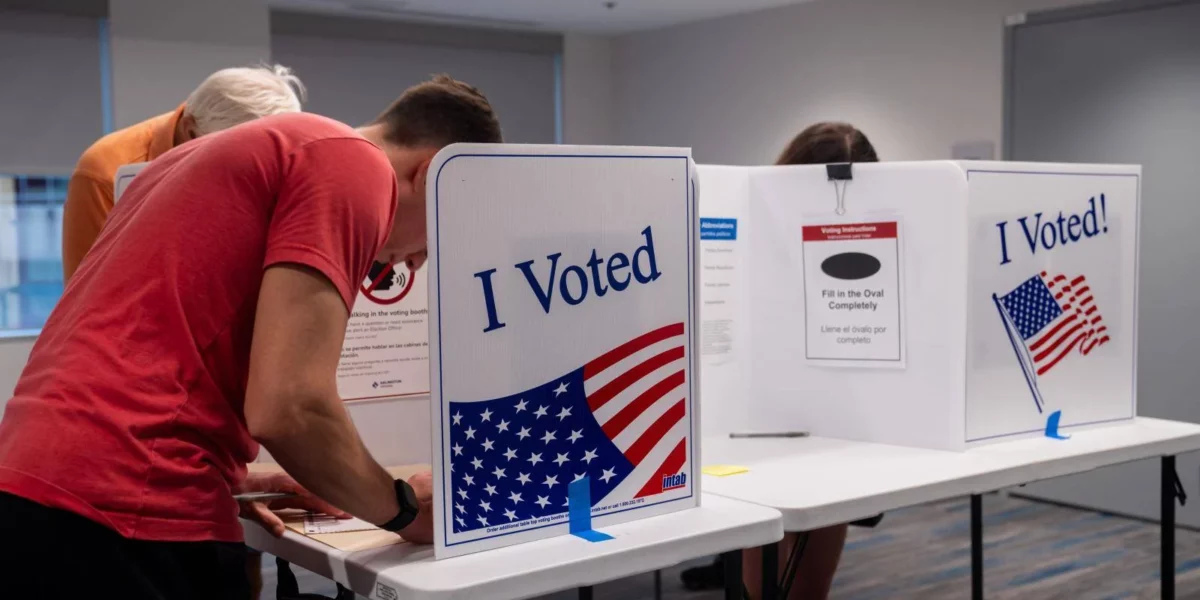
Americans will vote on Tuesday, November 3, to elect all 435 members of the House of Representatives and approximately one-third of the Senate.
The elections will determine whether Republicans retain control of both chambers or Democrats secure a majority in either or both, potentially changing the legislative environment for Trump’s agenda during the final two years of his presidency.
The results matter beyond America’s borders because Congress exercises significant powers over federal spending, foreign assistance, trade legislation and oversight of the executive branch. It can also scrutinise military operations and influence decisions on international security.
For African countries, the implications range from funding for health programmes and access to the US market to immigration enforcement, investment and security partnerships.
Why Africa Is Paying Attention
African media coverage centres on five broad issues: foreign aid and healthcare, trade, migration, security and political representation.
Foreign aid and healthcare: Following the dismantling of the United States Agency for International Development (USAID) and cuts to development assistance, African commentators are examining whether Congress could restore funding, limit further reductions or demand greater scrutiny of their consequences.
Health programmes are a particular concern for countries that have relied on American support for HIV/AIDS treatment, disease prevention, maternal healthcare and other public health interventions.
Trade: The future of the African Growth and Opportunity Act (AGOA), US tariffs and access to American markets remain important issues for African exporters.
Congress extended AGOA through December 31, 2028, under legislation enacted in September 2026. The debate has therefore shifted towards the programme’s implementation, possible modernisation and the wider effects of US trade policy.
Migration: African media outlets are monitoring visa restrictions, deportations and the treatment of African immigrants and diaspora communities in the United States.
Security And military oversight: In Nigeria, attention includes congressional scrutiny of US military operations, counterterrorism cooperation and the legal and policy implications of Washington’s use of force.
Representation: Pan-African publications are also following candidates of African origin who are contesting congressional seats, linking the midterms to the political influence of immigrant communities.
South Africa: Trade And Trump’s Policies
South African coverage is particularly concerned with the economic and diplomatic consequences of Trump’s policies.
Eyewitness News and Talk Radio 702 have examined whether a Democratic-controlled House could challenge aspects of the president’s agenda, including in discussions featuring South African Institute of International Affairs Chief Executive Elizabeth Sidiropoulos.
The central question is whether a change in congressional control would translate into meaningful changes in Washington’s relationship with Pretoria.
A Democratic majority could intensify hearings, investigations and scrutiny of the administration’s policies. However, Congress would not automatically take control of foreign policy, which remains substantially shaped by the president and the executive branch.
For South Africa, key concerns include the African Growth and Opportunity Act (AGOA), tariffs and Trump’s refugee policy towards white South African Afrikaners.
The extension of AGOA offers eligible African exporters greater certainty about preferential access to the US market through 2028. However, the programme’s extension does not, by itself, resolve wider trade disputes or guarantee that individual exporters will be unaffected by other US trade measures.
South African commentary has also drawn comparisons between American political developments and domestic elections, using both to explore public dissatisfaction, political accountability and confidence in governing parties.
Former South African president Thabo Mbeki has cautioned against assuming that a change in congressional control would produce a fundamental shift in US foreign policy. His broader concern centres on Washington’s commitment to multilateral institutions, the United Nations and international law.
Kenya: Diaspora And Development
Kenyan commentary has focused on the apparent disconnect between the limited attention Africa receives in American campaign debates and the substantial consequences US policy decisions can have across the continent.
In The Standard, commentator Kamotho Waiganjo examines how the elections could affect health services, immigration processes, peace negotiations and African diaspora communities.
Migration, remittances and the future of US-supported health programmes are particularly relevant to Kenyan audiences.
A divided Congress could also create opportunities for African governments, lobbyists and diaspora organisations to engage more directly with lawmakers and congressional committees.
However, such opportunities would depend on the priorities of individual legislators, the balance of power in Congress and the willingness of political leaders to pursue Africa-related issues.
For Kenya and other African countries, the outcome is therefore not simply about which party wins, but also about whether the new Congress pays greater attention to policies affecting its citizens and economy.
Nigeria: Security, Trade And Congressional Oversight
Nigerian media outlets, including LEADERSHIP and PREMIUM TIMES have framed the elections around accountability and the extent to which Congress can scrutinise Trump’s policies.
Issues attracting attention include foreign assistance, trade relations, immigration restrictions and Congress’s authority to examine military operations.
Nigeria has a substantial stake in these debates because it has historically received significant US assistance, particularly for healthcare and humanitarian programmes, while maintaining security and commercial relationships with Washington.
The US administration’s reductions in foreign assistance have prompted concerns about the future of programmes supporting public health, development and conflict prevention.
Congressional oversight could influence funding decisions and the conditions attached to assistance, although any reversal of existing policies would depend on legislative and executive action.
Trade is another concern. Although AGOA has been extended through 2028, Nigerian exporters must still contend with the wider US tariff environment and the eligibility requirements governing preferential access.
The Security Question
For Nigeria, military cooperation and the legal basis for US operations are especially sensitive issues.
The United States conducted strikes against Islamic State-linked targets in Sokoto State on December 25, 2025, in an operation that US and Nigerian officials said involved cooperation between the two countries. The strikes generated debate over counterterrorism policy, civilian protection and the wider implications of American military involvement in Nigeria.
The midterm elections could influence the level of congressional scrutiny applied to such operations, including questions about the use of force, military spending, civilian protection and the objectives of US engagement.
However, it would be inaccurate to suggest that Congress’s ability to oversee military action rests solely on the outcome of the midterms or that a change in party control would automatically end or reverse an operation.
The broader issue for Nigeria and other African countries is whether congressional scrutiny yields clearer accountability and greater transparency in decisions that affect their security.
The Diaspora Angle: African-Origin Candidates
The midterms are also being covered as a test of political representation for African-origin and other immigrant communities.
The Africa Report has highlighted African-origin candidates contesting congressional seats, alongside a Jamaican-American candidate, linking their campaigns to debates over immigration, representation and rising anti-immigrant rhetoric.
The number and backgrounds of these candidates should be established from current candidate records, as classifications can differ depending on whether reports count African-born candidates, people of African ancestry or candidates with broader immigrant backgrounds.
Beyond the candidates themselves, the elections raise questions about whether African and immigrant communities can strengthen their influence in Washington.
Their representation could help bring attention to issues such as immigration enforcement, diaspora welfare, US-Africa trade and development assistance. However, candidates’ origins alone do not determine their policy positions, which vary according to party affiliation, constituencies and individual priorities.
What African Countries Expect
African media coverage broadly points to three possible outcomes.
A Democratic-controlled Congress could increase scrutiny of Trump’s policies through hearings, investigations, legislation and budget negotiations. This could create additional pressure over foreign assistance, trade, migration and military operations, although it would not guarantee policy reversals.
A Republican-controlled Congress could provide the administration with greater political support for its legislative priorities and reduce some of the obstacles it faces in Congress. Nevertheless, disagreements within the Republican Party could still affect spending and foreign policy decisions.
A divided Congress could produce more bargaining and legislative gridlock. It might constrain some initiatives while leaving the administration considerable room to act through executive powers, depending on the policy area.
These scenarios are possibilities rather than guaranteed outcomes. Their practical effects would depend on the election results, congressional priorities, budget negotiations and subsequent decisions by the administration.
The Bottom Line
For African countries, the 2026 US midterm elections are about more than the balance of power in Washington. They are also about the future direction of a relationship that affects trade, health funding, migration, security cooperation and investment.
A change in congressional control could strengthen oversight of Trump’s Africa policy, while continued Republican control could give the administration more room to pursue its existing priorities.
Neither outcome, however, would automatically transform US-Africa relations. The president retains substantial influence over foreign policy, while Congress shapes spending, legislation and oversight.
The real test will be whether the election results lead to decisions that African governments, businesses and citizens can feel in their daily lives — from more predictable access to American markets and sustainable health funding to clearer accountability for security operations and fairer treatment of African immigrant communities.
For African media, the central question is therefore not simply who wins control of Congress, but what the result means for Africa.
We’ve got the edge. Get real-time reports, breaking scoops, and exclusive angles delivered straight to your phone. Don’t settle for stale news. Join LEADERSHIP NEWS on WhatsApp for 24/7 updates →
Join Our WhatsApp Channel