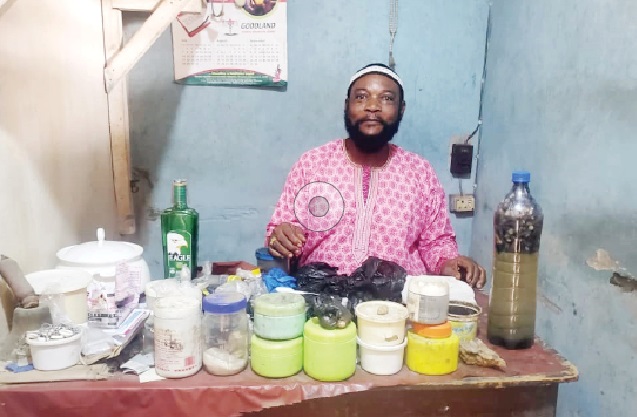
In Mosun Okunola Local Council Development Area (LCDA) of Lagos State, Baba Raji Owenla, a revered Traditional Birth Attendant (TBA), carries on the legacy of herbal medicine handed down through generations. For decades, Owenla has been a lifeline for women in his community, offering traditional solutions for reproductive health challenges.
Steeped in the wisdom of his late father, a renowned herbalist, Owenla prides himself on his mastery of herbs and their application to women’s health. Since 1990, he has offered treatments for infertility, fibroids, infections, and family planning. “From an early age, I was trained to use herbs to address women’s reproductive issues. This is my calling,” he said. His methods, though deeply rooted in culture, remain both popular and controversial.
The Lure of Tradition
Owenla’s traditional family planning methods include herbal soups, contraceptive rings, and other remedies he claims provide effective alternatives to modern contraceptives. “I prepare herbs that can prevent pregnancy for years. There’s also a ring that prevents conception until it is removed,” he explained. For women in his care, the affordability of these methods is a major draw. He charges N2,500 for deliveries at his home and N7,000 for family planning services—costs far lower than private healthcare facilities.
Despite the availability of free modern contraceptive services in government hospitals, many women continue to rely on traditional methods. Owenla’s clients, he says, include young mothers and women wary of modern contraceptives due to fears of side effects.
However, the appeal of tradition often comes at a cost.
When Tradition Fails
For Komolafe Oluwafunsho, a 40-year-old mother of four, choosing a traditional family planning method turned into a nightmare. After having three children, she sought a contraceptive option that wouldn’t exacerbate her weight issues. Discouraged by a nurse from using the Implanon implant due to concerns about weight gain, Oluwafunsho turned to a traditionalist for help.
“The baba prepared some soup for me and gave me a ring, promising it would work for a year,” she said. But just months later, she was pregnant again. “The pregnancy came with complications, and I was devastated,“ she added.
Following the birth of her fourth child, Oluwafunsho decided to switch to a modern method. She consulted her gynecologist, who guided her toward an intrauterine device (IUD). “No more risks,” she declared. “I’ve learned my lesson the hard way.”
The Modern Solution
Health officials like a health education officer with the Lagos State Primary Health Care Board, Mrs. Adewuyi Temidayo, emphasize the superiority of modern contraceptives in preventing unintended pregnancies and promoting maternal and child health.
“Modern family planning methods are scientifically tested and reliable. They allow women to plan and space their pregnancies effectively, reducing maternal and child mortality rates,” she explained.
Contraceptives such as IUDs, implants, pills, and condoms offer long-term protection and additional benefits, such as reducing the risk of Sexually Transmitted Infections (STIs). According to Mrs. Adewuyi, modern methods also empower women to pursue education and careers, contributing to economic stability.
However, the adoption of modern contraceptives remains low in Nigeria. According to the 2018 Nigeria Demographic and Health Survey (NDHS), only 17 percent of currently married women and sexually active unmarried women aged 15–49 use any method of contraception, with just 12 percent relying on modern methods.
The Risks of Tradition
Traditional contraceptive methods, though culturally accepted, come with significant risks. Adewuyi pointed out that these methods often fail due to improper usage or inconsistent practices. “Traditional methods rely heavily on timing and self-control, which increases the likelihood of unintended pregnancies and STIs,” she said.
A study she cited revealed that one in five couples using traditional methods, such as withdrawal or herbal solutions, experiences unintended pregnancies annually. This alarming statistic underscores the need for education and access to modern alternatives.
Breaking Barriers to Modern Family Planning
Myths and misconceptions about modern contraceptives remain a major obstacle. Many women fear side effects or believe misinformation about their efficacy. To counter this, Adewuyi advocates for continuous education and awareness campaigns.
“Workshops, community forums, and school programs are essential to dispel myths. Leveraging social media and engaging community leaders can amplify the message,” she said.
Policy reforms are also critical. Adewuyi called for increased funding for family planning services, subsidies for contraceptives, and better training for healthcare providers to address cultural and individual concerns.
A Call for Change
Community leaders and organizations have a pivotal role in driving this transformation. By organizing awareness campaigns and partnering with healthcare providers, they can promote modern contraceptives as safer and more effective options.
“Our goal is to ensure every woman, including adolescents, has access to comprehensive reproductive health education and modern contraceptive methods. Together, we can reduce maternal and child mortality rates and build healthier, empowered communities,” Adewuyi stated.
We’ve got the edge. Get real-time reports, breaking scoops, and exclusive angles delivered straight to your phone. Don’t settle for stale news. Join LEADERSHIP NEWS on WhatsApp for 24/7 updates →
Join Our WhatsApp Channel