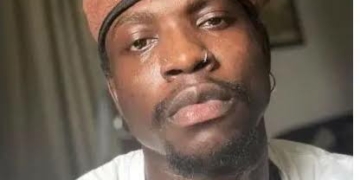

Jaywon’s journey is bigger than a hit song. From Egbe in Kogi State to shaping one of Nigeria’s most enduring New Year rituals, the singer, songwriter, and label executive has built a career defined by resilience, reinvention, and purpose. In this interview with Leadership Lifestyle EDITOR, ADEJOKE ALABI-HENRY, Jaywon speaks on sacrifice, independence, legacy, and why being called a “one-hit wonder” no longer rattles him.
Take us back to the very beginning. What did your journey into music look like before the industry knew the name Jaywon?
It was my love for the likes of King Sunny Ade, Osupa Saheed, Michael Bolton and Celine Dion that birthed my love for my own craft. I loved listening to and miming their songs, and the more I listened, the more I wanted to do something for myself. Then I started writing my own songs with their melodies, and the rest is history, as they say.
Coming from Egbe in Yagba West Local Government Area of Kogi State, how did your background shape your sound, ambition, and resilience as a young artist trying to break into the Lagos music scene?
I will say it wasn’t easy at all. Coming from a Jehovah’s Witness family and trying to do music would have been the hardest thing any kid would want to do. I remember my mum was constantly throwing away all my lyric books.
There was a time she took all my cassettes and music players and went to hide them in my grandma’s house, but you know, it was love, and the love just kept growing until I found my feet.
Coming from Egbe in Kogi State made it worse because there wasn’t much music in the town at the time, except for gospel music, which wasn’t what I was doing.
My parents were separated and attended different churches. Whenever I was with my dad, I went to ECWA Church. In ECWA, I could attend choir practices, but when I was with my mum, I didn’t do much music, because Jehovah’s Witnesses don’t do much music aside from the hymns.
I did all this for a long time until I got admitted to the Federal Polytechnic, Bida, where I met more friends and started doing small performances at school, which really helped me stand out.
Before the fame, what were the sacrifices people didn’t see—the moments that almost made you quit?
A lot of sacrifices went down, many that I can’t talk about, but there are certain places and circumstances in life that you would get to. I got to this point, and coming to Lagos, I will say, was the hardest of them all, because at that time, I hadn’t been anywhere outside of Kogi and Niger states, where I was born and schooled, respectively, so it was really hard.
I did a lot of crazy jobs to survive, and I was homeless for a long time because I couldn’t stay with the family friends I knew in Lagos, who told me I couldn’t do music in their homes. It was harder because I couldn’t tell my mum what I was doing in Lagos.
Like I always tell people, there were no jobs I didn’t do, from security work to motor boy work to labouring to cleaning jobs. Still, I will say thanks to my mum, who, if she didn’t teach us anything, taught us how to fight and hustle, and not to be interested in whatever wasn’t given to us. So I went into the street and looked for different jobs, and one day I saw a vacancy that said they needed a manager with an ND certificate. That was when I remembered I had one from Bida Poly. That’s how I got the job as manager of an event centre, which gave me access to celebrities like Blackface, the Tribunal, and other prominent artists from FESTAC. This also led me to more celebrities who gave me their platforms, which eventually led me to the likes of the late Sound Sultan, who was a big, big part of my success, and also respect to Tony Tetuila and more.
Tell us about Kennis Music and how you got signed up.
I met an artist from Benin, Edo State, who featured me on a song. We went to perform at the Kennis Music Easter Fiesta, and that’s where they saw my performance. It wasn’t expected, and they decided to sign, as they say. The rest is history.
Signing with Kennis Music was a significant turning point. What did that phase teach you about structure, discipline, and the business of music?
Signing to Kennis Music changed my life totally. In a few months, I saw myself travelling to the USA and Europe. Yes, I had my issues with Kennis Music, but I always like to give them their credit because they truly changed my life.
They taught me everything I know today.
Tuface told me one day, Jaywon, Kennis music is a school you go to without paying tuition. I never forgot that, and I made sure to learn everything I needed to know. Trust me, Kennis Music is a full-package label with all the structures, from radio to TV stations, but when it was time to leave, I had to face my own future.
Leaving an established label is never easy. What truly informed your decision to exit Kennis Music, and what misconceptions would you like to correct about that period?
Yes, it wasn’t easy, but I had already learned everything I needed and done everything, from travelling and touring the world to winning the Headies awards. People thought I walked out on my contract, but no, I didn’t. I did my time, but then the label wasn’t going to let go because they thought it was over for me. But towards the end of my contract, when they had already given up on me, God gave me the song, “This Year”, and at that time, they tried to make me stay back, but I left.
In hindsight, what did independence give you that a major label couldn’t—and what did it cost you?
Freedom of expression and also creating the kind of music that you have always wanted to do, but at the same time, there are both negatives and positives to it.
You are in control of your finances and creativity, and you also have your music to your name. Kennis Music still owns most of the records I released under their label to date, including some I paid for with my own money. So, there is nothing like having what is yours as yours, and I’m blessed to own mine now, but having a label means spending all the money on promotion yourself. So if you don’t know how to invest in yourself, don’t bother trying to own a label. It’s more than just that.
Starting Next World Music was a bold move. What lessons have you learned as both an artist and a label executive navigating Nigeria’s music ecosystem?
Ownership is essential, and investing in yourself is everything. Suppose you can’t do that, as I said. Don’t bother.
How intentional are you today about building systems and opportunities for younger artists, knowing what you know now?
Younger artists need more than exposure; they need mentoring first, even before the music, which is part of what I’m doing.
Before I work with any artist, I will need to mentor them for a while. It’s precisely what I’m doing for my new artist, Toby Jackson, who is from Yagba East Local Government Area of Kogi State, which is one of the places I grew up in. So I’m very excited to have someone from that side under my wings.
This Year (Odun Yi) has evolved into a New Year ritual for millions of Nigerians. At what point did you realise the song had become bigger than you?
I didn’t make the song a national anthem; Nigerians did. At one time, I actually didn’t even realise it had grown wings of its own. I just woke up, and I realised it had. That says a lot about good music. If it’s good, people will love and appreciate it.
Strategically, how have you protected the song’s meaning and relevance without overexposing or trivialising it over time?
It’s a lot of work, and even though I financed the song, it still technically belongs to Kennis Music because I released it under the label. Still, we are discussing at the moment about reclaiming what is mine, because I have been the only one keeping the song alive and doing all the work to keep it going, so the world can continue loving it.
Emotionally, what does it feel like to watch Nigerians return to one song every January—through hope, hardship, and transition?
It’s a blessing to have such a song, and that’s why sometimes I laugh when some people call me a *one hit wonder*. It is all jealousy. It’s a kind of song every artist prays for, and as far as this generation is concerned, I’m the one God blessed with it, and I’m grateful.
Tell us about your advocacy work in Egbe.
I’m a proud son of Egbe Mekun, a town I grew up in, hawked in the streets, farmed and schooled in, played and did everything in.
Sometimes I wish I weren’t this passionate about Okun land, but it’s too late. Our people can be so blind to politics, but we won’t stop doing our best to open their eyes to the future, and that’s why I founded the Iledare Foundation, which we use to reach out to widows, orphans, and people in need. It was founded and is funded by me.
You’ve consistently spoken out about security challenges in Egbe and Yagba West LGA. What personal responsibility do you feel toward your community as someone with a national platform?
Okun is me, I’m Okun made, and it would be a sin for me not to use my platform to not only support my people but also speak for them, even though some youths allow themselves to be used against me. I don’t care. I will talk anyway.
What would real progress look like to you—beyond statements and social media attention—in addressing insecurity in your hometown?
Opening our people’s eyes to what they really, really deserve and what their rights are and letting them see the power they possess by speaking out, because our politicians have reduced the youths to nothing but political thugs and beggars. Still, we will keep trying our best to let them know because we know these bad roads won’t fix themselves and the politicians, if given a chance, won’t bother.
Your induction as a Grammy Awards voting member is a significant milestone. What does that recognition mean to you personally, and what responsibility comes with it?
I’m blessed to be among those found worthy of that, and the opportunities are enormous, and so are the responsibilities. Still, there is nothing like being among the great members of the academy. It helps you be you and open doors of opportunities.
As you look ahead, what does the next chapter of Jaywon represent—musically, socially, and as a legacy builder beyond hit songs?
The next chapter is beautiful and nothing but greatness. The label is picking up again, I’m going into tech, producing a new movie, and also working on a new album. Toby Jackson, my mentee, has an Extended Play (EP) coming. Everything we put in God’s hands as we begin this year 2026.
We’ve got the edge. Get real-time reports, breaking scoops, and exclusive angles delivered straight to your phone. Don’t settle for stale news. Join LEADERSHIP NEWS on WhatsApp for 24/7 updates →
Join Our WhatsApp Channel