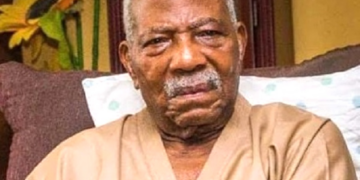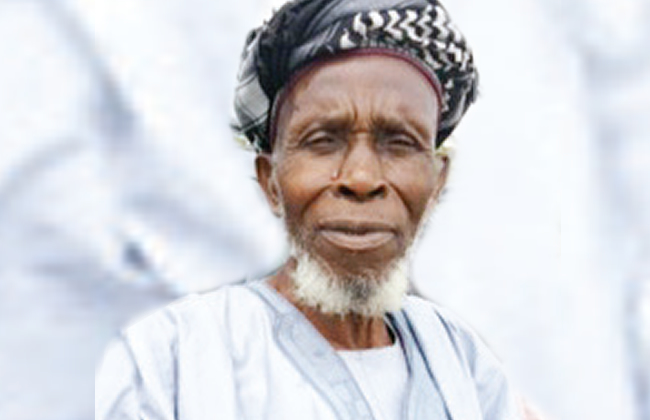
Imam Abdullahi Abubakar died last week at 92, and Nigeria lost something it can scarcely afford to lose: proof that our better angels still exist.
On June 23, 2018, when armed attackers descended on communities in Barkin Ladi Local Government Area of Plateau State, the Chief Imam of Nghar village made a choice that should have been unremarkable but turned out to be extraordinary.
He opened his mosque and home to over 300 Christians fleeing the violence. When the attackers demanded he hand them over, he refused. “I did it because we are all human beings,” he said later. “My religion teaches me to protect lives, regardless of faith.”
That single act born not from calculation but conviction earned him national honours, international recognition, and something far more valuable: the genuine gratitude of people whose lives he saved at serious risk to his own.
The Federal Government gave him the national honour of Member of the Order of the Niger. This Newspaper named him joint Person of the Year alongside Aliko Dangote in 2018. The United States presented him with its International Religious Freedom Award in 2019. President Bola Tinubu mourned him this week as “an extraordinary religious leader, whose lifetime represented a striking testament to faith, courage and a staunch belief in the sacredness of human life.
Fine words, all of them. But if Nigeria truly wants to honour Imam Abubakar’s memory, the task isn’t writing tributes, it’s replicating his example across the fault lines currently tearing this country apart. Because here’s the uncomfortable truth his death forces us to confront: in 2018, when Imam Abubakar hid those Christians, his action was considered heroic precisely because it was so rare. Six years later, it remains rare.
We have not become a nation where protecting your neighbour, regardless of religion, is ordinary behaviour. We have instead become a country where ethnic and religious identity increasingly determines who deserves protection, who deserves justice, and who deserves to be treated as fully human.
The testimonies that poured in after the Imam’s death tell you everything you need to know about the depth of Nigeria’s divisions and the heights of what we’re capable of when we choose differently. Mrs Tabita David, one of the over 262 Christians he saved, credited him with preserving her life and her family.
The Christian Association of Nigeria got it exactly right when its Plateau State Secretary, Rev. Simon Julius, said, “In every religion, there are good and bad.”Imam Abubakar represented what is good, what should be normal, but has become exceptional.
Yet here we are in 2026, and Nigeria’s religious and ethnic fault lines seem wider than ever. Plateau State, where Imam Abubakar performed his act of conscience, continues experiencing periodic eruptions of communal violence.
The Middle Belt remains a theatre of farmer-herder conflicts that too often break down along ethnic and religious lines. Southern Kaduna still buries its dead from attacks that follow depressingly familiar patterns. And across the country, politicians weaponise religious and ethnic identity for electoral advantage while religious leaders, with some honourable exceptions, either remain silent or actively stoke the divisions.
This is where the gap between honouring Imam Abubakar in death and following his example in life becomes painfully apparent.
President Tinubu urged religious and community leaders to “imbibe and preach the spirit of tolerance, mutual respect and peaceful togetherness as expounded in the life of Imam Abubakar.”
Now, what specific policies will enforce those values? What concrete steps will state and federal governments take to ensure that religious and community leaders who incite violence face consequences? How will we protect future Imam Abubakars who stick their necks out for their neighbours when the mob comes calling?
The United States Mission’s tribute to the Imam carries its own uncomfortable ironies. While praising him as “a fearless advocate for religious tolerance,” Washington has simultaneously raised alarm about religious persecution in Nigeria, with some American officials going so far as to use the word “genocide” in reference to Christian communities.
Whether or not that characterisation is accurate, the fact that America felt compelled to honour a Nigerian Muslim who saved Christians tells you something about the state of interfaith relations in this country.
In our opinion, religious tolerance isn’t just about refraining from violence. It’s about active protection, deliberate bridge-building, conscious rejection of the tribalism that tells you to care only for your own. Imam Abubakar understood this. The 300-plus people who survived because he understood this can testify to its power.
Imam Abdullahi Abubakar proved that another Nigeria is possible, one where your faith compels you to save your neighbour even when it’s dangerous, even when no one is watching, even when your neighbour doesn’t share your beliefs. He didn’t do it for awards or recognition. He did it because failing to do it would have violated everything he claimed to believe.
That’s the standard. That’s what Nigerian religious, community, and political leaders should be judged by. We buried Imam Abubakar immediately after Jumma’at prayers in Nghar village last week. The question now is whether we’ll bury his example with him, or finally decide to live up to it.
We’ve got the edge. Get real-time reports, breaking scoops, and exclusive angles delivered straight to your phone. Don’t settle for stale news. Join LEADERSHIP NEWS on WhatsApp for 24/7 updates →
Join Our WhatsApp Channel