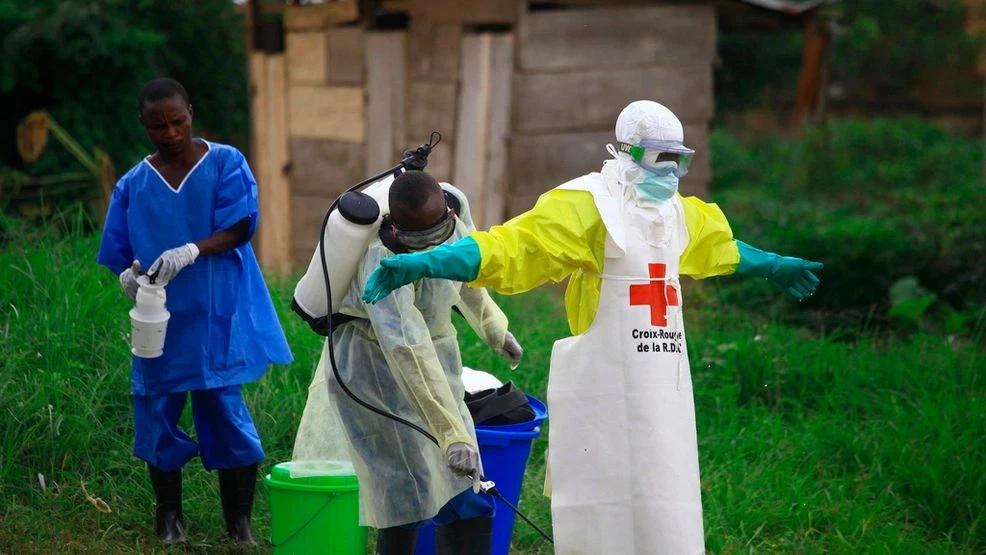
About 12 years after the devastating Ebola outbreak that ravaged parts of West Africa, the deadly virus has resurfaced, again, in Central Africa, this time with renewed ferocity and a different strain.
The development has understandably triggered anxiety across the continent, particularly in countries such as Nigeria that once battled the disease and narrowly escaped a catastrophic public health disaster.
Already, the World Health Organisation (WHO) has warned that the growing Ebola outbreak in Central Africa is expected to increase in scale.
According to the Director-General of the organisation, Tedros Adhanom Ghebreyesus, there have been about 600 suspected cases and an estimated 139 deaths across the Democratic Republic of the Congo and Uganda, although the figures are expected to rise due to delays in detecting the virus.
The WHO confirmed that 51 cases had already been verified in the Democratic Republic of Congo, where the outbreak was first reported, while neighbouring Uganda recorded two confirmed cases, including one fatality in the capital city, Kampala.
The outbreak reportedly began in the Ituri and North Kivu provinces of the DRC before spreading across borders, a reminder of how rapidly infectious diseases can travel in an increasingly interconnected world.
Particularly worrisome is the fact that the current outbreak involves the rare Bundibugyo strain of the Ebola virus, for which there are presently no approved vaccines or specific treatments.
This raises fresh fears among health experts, especially given the region’s fragile healthcare systems and the challenges associated with containing outbreaks in conflict-prone areas.
Expectedly, the Federal Government has moved to reassure Nigerians that there is presently no confirmed case of Ebola Virus Disease in the country.
The Coordinating Minister of Health and Social Welfare, Prof Muhammad Ali Pate, disclosed that precautionary measures had already been activated to strengthen national health security.
According to him, surveillance systems across the country have been reinforced, while agencies such as the Nigeria Centre for Disease Control and Prevention and Port Health Services are closely monitoring developments.
He further explained that the government is collaborating with the WHO and regional health authorities to ensure early detection and rapid response to any potential threat.
The minister also stated that enhanced screening procedures have been introduced at the nation’s entry points, including airports, seaports and land borders.
Laboratory preparedness and diagnostic capacity have equally been strengthened to enable prompt detection and confirmation of suspected cases.
Healthcare workers have been advised to maintain a high level of vigilance, strictly adhere to infection prevention and control protocols and promptly isolate suspected cases.
Similarly, the Federal Airports Authority of Nigeria (FAAN) has confirmed that screening procedures are fully operational across international terminals, particularly for passengers arriving from high-risk regions.
Public enlightenment campaigns and community engagement activities have also been intensified to educate citizens on preventive measures such as regular handwashing and avoiding contact with the bodily fluids of infected persons.
While these assurances are commendable, Nigerians cannot afford to forget the painful memories of the 2014 Ebola outbreak in West Africa, regarded as the deadliest since the disease was first discovered in 1976 in what is now the Democratic Republic of Congo.
The outbreak began in Guinea before rapidly spreading to Sierra Leone and Liberia, eventually reaching several other countries, including Nigeria, the United Kingdom, Spain and the United States.
By the time the epidemic was declared over in 2016, more than 28,600 people had been infected, while over 11,000 deaths had been recorded.
The sheer scale of the devastation exposed the weaknesses of healthcare systems across Africa and highlighted the urgent need for stronger disease surveillance and emergency response mechanisms.
Nigeria’s response during that difficult period remains one of the country’s most remarkable public health achievements.
Through decisive leadership and coordinated action led by former Minister of Health, Prof Onyebuchi Chukwu, health authorities successfully contained what could have become a national catastrophe.
The country recorded only 20 Ebola cases in Lagos and Port Harcourt, with eight deaths. More importantly, authorities were able to trace over 1,400 contacts linked to the index case, thereby preventing widespread community transmission.
That success story earned Nigeria global commendation and demonstrated the importance of preparedness, professionalism and swift government intervention during health emergencies.
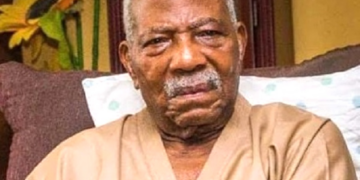
No discussion about Nigeria’s Ebola experience would be complete without acknowledging the heroic sacrifice of Stella Ameyo Adadevoh, the courageous doctor whose vigilance and patriotism helped prevent the spread of the virus in 2014.
By refusing to allow the infected Liberian-American diplomat, Patrick Sawyer, to leave hospital care against medical advice, she helped avert a potential national disaster.
Sadly, she contracted the virus in the process and died later that year. Her sacrifice remains a shining example of duty, courage and selflessness.
The resurgence of Ebola should, therefore, serve as a wake-up call, not only for Nigeria but for the entire African continent.
Infectious diseases thrive where poverty, weak healthcare infrastructure, poor sanitation and inadequate surveillance systems persist.
Governments across Africa must recognise that health security is national security and should be treated with corresponding seriousness.
There is also a need for sustained investment in medical research, healthcare infrastructure, disease surveillance systems and the welfare of healthcare professionals.
Public health emergencies should not only attract attention during outbreaks; rather, governments must consistently strengthen institutions and prepare for future threats long before crises emerge.
Although the WHO has clarified that the present Ebola outbreak has not reached pandemic levels, its warning that it could take several months before a vaccine for the Bundibugyo strain becomes available underscores the urgency of preventive action.
Ultimately, Nigeria and other African nations must draw lessons from past experiences. The continent cannot afford another large-scale Ebola tragedy. Vigilance, preparedness, public cooperation and strong leadership remain the most effective weapons against the renewed threat of Ebola.
We’ve got the edge. Get real-time reports, breaking scoops, and exclusive angles delivered straight to your phone. Don’t settle for stale news. Join LEADERSHIP NEWS on WhatsApp for 24/7 updates →
Join Our WhatsApp Channel