There is no doubt that many Nigerians today have their opinions about the country’s judiciary. For most, it borders on confidence betrayed while for many, despondency has become the attitude towards that institution which ought to reflect the best to be expected of a presumed temple of justice.
Over the years, the conduct of some judicial officers has left much to be desired. This much was acknowledged by no less a personality than President Ahmed Bola Tinubu.
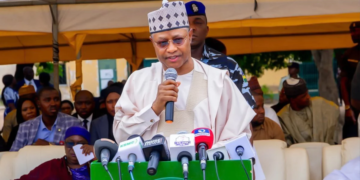
In his address at the recently held 2025 All Nigerian Judges’ Conference of the Superior Courts in Abuja, the president underscored the essential role of judges, reminding them that they remain the true custodians of justice. He warned against the creeping influence of corruption, insisting that justice must never be reduced to a commercial commodity.
“Justice must never be for sale, and the Bench must never become a sanctuary for compromise. Corruption in any arm of government weakens the nation, but corruption in the Judiciary destroys it at its core,” he declared.
The president also highlighted long-standing pitfalls that continue to diminish public trust: delays in adjudication, questionable conduct of judges, and the difficulty ordinary citizens face in accessing justice.
“The backlog of cases in our courts must be addressed with urgency. Our courts must no longer be places where cases languish for years. Justice exists for the people, and their faith in the judicial process is the foundation of our national stability,” he said.
There is no better way to capture the ailment afflicting the judiciary.
To say that perceptions of corruption have deeply shaken public trust is to restate the obvious. Dodgy and conflicting judgements, rising misconduct among judges, and the unholy fraternisation with politicians, have eroded the institution’s moral authority.
A joint 2024 study by the National Bureau of Statistics and the United Nations Office on Drugs and Crime identified the judiciary as the most corrupt institution in Nigeria, with judges and magistrates ranked as primary recipients of bribes.
Many observers believe that the increasing exposure of judges to political actors and election-related litigation is a major driver of this decay.
As a newspaper, we agree with the president that ethical reorientation, continuous learning, and strict discipline are needed within the judiciary. But it must be said that the path to true reform lies beyond the president’s charge.
First and foremost, the judiciary must be allowed to operate as independently as possible. The presidency can begin by fully implementing the constitutional requirement that judicial funding be drawn directly from the federation account as a first-line charge. Equally troubling is the expansive appointive power of the president, which has often resulted in the elevation of individuals who appear more loyal to the government of the day than to the law.
In some jurisdictions, heads of courts stand for public election just like governors and presidents, earning their mandate directly from the people based on merit and reputation. Nigeria’s model—where the president appoints the Chief Justice of Nigeria, Supreme Court justices, and heads of courts—hardly guarantees such independence.
Nonetheless, the National Judicial Council (NJC), the judiciary’s highest decision-making body, holds the key to genuine internal reform. Headed by the Chief Justice of Nigeria and populated by senior judicial officers, legal practitioners, and persons of assumed unquestionable integrity, the NJC wields broad powers over appointments, promotions, discipline, and administration. It also manages judicial funds, advises the executive on judicial matters, and oversees training and ethical compliance.
While the constitution grants the president the authority to appoint heads of courts, we are persuaded to argue that the true reformation of the judiciary must come from within—not from the executive, which often benefits from the status quo. This is why we firmly believe the NJC must lead the charge in cleansing the system and ushering in an era where justice is dispensed fairly and fearlessly.
To begin with, the NJC must entrench due process in all its activities, starting with judicial appointments and promotions. The current culture of patronage, where judges emerge and are elevated through connections rather than merit, must be abandoned. Individuals who ascend to judicial office through questionable means are likely to administer justice in dubious ways.
The NJC must also be ruthless in disciplining errant officers. The unethical conduct of a few stains the entire institution. Such officers must be identified, removed, and prosecuted where necessary. Only then can the culture of impunity be dismantled.
The present administration’s decision to increase judges’ salaries is commendable. However, meaningful reform requires that all judicial staff earn a living wage to prevent recurrent industrial actions that paralyse court operations and delay justice.
Ultimately, restoring the dignity of the judiciary requires much more than presidential admonition. It demands a radical internal restructuring that is anchored on an unwavering commitment to integrity and the courage to withstand outside pressure. Only then can the judiciary reclaim its place as the last hope of the common man.
We’ve got the edge. Get real-time reports, breaking scoops, and exclusive angles delivered straight to your phone. Don’t settle for stale news. Join LEADERSHIP NEWS on WhatsApp for 24/7 updates →
Join Our WhatsApp Channel