First, we need to “set forth at dawn” (apologies, Wole Soyinka, GCON) onto any of the arterial roads abutting the main Lekki highway, or be at a typical crossroads in any of the derelict suburbs between closing hour and sunset to feel the tidal current — that sheer apocalyptic wave — of an apparition increasingly overshadowing Lagos.
One ungainly picture stares you icily in the face: an exploding human population choking every available social infrastructure to near-breaking point — from roads to abstract concepts like waste management.
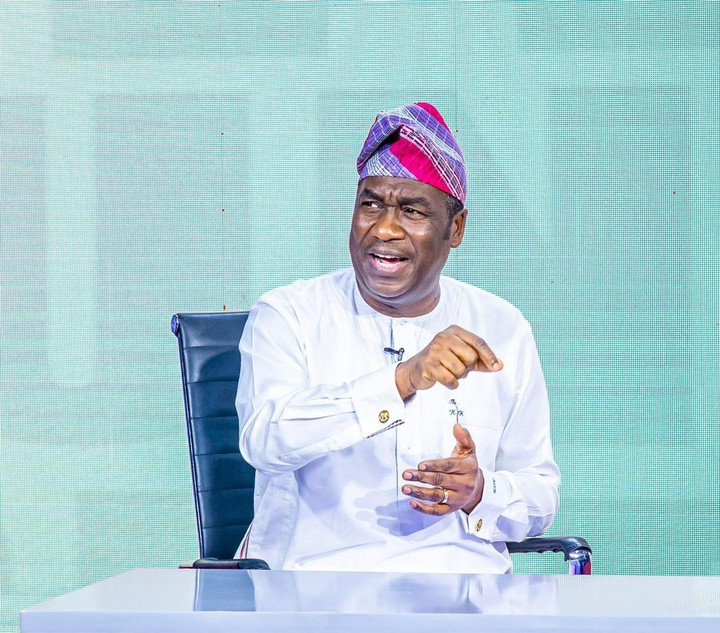
So, the prospects of someone like Kadiri Olufemi Hamzat (KOH) emerging as the next Lagos governor cannot be more fortuitous. With the formidable Tinubu machine, nowhere does securing the APC ticket offer a more guaranteed path to electoral victory in the general election than Lagos.
With an estimated 25 million people literally crammed onto a space that is less than 4,000 square kilometres (a quarter of which is water anyway), Lagos arguably ranks as one of the densest in population per square meter on earth. That colossal demographic alone approximates the population of 13 African nations lumped together.
Of course, managing a human colony of such heft and complexities sustainably in the times ahead is certainly not for a rookie or a charlatan with a sweet tongue. It surely requires a convergence of high IQ, acute presence of mind, mettle and scruple.
The strategic leverage of Lagos needs no further elaboration in the context of the Nigerian federation. Whereas Abuja may be the symbolic crown, Lagos is the ultimate jewel. The reason the question of who shepherds it is a matter of critical national importance.
Indeed, more than at any other time in history, data intelligence and application are becoming the new key to governance efficiency. Take Tokyo, for instance. With 37 million residents, it is larger than Lagos by more than 50 per cent, with a landmass of 13,500 square kilometres compared to Lagos’ roughly 3,600 square kilometres. In Japan’s most populous city, as well as its capital, authorities are adopting integrated data platforms and IoT sensors to control and optimise operations. To manage basic daily necessities like transportation and energy consumption, the Tokyo Metropolitan Government (TMG) uses real-time data from traffic, environmental, and infrastructure networks.
Taken together, the point is that it is no longer enough to diagnose a problem; it is just as important to refine the data to respond, interrogate the fallout, frame the follow-up, and predict the future outcome.
Incidentally, this is the speciality where KOH earned a PhD from one of the UK’s best schools (Cranfield University) more than three decades ago. He studied System Process Engineering.
Originally headhunted from Morgan Stanley (a notable address in the U.S. financial community) by then Governor Tinubu in 2004, KOH’s first meeting with Jagaban was quite dramatic. Locked in a boardroom filled with white faces, the single black person stood out. Upon introducing himself, a curious Tinubu asked: “Which Hamzat are you?”
Lo, it is the scion of the legendary Oba Mufutau Hamzat, who was Transport Commissioner under Lateef Jakande in the Second Republic.
There and then, Tinubu persuaded him to return home and lend his talent to help rebuild Lagos.
Upon arrival at Alausa, KOH immediately imprinted his signature of excellence on Lagos’ financial architecture. He oversaw the development and implementation of the Oracle system, which completely revolutionised the government’s financial records. Ghosts were hounded off the payroll. Automation reduced vulnerability to theft of government revenue. That, in part, helped Lagos weather the fiscal suffocation unleashed by Obasanjo through the withholding of Lagos council funds for more than two years.
When the hostile Obasanjo’s Federal Government later decided to carry out a “national census”, KOH, as the Commissioner for Science and Technology, led the counter-operation arranged by Tinubu to establish Lagos’ true number. As Works Commissioner under Raji Fashola, he directly supervised the conception and construction of the now iconic Ikoyi-Lekki link bridge.
Overall, in the last two decades, he has applied himself to service in Lagos with unparalleled diligence. The fact that he has maintained a squeakily clean record despite being around Alausa for that long, even after being tested with plush offices and tough assignments, is a testimony to his spartan discipline and stability of character. As the Yoruba will say, “Bibi ire ko se f’owora” (good breeding is never a commodity to be purchased).
On a personal note, I have known KOH for ages and can attest to his impeccable character. A man whose word is his bond, whose smile is real and laughter deep.
That said, it bears restating that a few facts are now beyond dispute in contemporary Lagos. One is the necessity and urgency of managing and conserving physical resources. And one sure way to begin is to ascribe primacy to data.
In a way, the identified widening infrastructural gaps are only symptoms of a bigger malaise. Lagos is a victim of its own relative success in contemporary Nigeria, where most parts are blighted by dwindling economic opportunities, worsened by security challenges.
In search of a better life, more folks are heading where the grass appears greener, with their attached baggage weighing excruciatingly on the “Centre of Excellence”, into which seven rivers famously empty from across Nigeria.
For instance, from the economic doldrums of 1999, today’s Lagos has recorded phenomenal economic growth, ranking not only as Nigeria’s most viable state but also Africa’s fourth-largest economy. Many thanks to the structural re-engineering commenced by Tinubu, outlined, block by block, in a 25-year masterplan.
Lagos’ IGR was a paltry N600m when Tinubu took over as governor in May 1999, with the wage bill nearing N1bn. Without monthly allocations from Abuja, Lagos was technically bankrupt. But with radical reforms, including automation, the figure had grown to N8bn by 2007, thereby making Lagos self-sufficient without federal allocation. Today, the average monthly number exceeds N90b.
It is a testament to Lagos resilience that, under Jide Sanwo-Olu, it emerged from the twin catastrophes of the COVID-19 shutdown and the EndSARS riots of 2020 without losing its folksy soul nor its vivacious spirit. Without a single kobo in support from Abuja.
Whereas violent crimes are daily fixtures in many states, Lagos, despite being the hub of sixty per cent of the nation’s economic activities, has relatively been peaceful. It is no coincidence. Tinubu pioneered the idea of a dedicated security fund administered independently as a robust framework to reinforce the police.
The police and other security agencies in Lagos are better resourced and incentivised. So, they are motivated to fight crimes with all their hearts.
So, the exceptionality of Lagos was bound to magnetise. In a clinical reading of the situation, KOH hit the nail on the head in 2024 by revealing a depressing — though not shocking — statistic at a public event. Daily, at least 6,000 people enter Lagos, half of whom don’t exit, thereby swelling the population geometrically.
What then poses a clear and present challenge is how to integrate the daily arrivals in Lagos into settling in at a ratio so disproportionate to the steep decline in the physical resource — land.
Fresh creativity is, for instance, needed to address the growing crisis of waste. Again, this is where data will help. Daily waste generation is conservatively estimated at 13,000 tonnes. The age-old strategy of compaction using the dumpsites at Olusosun (Ojota), Igando, and Abule-Egba has, in recent years, undoubtedly proved grossly insufficient. With the population growing exponentially, the sore will only get more glaring if fresh thinking is not injected.
Those who know say the 25-year masterplan, unveiled in 1999, anticipated this. But it is no longer time to lament how a policy shift a decade ago disrupted the previously scheduled transition from compaction to waste conversion.
In countries with stronger systems and strategy, waste becomes wealth, feeding a wider sustainability agenda that generates power, produces organic fertiliser, and drives circular‑economy innovation. The first step in that direction is to intensify the mobilisation and incentivization of our people to ensure that the bulk of processing biodegradable waste is done at the household level.
At some point, Rio, a densely populated city in Brazil, had similarly struggled with waste management. But much relief came with the introduction of the biomethanisation programme for organic waste gleaned from food bins at schools, supermarkets and restaurants. It helps to produce organic compost to support the city’s urban agriculture and reforestation programmes.
This is just one of the ways waste can be converted into wealth sustainably in Lagos.
Also, better data use will help reset town planning. It will assist in re-channelling scarce resources to providing critical amenities to places where they are sorely needed, with a view to redirecting residential as well as commercial traffic.
No doubt, the future lies paradoxically in rural Lagos. That refers to the largely virgin Badagry corridor and swathes of Epe and Ikorodu.
The tragedy of the past is that, in most built-up districts, human occupation often preceded the provision of government amenities. Ideally, it should be the other way round, to avoid chaotic development.
A corollary to this is the knotty issue of building control across the five districts that spell IBILE (Ikeja, Badagry, Ikeja, Lagos Island and Epe). Daily, LABCA, the government building control agency, chases after the army of estate developers over approvals and integrity tests as part of symptoms of an ingrained systemic deficit, which occasionally manifests in buildings under construction collapsing. Given the sheer volume of developments sprouting across the landscape daily, the government does not seem to have a fighting chance here, aside from the high potential for official compromises. The truth is that the government lacks the capacity to effectively police against sharp practices, given the exponential developments across the state.
Therefore, a few radical responses have been prescribed. One option is to co-opt critical stakeholders, such as the Nigerian Society of Engineers, the Nigerian Institute of Architects, urban and regional planners, surveyors, of them is the option of co-opting critical stakeholders like the Nigerian Society of Engineers, the Nigerian Institute of Architects, urban and regional planners, surveyors, etc. In a win-win situation, the government can outsource the enforcement of standards to these experts under an equitable revenue-sharing arrangement. It will create more sustainable jobs and raise standards. Under the new template, the ministry will be solely responsible for issuing final building approvals and overseeing the body of experts, who will then become the primary enforcers of industry rules and regulations.
Overall, while the challenges of governance in Lagos may appear daunting, the good news is that KOH has undoubtedly demonstrated that he possesses the requisite skill set to make the right choices if given the chance by Lagos voters to take over in 2027.
We’ve got the edge. Get real-time reports, breaking scoops, and exclusive angles delivered straight to your phone. Don’t settle for stale news. Join LEADERSHIP NEWS on WhatsApp for 24/7 updates →
Join Our WhatsApp Channel