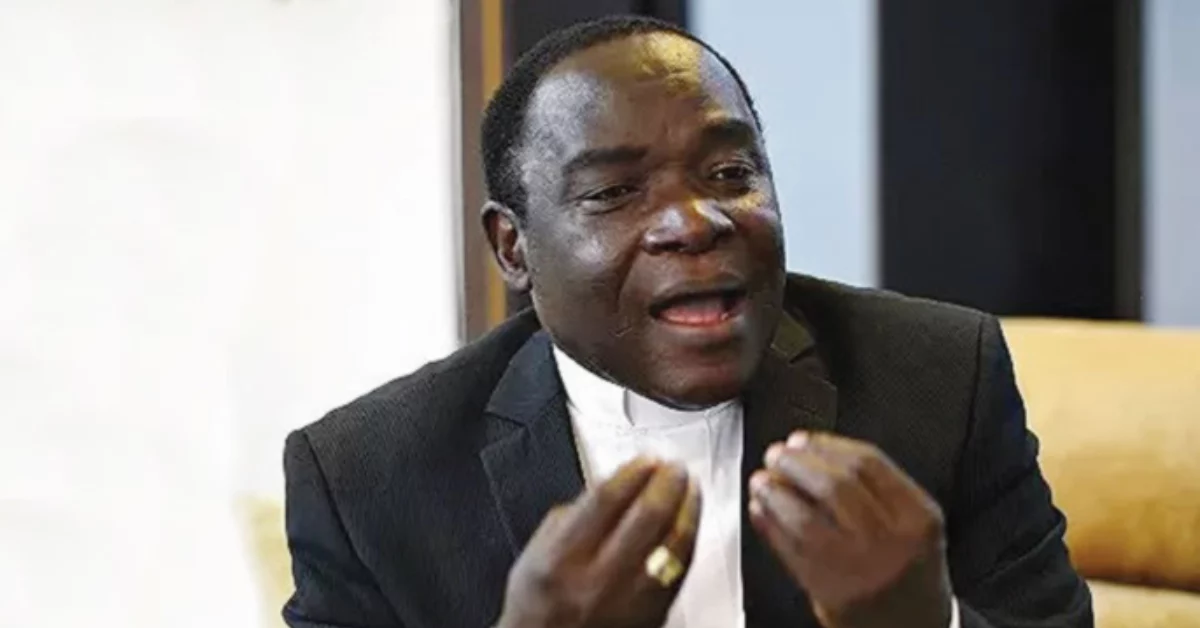
Convener of the National Peace Committee, Bishop Matthew Hassan Kukah, has declared that Nigeria’s deepening divisions and escalating violence were symptoms of longstanding governance failure and social exclusion.
He made the assertion yesterday in Abuja at a public discourse on national identity and the indigene–settler question, organised by the National Peace Committee.
Kukah said Nigerians could no longer pretend about the cracks within the country, insisting that violence by bandits and other groups was merely feeding off a broken system.
According to him, Nigeria has failed to build a platform that unites its citizens, leaving people to rally around their tribe, religion and birthplace instead of a shared national identity.
He said, “We need to elevate the Nigerian identity to a higher pillar of common citizenship. Only then can we, in unity, resist the oppression of a state increasingly detached from the hopes of its citizens.”
The eminent cleric warned that unless Nigeria rebuilds a sense of common belonging, the citizens would continue “to mourn, carry our corpses and bury our dead, singing our dirges of hopelessness.”
Bishop Kukah reminded the audience that the National Peace Committee, established in 2014, was intended to restore faith in reconciliation, peace and democracy. However, the country still remains trapped in divisive debates over identity.
He stressed that migration was a permanent feature of human existence and should not be used to determine who belongs where. The failure to forge a shared identity had created a vacuum exploited by toxic politics.
“Our killers are not the cause of our instability. They have only identified the cracks in our differences, worsened by the indifference and incapacity of the state, he said.”
He called for urgent repairs to Nigeria’s fractured unity, stating that the country belonged to all citizens equally and must be governed solely by law.
In his goodwill message, the European Union’s Representative to Nigeria and ECOWAS, Gautier Mignot, urged Nigeria to prioritise citizenship over narrow divisions and harness the strength of its youthful and diverse population.
“Nations everywhere still grapple with diversity, but unity thrives when merit and competence outweigh ethnic or cultural considerations.
“Citizens rarely ask about a pilot’s tribe before boarding a plane, yet such sentiments often colour decisions around political leadership,” Mignot said.
We’ve got the edge. Get real-time reports, breaking scoops, and exclusive angles delivered straight to your phone. Don’t settle for stale news. Join LEADERSHIP NEWS on WhatsApp for 24/7 updates →
Join Our WhatsApp Channel