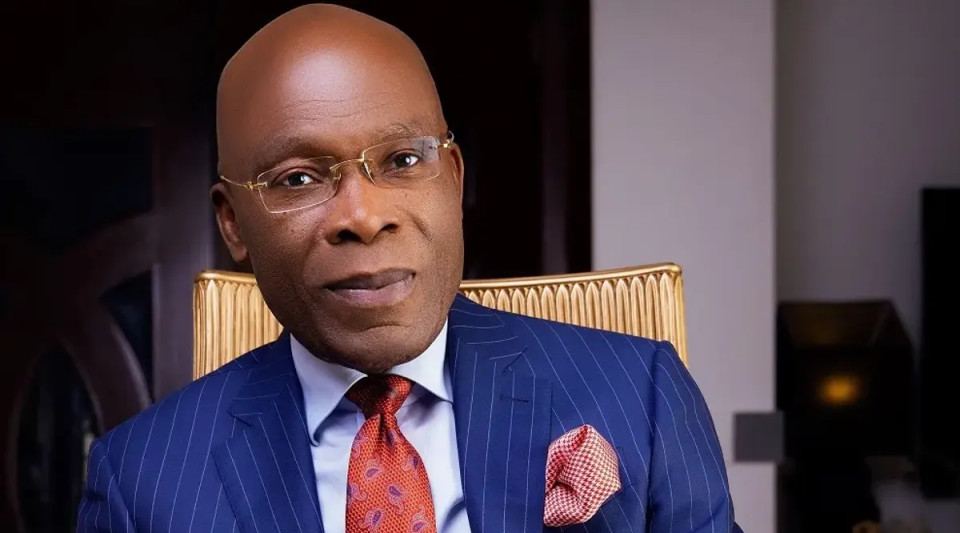
Long before technology became the new oil, Leo Stan Ekeh had already seen it coming. In an era when computers were rare, expensive, and largely misunderstood in Nigeria, Ekeh envisioned a future where digital tools would power governance, education, commerce, and democracy itself. Decades later, that vision has not only materialised—it has helped shape Nigeria’s ICT landscape.
Rated among Nigeria’s top tech CEOs by Ventures Africa, Dr Leo Stan Ekeh, Chairman of Zinox Group, is widely regarded as one of the architects of Africa’s digital economy. His journey into technology predates the buzzwords and billion-dollar valuations of today. It began quietly in the late 1980s, driven by foresight, resilience, and an unshakeable belief that Africa could build world-class technology for itself.
Born on February 22, 1956, in Imo State, Ekeh was raised by parents rooted in service—a dietician mother and a nurse father. He had his early education in Owerri and graduated from Holy Ghost College before taking a bold step that would redefine his worldview: emigrating to India. At Punjab University, where he earned a BSc in Economics, Ekeh encountered what he later described as a “realistic economy”—one that thrived on innovation, local production, and scale. That exposure altered his ambitions. Dreams of running Nigeria’s biggest transport company gave way to something more enduring: building systems that could transform the economy itself.
Further studies in Risk Management at the University of Nottingham, England, sharpened his strategic thinking. When he returned to Nigeria, Ekeh did not chase trends. He built foundations.
His first major venture, Task Systems Limited, launched in 1989, focused on desktop publishing and computer graphics at a time when such services were almost non-existent locally. Over three decades, Task Systems became a quiet powerhouse, executing ICT projects across oil and gas, telecommunications, manufacturing, and the public sector. The Company played a central role in computerising nearly 95 per cent of Nigeria’s print media, publishing houses, and advertising agencies, earning multiple partner awards from global giants such as Microsoft, HP, and Compaq.
But it was Zinox Technologies, founded in 2001, that propelled Ekeh to continental prominence. Zinox became West Africa’s first internationally certified branded computer OEM, the first to receive Microsoft’s Windows Hardware Quality Labs (WHQL) certification, and the first Nigerian ICT company to earn ISO 9001 certification. At a time when foreign brands dominated perceptions, Zinox boldly proved that Nigerian-made computers could compete globally—on quality, security, and performance.
Zinox computers were built with local realities in mind, including unstable power supply—an innovation symbolised by the iconic naira sign on its systems. Beyond hardware, the Company delivered large-scale ICT integration projects, including solutions that revolutionised electoral processes in Nigeria and other African countries such as The Gambia and Guinea-Bissau. Today, Zinox stands as the only local OEM partner of Microsoft and Intel in Nigeria and has been ranked by International Data Corporation (IDC) as the country’s number one computer brand by sales.
Ekeh’s entrepreneurial reach extends further. Through Buyright Africa Dotcom Limited, founded in 2008, he tackled the financing gap that stifled ICT adoption across Africa, offering equipment leasing, project funding, and consultancy services long before e-payments became mainstream. He also founded Technology Distribution (TD Africa), Task Direct, and ITEC Solutions, building one of West Africa’s strongest networks for ICT distribution and solutions.
In 2018, Zinox acquired a controlling stake in Konga, one of Nigeria’s largest e-commerce platforms, stabilising the Company and later merging it with Zinox’s retail brand, Yudala. The move reinforced Ekeh’s reputation as a strategic builder—one who steps in not just to acquire, but to restore and reposition.
Yet, for all his business success, Ekeh’s legacy is equally defined by impact. Through the Leo Stan Ekeh Foundation and flagship initiatives such as the Computerise Nigeria Project and CANi Scheme, he has consistently championed digital inclusion. His recent Computerise Nigeria Initiative, unveiled at GITEX Nigeria 2025, aims to equip one million students with laptops, internet connectivity, power solutions, and training—tackling infrastructure gaps that have long undermined educational technology programmes.
Recognised with numerous honours—including the Officer of the Order of the Federal Republic (OFR), ICON of Hope Award, and multiple honorary doctorates—Ekeh remains driven by the future. He has even called for a national “Tech Independence Day,” confident that Nigeria will soon produce tech billionaires capable of rivalling global icons. Before laptops became commonplace and before digital literacy entered policy debates, Leo Stan Ekeh was already at work—quietly wiring Nigeria for the future. And decades on, he is still building.
We’ve got the edge. Get real-time reports, breaking scoops, and exclusive angles delivered straight to your phone. Don’t settle for stale news. Join LEADERSHIP NEWS on WhatsApp for 24/7 updates →
Join Our WhatsApp Channel