
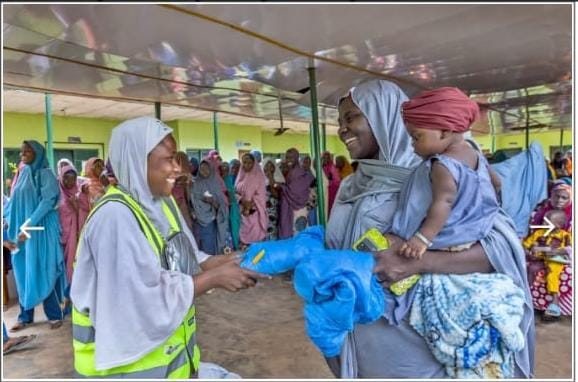
The Society for Family Health (SFH) 2025 malaria prevention campaigns report has revealed massive nationwide reach through the distribution of insecticide-treated nets (ITNs) and Seasonal Malaria Chemoprevention (SMC) across seven states.
According to the report, microplanning and implementation supported by SFH enabled ITN distribution in Delta, Kaduna, Kano, Katsina, Niger and Taraba, reaching a combined population of 45,092,208 people. The largest coverage came from Kano State with over 14.6 million people, followed by Kaduna (9 million) and Katsina (8.1 million).
Also, SFH supported SMC delivery in Adamawa and Kano States, reaching 1,088,727 children and 3,086,244 children, respectively. Across both states, a total of 4,174,971 complete SPAQ doses were administered during the four monthly cycles, providing direct protection for children aged 3–59 months during peak transmission periods.
The report also highlighted the training of 96,066 health workers and community volunteers, who handled data collection, logistics, drug administration, community mobilisation and real-time reporting.
SFH, one of Nigeria’s oldest and largest public-health NGOs, collaborated with the National Malaria Elimination Programme (NMEP), State Ministries of Health and development partners including CRS, MSH and Malaria Consortium, to roll out the integrated ITN and SMC campaigns.
The 2025 strategy combined ITN mass distribution, which protects whole households for up to four years with SMC, a preventive SPAQ drug administered monthly to children under five during high-risk months.
SFH said it adopted data-driven microplanning, digital tools, GIS mapping, and strengthened social behaviour change (SBC) communication to increase efficiency and coverage.
The organisation said integrating both interventions eliminated duplicate logistics, improved cost-effectiveness and expanded reach across communities. Early indicators suggest increased household protection, improved caregiver adherence and stronger state-level systems for future malaria control activities, it explained.
SFH noted that its home-grown structure and reliance on local personnel continue to build ownership, sustainability and trust within communities.
It said the 2025 integrated campaign represents “a major push toward reducing the malaria burden” by combining broad household protection with targeted prevention for the most vulnerable children.
We’ve got the edge. Get real-time reports, breaking scoops, and exclusive angles delivered straight to your phone. Don’t settle for stale news. Join LEADERSHIP NEWS on WhatsApp for 24/7 updates →
Join Our WhatsApp Channel