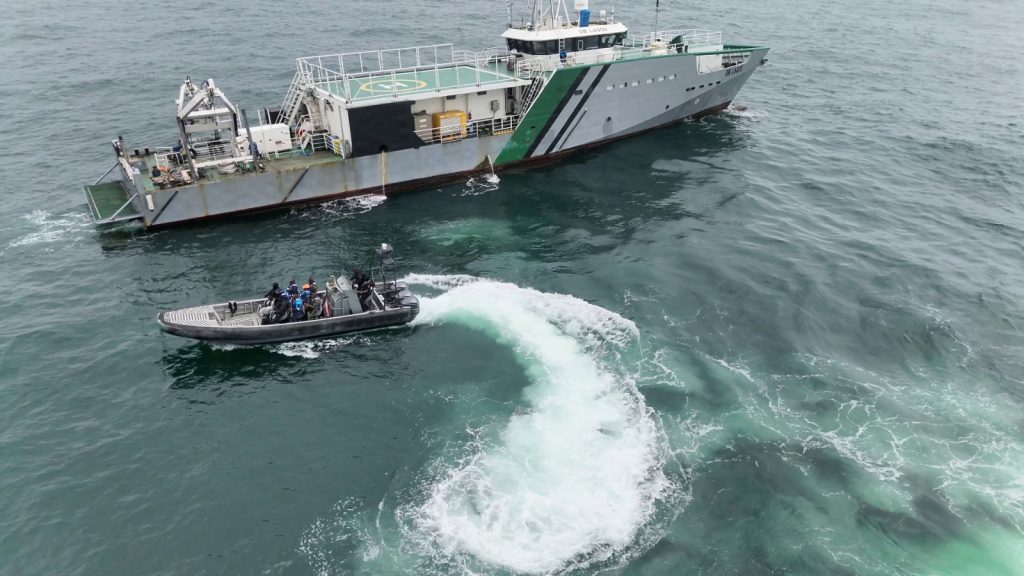
A drone incident at sea can happen while the vessel is still moving. Radio communications can continue while the drone changes its position, altitude, speed, or heading.
For Defense, Homeland Security, and Critical Infrastructure organizations operating at sea, the drone incident takes place while the wider operation continues.
This makes maritime counter-drone operations different from protecting a fixed site. The vessel is moving, the drone can be moving, and the information available during the incident can change.
When the Vessel and Drone Are Both Moving
A vessel does not stay in one place during an operation. A drone can also change its position and flight path.
The drone’s coordinates show where it is. Altitude, speed, and heading provide information about its flight.
Cyber-over-RF technology can extract operational data from supported drones, including altitude, speed, heading, and camera orientation. It can also provide identification data such as a unique serial number, drone vendor, make, and model.
For supported drones, Cyber-over-RF technology can also provide the drone’s coordinates and the remote control’s last known location.
Sentrycs’ Cyber-over-RF technology uses the communication protocols of supported drones to extract identification and operational data.
What Operators Can Learn About the Drone
Identification data can include a unique serial number, drone vendor, make, and model. Operational data can include altitude, speed, heading, and camera orientation.
The technology can also provide the operator’s location and the remote control’s last known location for supported drones.
This information can be available while the drone remains in flight.
When Radio Communications Are Already in Use
A drone incident can happen while other radio communications are active.
RF jamming works by overwhelming the communication link between a drone and its remote operator. By emitting strong RF signals at the same frequency the drone uses, jammers attempt to sever the connection. Jamming is fundamentally indiscriminate and disrupts all communication at the targeted frequency.
Cyber-over-RF technology uses a different approach. It interacts with the communication protocols used by supported drones rather than overwhelming the targeted frequency.
For a maritime counter-UAS system, these are different technical approaches to addressing a drone while other communications remain active.
Detection and Mitigation Are Different Actions
Detection and identification provide information about a supported drone. Mitigation is a separate action.
Where regulations and operating authority permit mitigation, Cyber-over-RF technology can enable controlled mitigation of supported unauthorized drones.
Before relevant detection or mitigation functions are used, the organization needs to ensure that its use of the system complies with applicable laws and any required approvals, licenses, permits, and authorizations.
The Customer Defines the Response
The customer decides who receives alerts and how personnel respond.
The provider is responsible for system integrity, operator training, and interface maintenance. The customer defines its own internal alert procedures.
During a maritime operation, those procedures determine how the organization responds to the information it receives.
The Incident Can Change While the Vessel Keeps Moving
The drone can change its position, altitude, speed, or heading while the vessel continues moving.
Cyber-over-RF technology can provide information about these changes for supported drones. Coordinates provide the drone’s location, while altitude, speed, heading, and camera orientation provide operational data. Identification data provides details about the supported drone.
As the flight continues, the available information can change with it.
Keeping Maritime Security Operations Moving
A drone incident at sea happens while the vessel and its wider operation continue.
Maritime Security during the incident involves the information available about supported drones, the technical capabilities used during the event, and the organization’s own response procedures.
In maritime counter-drone operations, information about supported drones can include identification, flight, and location data.
A maritime counter-UAS system can provide capabilities for detecting and identifying supported drones and, where regulations and operating authority permit mitigation, can enable controlled mitigation of supported unauthorized drones.
We’ve got the edge. Get real-time reports, breaking scoops, and exclusive angles delivered straight to your phone. Don’t settle for stale news. Join LEADERSHIP NEWS on WhatsApp for 24/7 updates →
Join Our WhatsApp Channel