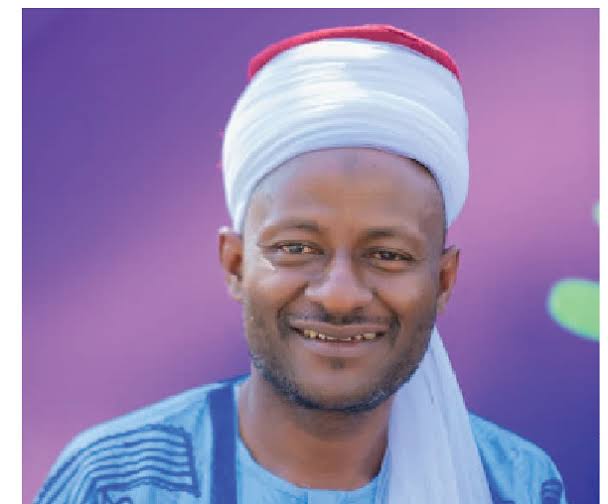
Following the murder of Sheikh Yahaya Masusuka, Islamic scholars and security experts in Kwara State, have called on federal government and security agencies to protect Islamic clerics across the country.
They also called for a transparent investigation into the killing of Masusuka and prosecution of the perpetrators.
Those who spoke with LEADERSHIP in Ilorin are the Chief Imam of Issa Elelu Memorial Mosque, Murtala Mohammed Road, Ilorin, Ustaz Abubakar Aliy-Kamal, a retired spokesperson of Kwara State Police Command, Ajayi Okasanmi and the executive director of PeacePro, AbdulRazaq Hamzat.
Aliy- Kamal described the tragic assassination of Masusuka and his associate, Adamu Abubakar, in Dutsin-Ma, Katsina State, on 26 October 2026 as a serious concern for the Muslim community and the entire nation.
In Islam, the protection of human life is a fundamental responsibility.
Allah says: “And do not kill the soul which Allah has forbidden, except by right,” (Qur’an 17:33).
“The Prophet Muhammad (peace and blessings be upon him) also highlighted the importance of protecting people’s lives, honour and property,” he said.
” In view of this tragic incident, I believe the following steps are urgently needed. Government must take the security of Islamic scholars seriously; a transparent investigation must be conducted;protect freedom of religious teachings and peaceful dialogue; Islamic organisations must establish a scholars’ safety network, while scholars must take reasonable security precautions,” Aliy- Kamal said.
He also emphasised the need for people to shun religious hatred, extremism and revenge,adding that:” The killing of a scholar must not become an excuse for reprisal attacks or accusations against innocent people. We must demand justice through lawful means and avoid spreading unverified allegations that could create further bloodshed.”
For his part, a retired senior police officer, Ajayi Okasanmi said:” The duty and responsibility of a government both at the centre and the states is protection and safety of her citizens regardless of tribal, religious and political affiliation.
” The assassination of Sheik Yahaya is a testimony of the inadequate security architecture in the country, and as such the security agencies must rise up and do the needful. Our religious leaders must be protected.”
Also, the executive director of Foundation for Peace Professionals (PeacePro), AbdulRazaq Hamza, called on political, religious and traditional leaders across Northern Nigeria to confront what it described as the dangerous normalisation of violence against religious scholars in the region.
He warned that repeated killings without conclusive investigations and visible accountability would deepen public fear and embolden radicals.
Hamzat urged the police and other relevant security agencies to pursue the Masussuka case with urgency and provide timely public updates without compromising the investigation.
He said the killing has revived painful memories of earlier attacks on prominent Islamic scholars, including Sheikh Ja’afar Mahmud Adam, who was shot dead while leading dawn prayers in Kano in April 2007, and Sheikh Muhammad Auwal Albani Zaria, who was killed in an attack in Zaria in February 2014 alongside members of his family.
He said the concerns surrounding attacks on religious figures reinforce the need for credible investigations, evidence based findings and accountability.
Hamzat, said condemnations by public officials and community leaders were important, but insufficient without concrete action to prevent further killings.
“Northern Nigeria cannot afford a situation in which the killing of a religious scholar generates public outrage for a few days, followed by silence, uncertainty and the gradual acceptance of violence as normal,” Hamzat said.
He said the central concern was not merely the loss of individual lives, but also the wider consequences when people who teach, preach, challenge prevailing views or advocate peaceful coexistence fear that disagreement could expose them to lethal violence.
“When people begin to believe that a person can be killed for what he teaches, what he believes or the position he takes in a religious debate, the damage goes beyond the victim and his family. It threatens freedom of conscience, peaceful religious engagement and the ability of communities to resolve disagreements without violence,” he said.
Hamzat called on governors, traditional rulers, Islamic scholars, Christian leaders, community organisations and civil society groups across the north to build a coordinated response that would address both violent incidents and the social conditions that allow violence to be justified, celebrated or tolerated.
According to Hamzat, such a response must go beyond issuing statements after killings, but, “should include the protection of threatened religious figures, credible public communication, early-warning mechanisms, cooperation with security agencies and sustained engagement to challenge the ideological justification of murder.”
“No individual or group should have the power to decide that another person has forfeited the right to live because of a theological disagreement, an unpopular interpretation or a commitment to peaceful coexistence,” Hamzat said.
We’ve got the edge. Get real-time reports, breaking scoops, and exclusive angles delivered straight to your phone. Don’t settle for stale news. Join LEADERSHIP NEWS on WhatsApp for 24/7 updates →
Join Our WhatsApp Channel