Nigeria’s mining sector is moving beyond licences as the Nigeria Mining Cadastre Office (MCO) unveiled Nigeria’s Social Contract for Mining, a new framework that places community trust, environmental responsibility and Environmental, Social and Governance (ESG) standards at the centre of future mining investments and operations.
The framework is designed to reposition the sector for sustainable growth by making host communities active partners in mineral development, strengthening transparency and aligning Nigeria’s mining industry with evolving global investment standards.
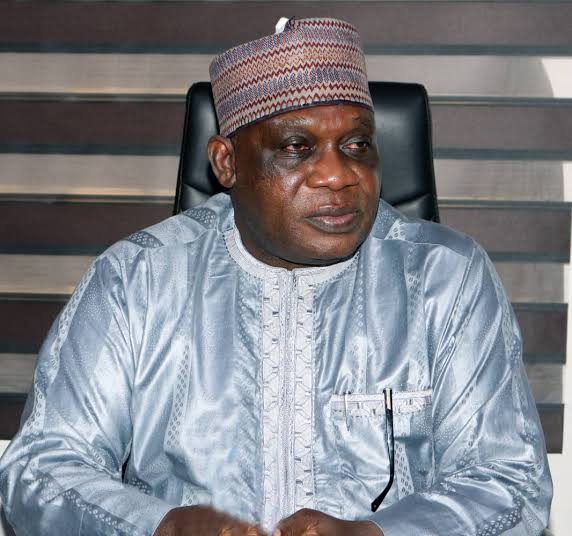
Director-General of the Mining Cadastre Office, Engr. Obadiah Simon Nkom, disclosed this through the Head of the Research, Development and Sustainability Unit, Muhammad Hannatu Indosire, during a masterclass on “Social Licence and ESG – The New Social Contract” in Abuja.
According to Nkom, the long-term success of mining projects will depend not only on obtaining government-issued mining titles but also on earning the trust, participation and enduring support of host communities.
He said while mining licences confer legal rights to extract mineral resources, they do not automatically guarantee public acceptance or the sustainability of mining operations.
“A mining title grants legal rights, but social licence grants legitimacy, while Environmental, Social and Governance (ESG) principles sustain both,” he said.
Nkom explained that international investors and global mineral markets are increasingly demanding proof of ethical sourcing, environmental compliance, respect for human rights and measurable socio-economic benefits for host communities before committing capital to mining projects.
He said Nigeria must align its mining industry with these changing expectations by ensuring that local communities become genuine stakeholders in mineral development rather than passive observers.
The MCO boss noted that the Nigerian Minerals and Mining Act, 2007 already provides the legal framework for responsible mining through provisions on Community Development Agreements, environmental stewardship, stakeholder participation and local governance.
He, however, argued that the industry’s biggest challenge is not the absence of legislation but the faithful implementation and modernisation of the existing legal framework.
Nkom advocated a new generation of Community Development Agreements that would move beyond compensation for land acquisition to guarantee employment opportunities, skills acquisition, scholarships, enterprise development, healthcare, education, infrastructure and equitable benefit sharing for host communities.
He also called for the deployment of digital mineral traceability systems capable of tracking minerals from extraction to export, saying the technology would improve transparency, strengthen revenue accountability, boost investor confidence and expand Nigeria’s access to premium international mineral markets.
According to him, future buyers will increasingly seek to know not only what mineral was mined but where it was mined, how it was extracted, who extracted it and what impact the project had on surrounding communities.
Nkom further stressed the importance of integrating traditional rulers, youth groups, women organisations, community associations and civil society organisations into mining governance, describing cultural legitimacy as an essential pillar of sustainable mining.
He warned that projects that ignore local institutions often encounter community resistance, prolonged disputes and declining investor confidence.
The Mining Cadastre Office also highlighted the role of civil society organisations in strengthening transparency, monitoring Community Development Agreements, promoting accountability and building public trust in the extractive sector.
According to Nkom, sustainable mining can only be achieved when government provides effective oversight, investors embrace responsible mining practices, communities actively participate in decision-making, traditional institutions safeguard cultural governance and civil society ensures accountability.
He maintained that Nigeria possesses the legal framework required to become a global leader in responsible mining, insisting that faithful implementation of the Nigerian Minerals and Mining Act would unlock greater investment while ensuring that the country’s mineral wealth translates into tangible development for host communities.
“The future of mining will not be secured by extraction alone. It will be secured by trust, traceability, benefit sharing, cultural legitimacy and the faithful implementation of the social contract between mineral wealth and the people to whom that wealth ultimately belongs,” he said.
We’ve got the edge. Get real-time reports, breaking scoops, and exclusive angles delivered straight to your phone. Don’t settle for stale news. Join LEADERSHIP NEWS on WhatsApp for 24/7 updates →
Join Our WhatsApp Channel