“The mark of a great communicator is not how often he is heard, but how deeply his message endures.”
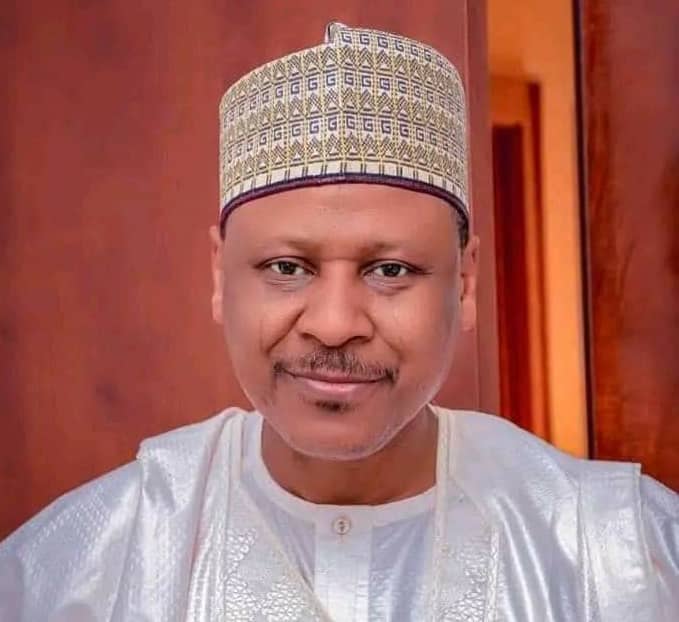
In an era where noise often passes for impact and visibility is mistaken for effectiveness, the Minister of Information and National Orientation, Alhaji Mohammed Idris, FNIPR, has charted a different course. He stands not as the loudest voice in the room, but as one of the most consequential, an architect of influence whose work is felt more than it is flaunted.
His journey from a seasoned PR practitioner, strategic communicator, and media entrepreneur to Nigeria’s chief image maker reflects a rare blend of strategic restraint, intellectual depth, and an instinctive understanding of communication as a tool of governance.
If history teaches anything, it is that the most effective communicators are not those who dominate the airwaves, but those who shape the conversation. In this regard, Mohammed Idris belongs to a distinguished lineage of media practitioners who transcended journalism to redefine public leadership.
With strong academic foundations from Usmanu Danfodiyo University, Sokoto, and Bayero University, Kano, and early experience in teaching at the tertiary level, Idris was positioned for multiple elite trajectories. He could have been an academic, a diplomat, a senior public servant, or even a military officer, given his strategic temperament. Those who have followed his journey often describe a rare versatility that combines the clarity of a teacher, the balance of a diplomat, the foresight of a strategist, and the discipline of a builder. Instead, he chose the uncertain path of enterprise and creation.
Over three decades ago, he left the stability of public employment to establish Bifocal Communications Limited, a bold step into the unpredictable terrain of private-sector communications. At the time, it was seen by many as risky, even unconventional, but it became the foundation of a career defined by foresight, structure, and execution.
Bifocal Communications quickly grew into a leading public relations and consultancy firm in northern Nigeria, serving institutions in both the public and private sectors. Through this platform, Idris developed a communication philosophy rooted in public value, institutional trust, and strategic influence.
This foundation naturally expanded into media entrepreneurship. He founded The Market Magazine, the first business and economy publication of its kind in northern Nigeria, and later Blueprint Newspaper, which under his leadership became a respected platform for investigative journalism and policy discourse.
Beyond building institutions, he has consistently invested in people, mentoring and developing a generation of media and communication professionals, many of whom now shape the industry in their own right. His leadership extends beyond structures to human capital, reflecting a belief that lasting influence lies not just in systems built, but in people empowered.
This same philosophy is evident in his foray into politics. Mohammed Idris approached the political arena not as a contest of personalities, but as a platform for ideas and public value. At a time when engagement was often defined by aggression, personal attacks, and divisive rhetoric, he chose an issue-based approach anchored on decorum, peace, unity, and development-focused dialogue.
Through consultations across Niger State, he engaged traditional rulers, political actors, youth groups, and community leaders, consistently projecting a message of hope rather than hostility. Even in moments of intense competition, he maintained a calm and strategic posture, choosing persuasion over provocation. His political journey, though tested by the realities of contests and outcomes, ultimately reinforced his identity as a statesman of restraint whose influence lies in civility and the strength of his ideas rather than confrontation.
His deep connection to the community is foundational. Across Niger State, he has remained actively engaged in service, earning recognition as the Kakaaki Nupe, meaning the Trumpet of the Nupe Kingdom, conferred by the Etsu Nupe, His Royal Highness, Alhaji Dr. Yahaya Abubakar CFR.
This trajectory is essential to understanding his current approach as minister. He does not see communication as a reaction, but as a structure. He does not pursue visibility for its own sake, but influence through systems, people, and consistency.
When he was appointed by President Bola Ahmed Tinubu, GCFR, as Minister of Information and National Orientation, he set a clear priority: restoring public trust in government communication. In his first public outing, he stated that he would not mislead Nigerians and promised to communicate facts with honesty and clarity. Through deliberate engagement, he has helped shift government messaging from distance to dialogue. Rather than speaking to the public, he has consistently chosen to speak with the public.
Central to this transformation has been his sustained partnership with the media ecosystem, including the Nigerian Institute of Public Relations, the Nigeria Union of Journalists, the Nigerian Guild of Editors, the Newspaper Proprietors Association of Nigeria, the Broadcasting Organisations of Nigeria, and the Guild of Corporate Online Publishers. His engagement is not symbolic but participatory, anchored in long-standing professional relationships and mutual respect.
He has ensured that the media remains an active participant in governance rather than a distant observer. This has strengthened transparency, improved accountability, preserved the independence of the fourth estate, and deepened constructive engagement with government.
Beyond external engagement, his leadership within the ministry has been defined by purpose and cohesion. He has fostered a strong sense of direction among heads of agencies and the broader national communication team, aligning their efforts toward a unified vision of public communication.
Through deliberate coordination and a culture of collaboration, he has strengthened institutional synergy, ensuring that messaging across platforms is not only consistent but strategically aligned with the Renewed Hope Agenda.
His communication philosophy is defined by restraint and strategy. In a diverse and often polarised country, he has consistently embraced inclusion over confrontation. In moments of national tension, including debates around reforms, he has relied on dialogue, convening stakeholders through structured engagements. The result has often been reframing rather than escalation, and listening rather than amplification.
This clarity of purpose was evident at the 2026 Voice of Nigeria Forum, where he emphasized that national cohesion requires collaboration between government, media, civil society, and international partners.
His five-point agenda for the Ministry reflects this philosophy: restoring trust in public communication, amplifying government policies, reorienting national values, modernising communication systems, and creating an enabling environment for media development.
To date, he has remained firmly aligned with the Renewed Hope Agenda of President Bola Ahmed Tinubu, ensuring consistency, discipline, and coherence in government messaging.
Beyond formal communication, his strength lies in quiet influence. He has mastered back-channel engagement, resolving tensions, correcting misinformation, and building consensus away from public attention. His handling of misinformation crises reflects balance, combining institutional credibility with restraint.
He does not trivialise national challenges, nor dramatises them. Instead, he situates them within broader national objectives, acknowledging difficulty while maintaining direction.
At 60, Mohammed Idris represents a model of leadership defined by depth rather than noise. He embodies the principle that influence is most powerful when it is structured, consistent, and quietly effective.
–Jibrin Baba Ndace is the Director General/CEO, Voice of Nigeria (VON).
We’ve got the edge. Get real-time reports, breaking scoops, and exclusive angles delivered straight to your phone. Don’t settle for stale news. Join LEADERSHIP NEWS on WhatsApp for 24/7 updates →
Join Our WhatsApp Channel