Over the weekend, international rating agency, S&P, released its ratings for the country, putting out a negative outlook for the country. This is following the downgrade of the country’s ratings by Moody’s the previous week.
Moody’s Investors Service had downgraded Nigeria’s sovereign credit rating further to ‘Caa1’ from ‘B3’ and changed the outlook to ‘Stable’. S&P in its ratings had affirmed Nigeria’s credit rating at “B-/B” but turned negative on its outlook, citing increasing risks to the country’s debt servicing capacity over the next one-to-two years.
These negative ratings, analysts say, would further dampen Nigeria’s ability to raise funds at the international market if efforts are not quickly put in place to address the challenges of the country’s rising debt.
This was evident in the way foreign investors dumped the country’s bonds in reaction to Moody’s ratings as well as in anticipation of the ratings release by S&P. Following the release of Moody’s downgrade, Nigeria’s sovereign-risk premium had jumped the most in three months as data by JPMorgan Chase & Co. showed that “the extra yield investors demand to own Nigeria’s dollar debt rather than treasuries widened 49 basis points to 780.” Bloomberg also reported that Nigeria’s 2032 bonds jumped 56 basis points to 12 per cent, also the most since October.
Moody’s rating of ‘Caa1’ are judged to be of poor standing and are subject to very high credit risk. Accordingly, the rating reflects a downgrade to speculative or non-investment grade.
This is just three months after the rating agency downgraded the country’s credit rating to ‘B3’ on 21 October 2022 primarily due to the significant deterioration in the country’s fiscal and external position, exerting increasing pressure on the sovereign credit profile despite a substantial increase in international crude oil prices in 2022.
The agency forecasts that Nigeria’s debt service payments will take up almost 50 per cent of the government’s revenue in the medium term, up from an estimated proportion of 35 per cent in 2022. It also expects the country’s aggregate debt-to-GDP ratio to rise to around 45 per cent in 2023. This compares with 34 per cent in 2022 and 19 per cent in 2019.
S&P in its ratings had noted that “Nigeria’s debt servicing capacity has weakened due to high fiscal deficits and increased external pressures,” S&P said in its statement revising outlook on the country from “stable”.
“Ultimately, the risk that a negative feedback loop sets in over the next couple of years between higher government borrowing needs and rising interest rates have intensified, exacerbating the policy trade-off between servicing debt and financing other key spending items”.
According to analysts at Cordros Research, the ‘Caa1’ rating is the lowest Nigeria has attained since 2006 (when rating agencies commenced coverage of Nigeria) and places the country under the same rating category as Gabon, Iraq, Pakistan, and Tunisia.
On the implication of these negative ratings for the country, the analysts said, while they expect investors to be cautious of Nigerian Eurobonds, pending the outcome of the February general election, “we think the recent rating downgrade will add a further layer of pressure on prices in the near term, more so that this is the first time since Nigeria has been downgraded to Caa1.
“Downgrading the country’s credit rating further into a speculative grade implies that investing in Nigeria’s sovereign bonds is considered riskier, and the probability of default has increased compared to when the rating was at ‘B3’. Accordingly, another likely implication of the downgrade is that Nigeria will find it difficult to access the foreign currency debt market in the short-to-medium term as investors price in the risk of default into the cost of debt amid the lingering increase in global interest rates.
“Based on the preceding, the government’s options for funding annual budgets will be limited, with most of the funding need to be channelled to the domestic debt market, as we have seen in the 2023 budget. Barring the continued utilisation of the CBN’s Ways & Means advances, we expect domestic fixed-income yields to rise significantly to drive participation by local market players.
Finally, the negative sentiments from the rating downgrade are also expected to further worsen the country’s already low foreign direct investments, implying a further decline in foreign capital inflows. Accordingly, we believe foreign investors will be on the lookout for the February general elections and policy direction afterwards.
Although, the analysts believe Nigeria is unlikely to default in the near term, they think continued expenditure expansion with little revenue growth will steepen the path towards a debt default.
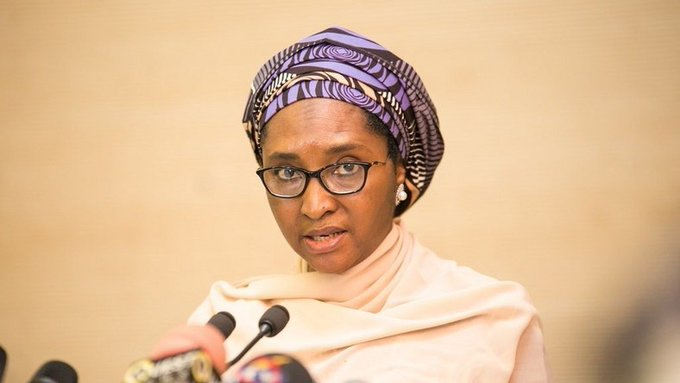
Meanwhile, Nigeria’s Finance minister, Zainab Ahmed had disagreed with what she called a ‘surprise’ downgrade of the country by Moody’s, insisting the government was already addressing the agency’s concerns.
We’ve got the edge. Get real-time reports, breaking scoops, and exclusive angles delivered straight to your phone. Don’t settle for stale news. Join LEADERSHIP NEWS on WhatsApp for 24/7 updates →
Join Our WhatsApp Channel