
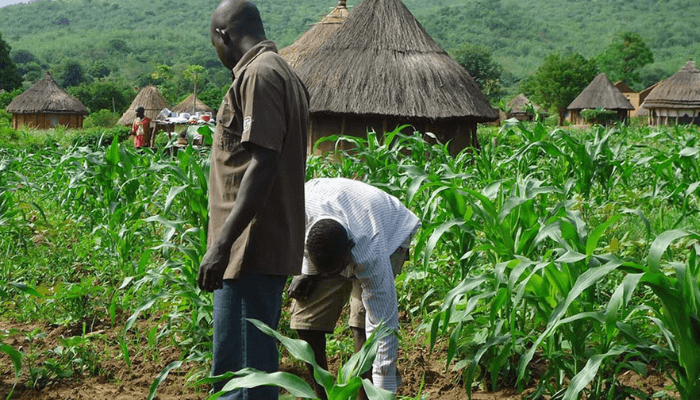
Maize is one of the most popular crops that thrive in the rainy season in Nigeria.
To this end, most farmers step up their agricultural activities because many local farmers lack the irritability for dry-season agriculture in many areas of the country. In addition to that, it is an all-year crop, but planting during the dry season is often expensive. So, it can be planted between April and June when the rainfall is high.
As a staple food, most homes depend on it in many regions. Depending on your choice, it can be eaten boiled or roasted. Sometimes, it can be produced as corn flour, cornmeal, or corn flour.
The majority of maize grown these days does not go to food production alone, when fully utilised, you can get livestock feed from it. Products like ethanol gas, batteries, plastics, crayons, whisky, glue, cough drops, common ingredients in hygiene products, and many medications and vitamins come from maize.
Authorities in the health sector believe maize is rich in fibre and plant compounds that may aid digestive and eye health.
Economic Viability
Experts believe that the use of maize around the world has prompted some interest in maize as an investable asset. If well managed and developed, like other grains such as Sorghum, Rice, Millet, Oats, cowpeas, and Wheat, the economic gains, such as foreign exchange, internal revenue generation, and the provision of sustainable employment and means of livelihood to farmers, will contribute to the nation’s GDP.
Maize needs just 90 to 120 days to reach harvest after planting. A seed can give you over 500 kernels in return, and its harvest success depends on the quality of care you give it.
Profitability
Like every other business, no amount is too small to start. In Lagos last year, between July and August, a bag of maize was sold for N20,000, while a tonne of maize was N360,000. And in Ogun State, a farmer said a bag costs around N20,000. So, imagine if you planted maize on large hectares of land.
Market Opportunities
There is a huge market for maize farming in the country, and the demand for it is high. The federal government banned maize importation into the country, which has led to 100 percent of the grains being sourced locally. Companies are now forced to source maize locally from farmers who can supply it, which in turn can impact the local economy positively by providing a sustainable means of livelihood for the farmers and other players across the value chain.
According to Kemi Owolabi, who sells maize around Oba-Akran, Ikeja, Lagos, ‘there is a profit in this business. If not, I will not be in business,’ she said. Owolabi buys her maize to sell from Ile-Epo market in Alimosho local government area, Ketu, or even Mowe in Ogun State.
“Maize is less expensive now, especially, during the rainy season. Today, I bought a bag for N9,000, and about 200 pieces of corn were stacked into the bag. And between March and April this year, I bought it for N15,000,” she noted.
We’ve got the edge. Get real-time reports, breaking scoops, and exclusive angles delivered straight to your phone. Don’t settle for stale news. Join LEADERSHIP NEWS on WhatsApp for 24/7 updates →
Join Our WhatsApp Channel