
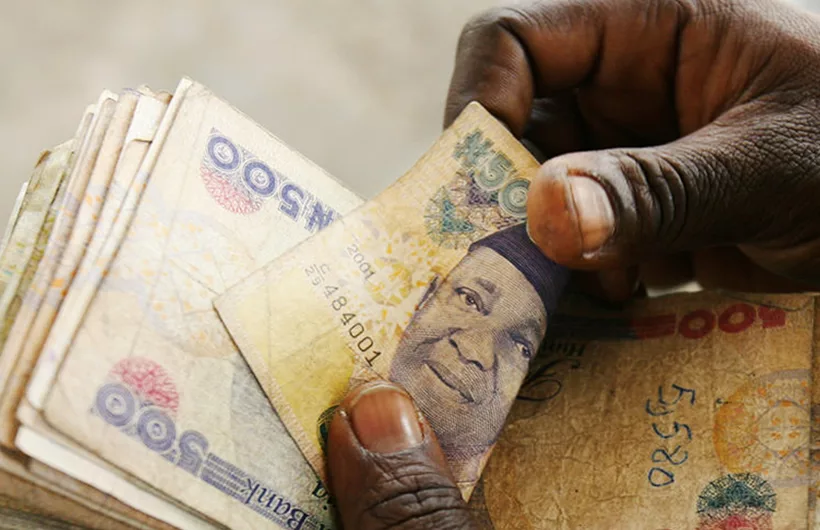
Nigeria’s money supply surged by more than N11 trillion in 2025, highlighting rising liquidity across the financial system despite sustained monetary tightening by the Central Bank of Nigeria (CBN), as broad money supply M3 climbed to N124.41 trillion in December 2025, driven by strong growth in quasi money, demand deposits and currency outside banks.
Data from the CBN’s money and credit statistics show that broad money supply M3 rose to N124.41 trillion in December 2025, up from N113.36 trillion recorded in December 2024. This represents an increase of about N11.05 trillion year on year, despite sustained monetary tightening and elevated interest rates.
The expansion was largely driven by growth in quasi-money. Quasi money, which comprises savings and time deposits, rose to N82.26 trillion in December 2025, compared with N74.52 trillion in December 2024. This reflects a year-on-year increase of about N7.74 trillion, confirming stronger deposit mobilisation by banks over the period.
Narrow money also recorded notable growth. Data show that narrow money rose to N42.14 trillion in December 2025 from N38.81 trillion in December 2024, an increase of about N3.33 trillion over the year.
Within narrow money, currency outside banks climbed to N5.41 trillion in December 2025, up from N5.13 trillion in December 2024. The increase of roughly N282.6 billion points to sustained cash use across the economy, particularly in household and informal-sector transactions.
Demand deposits showed even stronger momentum, rising to N36.73 trillion at the end of 2025, up from N33.69 trillion a year earlier. This translates to a year-on-year increase of about N3.04 trillion, reflecting higher transaction volumes, increased government spending and improved nominal economic activity.
The data also showed that net domestic credit expanded alongside the money supply, rising to N110.06 trillion in December 2025 from N105.16 trillion in December 2024.
Credit to the private sector, however, declined slightly to N75.83 trillion in December 2025 from N78.02 trillion recorded a year earlier, suggesting a shift in credit composition during the period.
Government credit increased significantly, rising to N34.22 trillion in December 2025 from N27.14 trillion in December 2024, reinforcing the role of public sector borrowing in driving liquidity growth.
Base money also expanded over the period. Base money stood at N37.77 trillion in December 2025, up from N32.67 trillion in December 2024, an increase of about N5.10 trillion year on year.
Currency in circulation rose to N5.73 trillion from N5.44 trillion, while bank reserves increased to N32.04 trillion from N27.23 trillion over the same period.
Meanwhile, liquidity in the money market persisted last week as rates continued to decline. System liquidity remained firmly in negative territory, closing at a N2.4 trillion deficit, deeper than the N1.6 trillion shortfall recorded in the previous week.
The sustained tightness reflected the absence of meaningful inflows and elevated standing deposit facility placements of about N2.5 trillion, which continued to sterilise available funds.
Intermittent liquidity injections from primary market repayments earlier in the week proved insufficient to offset persistent pressures.
Last week, CBN conducted a primary market auction of Treasury bills, offering N150 billion of 91-day bills, N200 billion of 182-day bills and N800 billion of 364-day instruments. Market demand was strongest at the long end, with subscriptions on the 364-day tenor surging to about N4.4 trillion, far above the offer size, while the 91-day and 182-day bills recorded subscriptions of N66.1 billion and N123.4 billion, respectively.
Total sales stood at N63.2 billion for the 91-day bills, N80.6 billion for the 182-day bills, and N808.8 billion for the 364-day bills, with stop rates of 15.8 per cent, 16.7 per cent, and 17.0 per cent, respectively.
Nevertheless, interbank funding rates moderated, with the OPR and OVN declining to 22.5 per cent and 22.8 per cent, respectively, from 26.1 per cent and 26.4 per cent previously. This divergence suggests reduced funding stress and improved liquidity distribution across the banking system, alongside softer demand for overnight funding.
We’ve got the edge. Get real-time reports, breaking scoops, and exclusive angles delivered straight to your phone. Don’t settle for stale news. Join LEADERSHIP NEWS on WhatsApp for 24/7 updates →
Join Our WhatsApp Channel