When the Monetary Policy Committee (MPC) of the Central Bank of Nigeria (CBN) concluded its 303rd meeting on November 25, 2025, the message it delivered was clear: Nigeria has entered a new phase of monetary consolidation, one that prioritises stability, disciplined liquidity management, and redirected credit to the real economy.
After months of steady disinflation, rising foreign reserves, stronger capital inflows and improved investor confidence, the Committee opted not for dramatic changes in headline rates but for a deeper structural adjustment — one that re-engineers how banks behave within the money market.
The Committee retained the Monetary Policy Rate (MPR) at 27 percent, a continuation of the tight monetary stance required to keep inflation on a downward path. But beyond this well-telegraphed decision was a far more consequential shift: the adjustment of the standing facility corridor around the MPR to +50/-450 basis points.
That single policy action, though technical, could shape the financial system more significantly than headline rate movements. It is a deliberate recalibration designed to create new incentives, eliminate old distortions and ensure that liquidity within the banking system flows to places where it can stimulate sustainable growth.
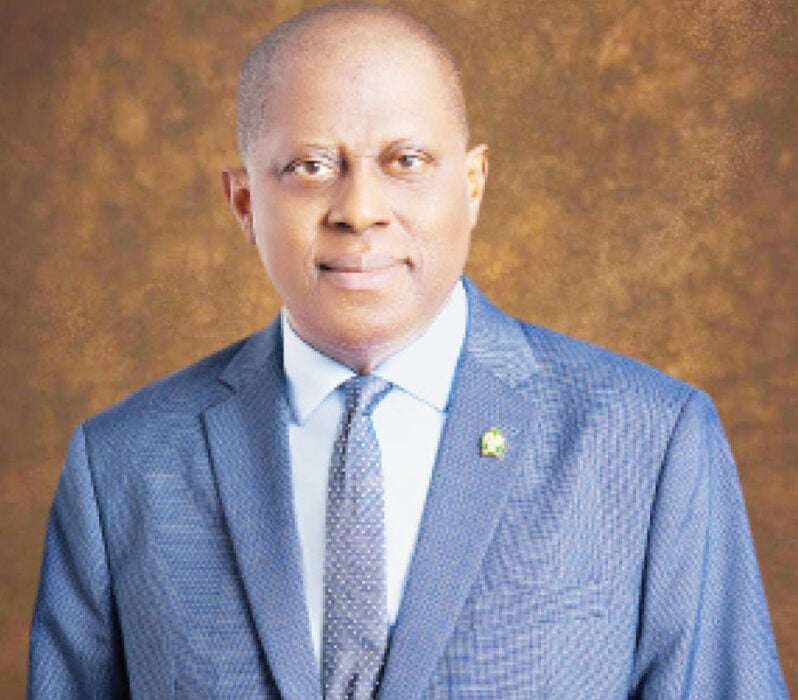
Governor Olayemi Cardoso, addressing journalists after the MPC briefing, placed the decision within a broader narrative of reforms that have stabilised FX markets, boosted reserves, strengthened investor confidence and restored discipline within the financial system. “We have moved from a situation where there is instability,” he said. “And after stability comes investment, and after investment comes growth. What we don’t need is anything that is short-term and cannot be sustained.”
Rewiring the incentives
By widening the corridor around the MPR, the CBN effectively makes it less attractive for banks to keep money idle in the Standing Deposit Facility—where they earn significantly lower returns than before. This change forces banks to rethink liquidity strategies that, for years, allowed them to make comfortable, risk-free income simply by placing surplus funds with the apex bank. With the new structure, such passive behaviour becomes unprofitable.
This is an intentional push toward greater engagement with the productive sectors. Banks must now allocate more liquidity to lending—for manufacturing, agriculture, services and SMEs—or invest in government securities, which also support broader economic stability.
The adjustment compels movement away from arbitrage-driven placement activity and toward risk-assessed, growth-enabling credit.
In essence, the CBN is restructuring the entire reward system of the banking industry. Liquidity must now work. It must circulate. It must contribute to productive output rather than sit in risk-free vaults earning interest. This is the heart of the MPC’s position: a banking system that functions as an engine of economic expansion, not merely a repository of idle funds.
One of the long-standing challenges in Nigeria’s monetary environment has been uneven liquidity circulation. Banks often prefer holding positions with the CBN instead of lending to the real economy or participating in the interbank market. The corridor adjustment directly addresses this inefficiency. With deposit placements now sharply de-incentivised, banks will find it more rewarding to trade liquidity among themselves or extend credit to clients.
This change deepens interbank activity, improves liquidity redistribution and ensures a more active money market. A vibrant interbank system not only supports credit allocation but also strengthens the transmission of monetary policy.
Interest rates across markets—whether treasury bills, commercial lending or overnight placements—begin to move more consistently with the MPR. A clearer alignment between policy intent and market response enhances the effectiveness of monetary management.
It also supports the CBN’s broader fight against inflation. By keeping short-term money market conditions tight and reducing idle liquidity, inflationary pressures are better controlled. Money supply becomes sufficiently contained without undermining legitimate credit expansion. The structure therefore achieves balance—firm in its anti-inflation stance but supportive of economic productivity.
For years, distortions existed between the rates banks earned from the CBN and the rates they charged costomers and businesses. These distortions sometimes encouraged arbitrage—profiting from risk-free placements rather than lending. The new corridor eliminates this incentive. Banks must now operate from a position of discipline, competitiveness and efficiency.
Borrowing from the CBN has also become more expensive, compelling banks to manage liquidity proactively and avoid unnecessary dependencies on the apex bank’s overnight window. The system rewards careful planning, prudent treasury operations and robust internal liquidity management. A more disciplined banking industry reduces systemic vulnerabilities and strengthens overall financial stability.
This aligns with the ongoing recapitalisation programme, which Cardoso described as essential for building buffers within the industry. “Sixteen banks have fully complied, while 27 others have raised capital,” he said. “From every indication, it is going in the right trajectory. We are building a financial industry that will be very fit for purpose.”
Together, recapitalisation and the new corridor structure reinforce each other: one strengthens balance sheets while the other enforces more responsible liquidity behaviour.
Supporting inflation moderation and Naira stability
The Committee’s decision came in the context of seven consecutive months of inflation deceleration. Headline inflation slowed to 16.05 percent in October, down from 18.02 percent in September. Food inflation fell sharply, supported by improved harvests, a stable exchange rate and sustained policy tightening. Core inflation also moderated.
The MPC is confident that previous policy actions are still transmitting through the economy. Thus, retaining the MPR while adjusting the corridor allows these effects to deepen. The structure ensures that money market rates remain tight enough to support the disinflation trend. At the same time, the stability of the naira—driven by reforms that have made the FX market open, transparent and market-driven—creates a more predictable environment for businesses and foreign investors.
Cardoso reinforced this during the briefing, noting that daily foreign exchange market turnover now averages $500 million, often without CBN intervention. The narrow 2 percent spread between official and BDC rates reflects a level of stability that had been elusive for years. “It is a more disciplined market,” he said. “There is policy consistency and no flip-flop. Everyone can see who is buying and selling.”
Such transparency boosts confidence, reduces speculation and supports the disinflation process.
The corridor adjustment is not only about monetary control; it is a growth-enabling intervention. By pushing banks toward lending, the MPC is positioning credit as the engine for Nigeria’s next phase of economic expansion. GDP growth already shows momentum, rising to 4.23 percent in Q2 2025, while the Purchasing Managers’ Index hit a five-year high of 56.4 points in November—an indication of increased business activity and improved sentiment.
As credit begins to circulate more effectively, productive enterprises gain the liquidity needed to expand operations, hire workers, and increase output. SMEs, often constrained by limited access to credit, stand to benefit significantly from a more active lending environment. Government securities also absorb excess liquidity, supporting fiscal operations and reducing pressure on the wider financial system.
This aligns with Governor Cardoso’s message that investor confidence increases when markets remain stable and well-regulated. The removal of Nigeria from the FATF grey list, upgrades by rating agencies and rising external reserves—all point to an economy moving in the right direction. “We are building reserves on a systemic basis,” he explained. “Portfolio investors find Nigeria attractive because we are operating a more open and transparent system.”
Cardoso also emphasised the essential collaboration between fiscal and monetary authorities—a partnership that has strengthened reforms across various sectors. The presence of the Permanent Secretary of the Ministry of Finance on the MPC reflects this high-level coordination. Joint committees work regularly to ensure policy alignment, particularly as Nigeria moves toward a full inflation-targeting framework.
“The most efficient way for us to achieve our objectives is joint collaboration,” he said. “It is that collaboration that has brought the stability we see today, and we are not about to lose it.”
The adjustment of the standing facility corridor marks a critical evolution in Nigeria’s monetary policy framework. It is a strategic decision that supports disinflation, reinforces stability, encourages productive lending and enriches the transmission of policy signals across the financial system.
By discouraging idle liquidity and incentivising banks to support the real economy, the MPC has positioned monetary policy as a catalyst for productivity, job creation and sustainable growth.
In a landscape where stability is finally taking root, the decision sends a message of confidence, discipline and strategic foresight—one that aligns Nigeria’s monetary system with global best practices and sets the foundation for a more resilient, growth-driven economy.
We’ve got the edge. Get real-time reports, breaking scoops, and exclusive angles delivered straight to your phone. Don’t settle for stale news. Join LEADERSHIP NEWS on WhatsApp for 24/7 updates →
Join Our WhatsApp Channel