
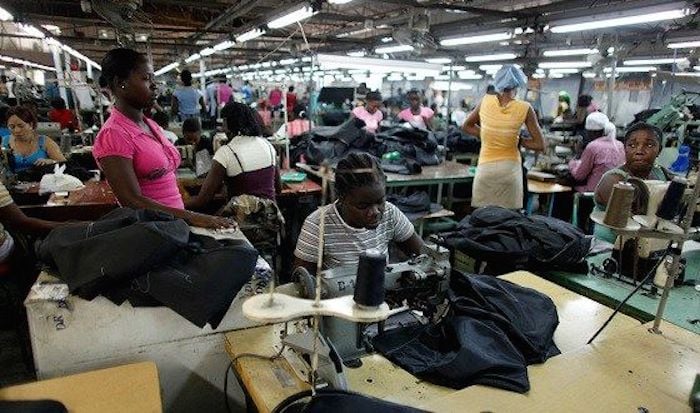
Nigeria’s Micro, Small and Medium Enterprises (MSMEs), which account for about 90 per cent of the country’s workforce, are facing mounting pressure from rising operating costs, expensive credit, multiple taxes and regulatory charges, forcing many businesses into survival mode rather than expansion.
Business leaders have warned that, despite relative stability in the foreign exchange market, government policies and escalating production costs have continued to weaken the sector, with SMEs receiving less than one per cent of total banking credit despite an estimated N48 trillion financing gap.
Speaking on the state of the sector, the national president of the Association of Small Business Owners of Nigeria (ASBON), Dr. Femi Egbesola, said the cumulative impact of government policies over the past six months had created one of the toughest operating environments for small businesses in recent years.
“The last six months have been very challenging for SMEs. Government policies have made it almost impossible for many businesses to scale. Most MSMEs are operating in survival mode because of the cumulative impact of multiple policy-related challenges,” he said.
According to Egbesola, while exchange rate stability has brought some relief, many businesses still struggle to access foreign exchange for imports and raw materials.
He identified energy as one of the biggest cost drivers, noting that many SMEs now spend more than 40 per cent of their profits on electricity generation due to Nigeria’s unreliable power supply.
He said persistent increases in fuel prices, rising electricity tariffs and the soaring cost of cooking gas have significantly raised production costs, particularly for nano and micro enterprises.
Access to finance, he added, has become increasingly difficult, with commercial lending rates ranging between 32 and 35 per cent, making bank loans commercially unviable for most businesses.
Egbesola also blamed policy inconsistency for discouraging investment, saying frequent policy changes have weakened investor confidence and made long-term business planning difficult.
He argued that while the federal government’s tax reforms were expected to ease the burden on businesses, the benefits have been largely offset by higher customs duties, increased regulatory fees, stamp duties, Corporate Affairs Commission charges and other government levies.
He further lamented the burden of multiple taxation and illegal collections across the country, noting that trucks transporting goods from Lagos to Kano could encounter more than 40 illegal checkpoints, where operators are compelled to make unofficial payments in addition to various federal, state and local government charges.
According to him, the cumulative effect of these levies continues to increase production and distribution costs, further eroding business profitability.
Egbesola also identified rising commercial rents as another major threat to SME survival, saying many businesses have shut down because they can no longer afford escalating rents, agency fees and legal charges associated with leasing business premises.
He called for comprehensive reforms in the real estate sector, stronger mortgage financing systems and stricter regulation of rental practices to reduce the financial burden on businesses.
The ASBON president urged the government to prioritise affordable electricity, improve access to foreign exchange, simplify customs procedures and establish permanent intervention funds that would provide SMEs with single-digit interest loans.
“If Nigeria intends to build a stronger economy, government must deliberately support nano and micro enterprises because they are the foundation from which future small, medium and large businesses will emerge,” he said.
On his part, the director and chief executive officer of the Centre for the Promotion of Private Enterprise (CPPE), Dr. Muda Yusuf, described the outlook for Nigerian SMEs as highly fragile, citing severe credit constraints, high inflation, escalating electricity tariffs, logistics costs and multiple government revenue collection mechanisms.
According to Yusuf, despite ongoing banking sector recapitalisation, lending to SMEs remains extremely weak, with the sector receiving less than one per cent of total banking credit while facing an estimated N48 trillion financing gap.
He warned that soaring production costs and electricity tariffs were squeezing profit margins and pushing many businesses into survival mode.
Yusuf also estimated that MSMEs lose as much as N5 trillion annually to internal occupational fraud and employee-related corruption, significantly weakening cash flow and limiting business expansion.
While acknowledging that the recently introduced four per cent Development Levy had simplified part of the tax system, he warned that aggressive revenue collection by multiple government agencies continues to drain the working capital of small businesses.
He added that although exchange rate stability had improved planning certainty, many SMEs remain vulnerable because of high raw material costs and stiff competition from cheaper imported products.
The CPPE boss stressed that unless government addresses financing constraints, infrastructure deficits and excessive regulatory charges, Nigeria’s SME sector would remain under severe pressure despite broader macroeconomic reforms.
We’ve got the edge. Get real-time reports, breaking scoops, and exclusive angles delivered straight to your phone. Don’t settle for stale news. Join LEADERSHIP NEWS on WhatsApp for 24/7 updates →
Join Our WhatsApp Channel