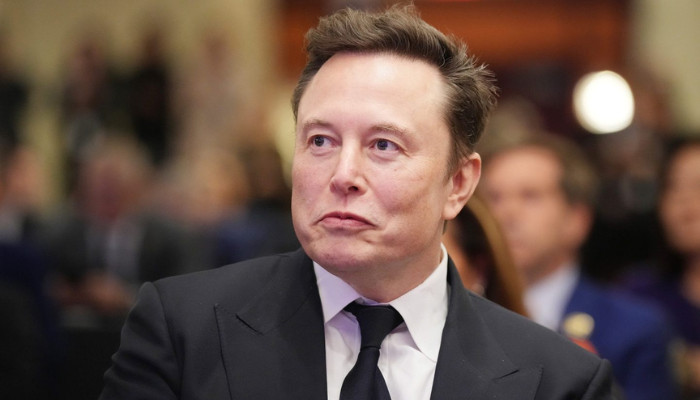
Multi-billionaire technology entrepreneur Elon Musk has told a jury in California that stock market investors “read too much” into his social media posts, as he defends himself against claims that he manipulated the market ahead of his 2022 purchase of Twitter.
Testifying on Wednesday in a federal court in San Francisco, Musk denied that his posts were intended to influence the price of the social media platform he later acquired.
The lawsuit, the first over Musk’s 2022 Twitter purchase to proceed to trial, centres on allegations by investors that he issued misleading public statements in the run-up to the $44 billion takeover deal.
Musk told the jury that posts he wrote after striking a deal to buy Twitter were “extremely literal” and not aimed at lowering the amount he would eventually pay.
“I was simply speaking my mind,” Musk said when asked whether he had considered the potential market impact of his posts, including one in which he declared the takeover plans were on hold.
“People tend to read too much into things that I do,” he added.
At other points during the proceedings, Musk maintained that his public statements mirror his private thoughts.
“What I think privately is what I say publicly, there’s no difference,” he said.
The trial, which began on Monday and is expected to last three weeks, involves a class of investors seeking unspecified monetary damages. They argue they acted on Musk’s allegedly misleading statements, including when he claimed in July 2022 that he was “terminating” the acquisition deal.
Brian Belgrave, who is leading the class action, told the court he sold thousands of Twitter shares in July 2022 after concluding from Musk’s public comments that the deal would not proceed.
Belgrave said he sold the shares at a loss and significantly below the $54.20 per share Musk eventually paid after the company sued him to complete the acquisition.
“I got screwed,” Belgrave said. “I got cheated.”
In a moment of candour during testimony, Musk remarked: “If this was a trial on whether I’ve made stupid tweets, I’d say I’m guilty.”
When asked whether he had told Twitter’s board he would “hunt them down for the rest of time,” Musk did not deny making the statement.
“I was pretty upset with the Twitter board because I thought they had engaged in fraud,” he said.
Aaron Arnzen, lead attorney for the plaintiffs, argued that Musk strategically pressured Twitter into accepting his takeover bid and later sought concessions to complete the deal.
He likened the approach to a boxing tactic known as “rope-a-dope,” where one fighter allows the other to tire out before striking.
Asked whether he had deployed such a method during takeover negotiations, Musk conceded that he “may have.”
Arnzen further alleged that Musk’s public comments were not intended to provide transparency to shareholders but were instead designed for personal advantage.
During much of Wednesday’s questioning, Musk limited his responses to “yes,” “no,” or “I don’t recall.” As proceedings continued, he admitted he was attempting to avoid direct answers, accusing Arnzen of “trying to mislead the jury.”
Judge Charles Breyer, who is presiding over the case, briefly paused proceedings before allowing questioning to continue.
Musk’s social media activity has previously drawn legal scrutiny. In earlier cases, he successfully defended against claims that he misled investors in Tesla, Inc. and committed defamation through online posts.
Following the takeover, Musk renamed Twitter to X and implemented sweeping changes, including significant staff cuts, the introduction of paid account verification, and adjustments to content moderation policies.
The outcome of the ongoing trial could have implications for how corporate leaders use social media and the extent to which their online statements can be deemed market-moving communications.
We’ve got the edge. Get real-time reports, breaking scoops, and exclusive angles delivered straight to your phone. Don’t settle for stale news. Join LEADERSHIP NEWS on WhatsApp for 24/7 updates →
Join Our WhatsApp Channel