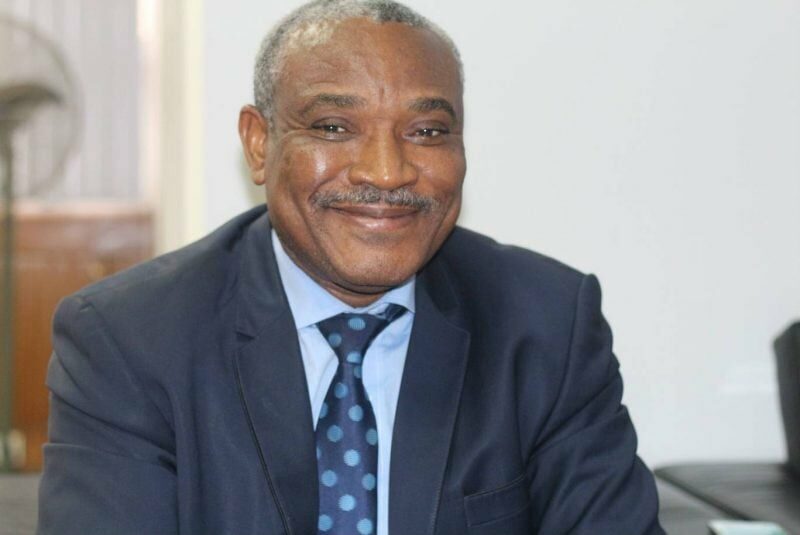
You served in the Buhari administration. Is it fair that even some APC members have blamed some of the challenges inherited by Tinubu on the failure of his immediate predecessor?
The APC stands today as the largest political party in Nigeria, with a conservative membership strength of over 15 million. It represents a true reflection of the nation’s diverse and complex character—a mosaic of people, interests, and ideologies. In many ways, the APC is a microcosm of Nigeria itself, embodying a wide range of centripetal, configurational, and fissiparous tendencies that often contend and compete within the party.
In such a vibrant mix of voices and perspectives, it is only natural to encounter a multiplicity — even a cacophony — of opinions on various issues. There is absolutely nothing wrong with this. In fact, such energy and diversity of thought are essential for a healthy democracy. They provide an avenue for members to express their views freely and ventilate their feelings, creating the vibrancy that, if properly harnessed, can contribute significantly to national growth and development.
It is therefore important to note that when some APC members express differing opinions, it should not be misconstrued as a condemnation of the previous APC-led Federal Government. Nor does it imply that the previous administration failed to perform. On the contrary, the former government performed creditably well within the limits of its capacity, given the monumental developmental challenges it inherited. For eight years, it worked diligently to address many of these issues while laying the groundwork for further progress.
Government, by its very nature, is a continuum. No single administration can completely solve all the problems it inherits. Each government addresses certain challenges and leaves others for the succeeding administration to tackle. Often, new administrations build upon the foundations laid by their predecessors to advance their own developmental agenda.
A clear example of this continuity is the withdrawal of fuel subsidies and the floating of the naira — policies that had long been on the national agenda. The previous government was cautious in implementing them due to potential public backlash. However, the current administration has taken bold and decisive steps to execute these policies from its first days in office. This is how governance evolves — through continuity, courage, and the willingness to build upon the efforts of those who came before.
The recent presidential pardon brought up a lot of issues about the fight against corruption. What’s your take on it?
All the major religions of the world, each with hundreds of millions of adherents in our country, emphasize contrition, penitence, forgiveness of sins, compassion, and mercy. Therefore, there is absolutely nothing wrong with the President exercising the discretionary powers vested in him under the prerogative of mercy to pardon individuals who have been convicted for one reason or another.
The principle of the prerogative of mercy does not categorize convicts based on the nature of the offenses that led to their conviction. There is no provision excluding those found guilty of corruption from benefiting from a presidential pardon. Every nation in the world entrusts such discretionary powers to its Presidents or Prime Ministers, who routinely exercise them to forgive and cleanse the transgressions of those duly convicted by competent courts and sentenced to imprisonment.
Only last week, President Donald Trump granted a pardon to Changpeng Zhao, the cryptocurrency billionaire convicted and sentenced to four months in prison for money laundering offenses. I firmly believe that even public officials who have stolen extensively and are subsequently convicted may be more inclined to cooperate with law enforcement agencies and the judiciary if they know they could be eligible for a pardon after conviction and sentencing.
Consequently, the instrumentality of the prerogative of mercy can be strategically employed as a tool in the fight against corruption. When individuals who have unlawfully enriched themselves understand that cooperating with the authorities upon apprehension could earn them a pardon, they may be more willing to surrender the assets and resources they have taken from the system.
Do you really think this administration is fighting corruption, considering the pace of prosecution of pending cases involving former political office holders as well as some persons who recently left elective public office and are yet to be questioned by the anti-graft agencies for alleged financial crimes?
I do not doubt that the administration is committed to fighting corruption. Evidence of this commitment is clear: the Financial Action Task Force (FATF) recently removed Nigeria from its list of jurisdictions under increased monitoring, also known as the grey list. This decision was taken at the FATF October 2025 Plenary in Paris, following the country’s successful implementation of a 19-point action plan designed to strengthen its Anti-Money Laundering and Countering the Financing of Terrorism (AML/CFT) framework.
This development is overwhelming proof that the government is taking decisive steps to combat corruption and money laundering—crimes that often serve as gateways to broader financial crimes. In the past, Nigeria had gained notoriety as a regional hub for money laundering, with illicit transactions estimated at over $500 million.
Among the reforms recognized by the FATF are the enactment and enforcement of the Money Laundering (Prevention and Prohibition) Act, 2022, and the Terrorism (Prevention and Prohibition) Act, 2022; the operationalisation of the Beneficial Ownership Register; and enhanced supervision of designated non-financial businesses and professions.
Moreover, the Economic and Financial Crimes Commission (EFCC) recently reported remarkable achievements under its current leadership, including the recovery of N566 billion, $411 million, and 1,502 assets over the past two years. Between October 2023 and September 2025, the Commission received over 19,000 petitions, conducted 29,240 investigations, filed 10,525 cases in court, and secured 7,503 convictions.
It must be acknowledged, however, that the prosecution of criminal cases remains a slow and complex process. Responsibility for these delays should not rest solely with the government; the tactics and attitudes of defendants also contribute significantly. The challenge now is to focus on solutions—designing strategies to address the bottlenecks that slow down the resolution of corruption cases and implementing fundamental reforms to strengthen the justice system.
This is the path forward: a determined, structured, and reform-driven approach to ensure that the fight against corruption in Nigeria is not only sustained but also truly effective.
Drawing from your experience as Chairman of the Special Presidential Investigative Panel on Recovery of Public Property (SPIP), how feasible is it to curb corruption in Nigeria?
Corruption is a basic human instinct—found everywhere and as old as mankind itself. Even in the Bible, the story of Sodom and Gomorrah illustrates the pervasiveness of corruption. In that city, corruption had become so endemic, pathological, and extreme that God destroyed it, cleansing it like an Augean stable.
In Nigeria, the fight against corruption cannot succeed without a change in cultural attitudes. Certain practices, deeply embedded across the country’s diverse communities, reinforce corrupt behavior. For instance, the traditional presentation of kolanuts—a gesture meant to show goodwill—is often used as a euphemism for giving or receiving bribes. Similarly, the lavish celebrations held for individuals appointed to public office foster expectations of patronage. People throng to inaugurations, enjoying sumptuous entertainment, anticipating favours once the official assumes office.
There is also a widespread expectation that public officials provide money or gifts for healthcare, school fees, marriages, and festival celebrations. When officials fail to meet these demands, they are derided as selfish or uncaring. This societal pressure often encourages public officers to dip into public funds to satisfy the crowd, lest they be stigmatized as wicked or ungenerous.
Politicians face similar pressures during campaigns, spending vast sums to secure support. Once in office, the expectation of handouts continues, perpetuating the cycle of corruption. Unless Nigerians are reoriented to value integrity, transparency, honesty, and hard work over ill-gotten wealth, anti-corruption measures will be undermined. Laws, institutions, arrests, and prison sentences alone cannot restore the moral fabric of society.
Even in my own experience, I have witnessed the consequences of this mindset. As Chairman of the Special Presidential Investigation Panel for Recovery of Public Property, I was criticized by relatives and friends for not enriching them, as they mistakenly believed it was my duty to do so. When I later sought a senatorial ticket in 2022, some people opposed my candidacy, claiming I lacked the personal wealth to be supported.
Nobody celebrated the work I had done to recover stolen assets for the nation.
True progress requires a shift in values. Nigerians must reject the culture of celebrating ill-gotten wealth and demanding favors from public officialsls. We must honor integrity over money, transparency over patronage, and honesty over personal gain.
Only then will corruption be curbed. Otherwise, no amount of investigations, arrests, or prosecutions will succeed.
Even during the early years of President Muhammadu Buhari’s administration, when the anti-corruption drive was most vigorous, some argued that it was harming the economy and increasing poverty. That mindset underscores how deeply entrenched certain attitudes toward corruption remain—and how urgent it is to change them.
Do you regret working in the Buhari administration considering the hand you were dealt?
My greatest regret in life was accepting the role of Anti-Corruption Czar in Nigeria. I believed, with all sincerity, that the government was genuinely committed to tackling corruption and graft. I threw myself into the fight, taking bold steps and challenging powerful interests—even those of the very people who appointed me, assuring me that my work was their last-ditch effort to turn things around.
Yet, they turned against me. I was left to face the lion’s den alone, surrounded by the promoters and patrons of grand corruption and their cohorts. I was hounded, victimized, scandalized, persecuted, and witch-hunted—for nothing. I never added a single asset to what I declared upon entering government, yet I was vilified rather than commended.
To this day, I continue to endure taunts, insults, vituperation, abuses, and smear campaigns from detractors—all stemming from my tenure as Chairman of the Panel. I deeply regret having accepted that position, believing it was supposed to be the final, decisive effort in the fight against corruption in this country.
It was a battle I fought with integrity, only to realize that good intentions alone are not enough in a system where vested interests are deeply entrenched. My experience serves as a cautionary tale: fighting corruption requires not just courage, but a commitment from all corners of governance and society to truly uphold the values of honesty and accountability.
So much has been said about the state of the economy and infrastructural development, considering the removal of fuel subsidy and increased borrowings by this administration. Do you think Nigeria, under the Tinubu-led administration, is making the kind of progress this administration says it is making?
Nigeria has made remarkable progress in recent years, with substantial investments directed toward addressing the country’s long-standing infrastructural deficit. There is no doubt that these efforts signify a renewed commitment to national development and economic transformation.
Recently, the Nigerian Ports Authority announced an unprecedented investment of one billion dollars for the development of new ports in Tin Can Island, Lagos, Port Harcourt, Warri, and Calabar. This marks a historic milestone, as there has been no major investment in port infrastructure for over four decades. The modernization of these ports is crucial to strengthening Nigeria’s participation in international trade, particularly in the export and import of goods and services.
Significant attention is also being given to the road transport sector. The ongoing construction of the Lagos–Calabar Coastal Highway, which will link states across the South-West, South-South, and South-East geopolitical zones, is expected to boost trade, enhance regional connectivity, and promote social and economic integration. This ambitious project will undoubtedly catalyze growth and development across these regions.
In addition, the Lagos–Badagry–Sokoto Highway will connect the South-West, North-Central, and North-West geopolitical zones, further strengthening trade relations and fostering unity among the diverse peoples of these areas.
Equally noteworthy is the ongoing redesigning and remodeling of the Murtala Muhammed International Airport in Lagos. This initiative aims to upgrade the facility to international standards, enabling it to effectively compete with major airports around the world and enhance Nigeria’s global aviation profile.
Together, these projects represent a bold and strategic investment in Nigeria’s future — one that holds the promise of greater connectivity, economic expansion, and national cohesion.
Do the mass defections into the APC bother you, especially as the debate about whether we might drift into a one-party state reverberates?
It doesn’t bother me at all. Why should it, when people are exercising their fundamental rights to freedom of movement and association? Stopping someone from moving freely infringes on their rights.
Similarly, preventing someone from joining another political platform is unlawful and violates their right to association, one of the hallmarks of a democratic society anchored on the rule of law.
The defection of politicians from other parties to the APC is both natural and democratic. It is part of the evolutionary process of Nigeria’s democracy—a country made up of living, dynamic people.
Throughout history, humans have migrated in search of better opportunities, escaping famine, natural disasters, wars, persecution, and other challenges. Even the Holy Bible recounts how God told Abraham to move to a new place that would bring prosperity and opportunities.
In the same vein, politicians today move from one party to another when their platforms are no longer conducive to pursuing their aspirations. The PDP, for instance, is currently imploding, plagued by corruption and internal uncertainty. Multiple national secretaries and chairmen are engaged in bitter factional battles, creating confusion over who has the authority to oversee candidate nominations for the 2027 elections. This internal chaos inevitably drives politicians to seek more stable platforms.
Other parties, such as the NNPP, Labour Party, and even the much-vaunted ADC, also suffer from fragmentation and litigation due to factionalism. Consequently, it is logical for politicians to migrate to parties that are organized, orderly, and have a realistic chance of winning elections.
Defection is not a new phenomenon in Nigeria. In 1953, parliamentarians elected on the platform of the now-defunct NCNC defected en masse in the Western Nigeria House of Assembly to block their leader, Dr. Nnamdi Azikiwe, from becoming Leader of Government Business in the Western Region. This action shifted power to the Action Group. This historical example, over 70 years old, demonstrates how political behavior and migration patterns are deeply rooted in our culture and continue to shape outcomes today.
Defection is evident in the political careers of prominent leaders. Atiku Abubakar migrated from PDP to Action Congress, then back to PDP, then to APC, back again to PDP, and finally to ADC between 2007 and 2025. Peter Obi moved from PDP to APGA, back to PDP, then to Labour Party, and from Labour Party to ADC.
The ADC has even celebrated when politicians migrated from APC to their platform without raising alarms, yet now they protest when the reverse occurs. Democracy was not threatened then, and Nigeria was not sliding into a one-party dictatorship. Our constitution forbids the imposition of a one-party system, and it has not been amended to introduce such a system. The alarm being raised is therefore baseless, a distraction designed to tarnish the APC and its government.
Defection is a natural, democratic, and historical aspect of Nigeria’s political landscape. Rather than seeing it as a threat, it should be understood as part of the ongoing evolution of our democracy—where citizens and politicians alike exercise their rights to choose platforms that best align with their aspirations and values.
Your impression of the opposition platform is that they are not ready for the task. What would you have expected of them that they are not doing?
My impression of the opposition as presently constituted is that it is unserious, pathetic, disorderly, dismal, disoriented, and solely power-hungry—not a genuine alternative to the present government. We were told that the opposition was working toward forming a coalition of different political parties, coalescing into a merger. After much hype, fanfare, postulation, and noise, we were told that the SDP would be adopted as the coalition platform.
Before the deafening noise died down, they floated a political association known as ADA, which they claimed would serve as the coalition’s special purpose vehicle. But before Nigerians could even catch up, we were told that ADA had been stepped down in favor of ADC. ADC is an old party—older than the APC—but it has never gained traction or momentum among the Nigerian people.
The opposition moved en masse to hijack its structure and supplant its leadership through undemocratic methods. Those who were originally in the ADC rebelled and challenged the hijack in court. As a result, the ADC is presently embroiled in messy litigation that may linger until 2027 and could legally impede it from filing candidates for the election.
One would have expected a serious and focused opposition to set aside their differing ideologies, interests, and ambitions to come together and koolforge a political party that could setime Alas, everyone is pursuing ambitions that are at cross purposes and singing with disconnected voices. All the opposition leaders harbor vaulting presidential ambitions, which further demonstrates their selfishness and lack of purpose.
Meanwhile, the massive defection from the APC that the ADC had predicted has not materialized. Instead, we are witnessing migration into the APC more than ever before.
Do you think they have the potential to repeat the 2015 feat which saw an incumbent defeated?
The dynamics of 2015 will not be the same as those that will shape and influence the dynamics of 2027. From 2015 to 2027 is over a decade—precisely twelve years—which is a long timeeime in the life of a country that is daily experiencing social, economic, and political changes rapidly reshaping society. Those who were six years old in 2015 will be 18 years old by 2027, making them eligible to vote. They are unlikely to be influenced by the factors that shaped voting behavior in 2015.
In 2015, the APC had two charismatic and influential personalities with massive followership across regions of the country with strong voting strength—the North West and the South West. It had President Muhammadu Buhari and President Bola Ahmed Tinubu, both commanding tremendous loyalty among their supporters. The opposition today lacks such figures with comparable influence, mass appeal, and regional strength.
I therefore do not believe that the dynamics of 2027 will favour or sway toward the opposition.
The opposition believes that your party, APC, has lost its popularity among Nigerians hence its resort, according to the opposition, to blackmailing and coercing opposition governors to join its ranks. What’s your take on this assertion?
What parameter has the opposition used to evaluate that the APC is no longer popular with Nigerians? In the absence of any researched analysis or verifiable data, I would disagree with the perception that the APC is no longer popular. Which segment of the population is the APC supposedly unpopular with? Is it among the urban elites? The rural dwellers? The upper class, the middle class, or the lower class — the ordinary people?
If the opposition cannot provide clear answers to these questions, then I cannot agree with its perspective that the APC has lost popularity. Relying on such unverifiable premises only shows that the opposition is merely gambling and not serious.
We’ve got the edge. Get real-time reports, breaking scoops, and exclusive angles delivered straight to your phone. Don’t settle for stale news. Join LEADERSHIP NEWS on WhatsApp for 24/7 updates →
Join Our WhatsApp Channel