A professor of military history, Ubong Essien Umoh, of the Department of History and International Studies, Faculty of Arts, University of Uyo (UNIUYO), has traced the evolution of small wars and the proliferation of small arms and light weapons in the Niger Delta region, noting that such skirmishes had origin in the Trans Atlantic Slave Trade of several decades.
Umoh said the protracted conflicts in the region are deeply rooted in historical patterns, warning that “the region’s small wars remain a replay of past struggles shaped more by continuity than change.”
The UNIUYO lecturer gave the insight while delivering the 131st in the series of inaugural lectures on military history at the institution’s 1,000-capacity TETfund Auditorium, Main Campus, Nwaniba, Uyo, the state capital, which was entitled; “Cause, Course and Consequences of Change and Continuity in the Small Wars of Nigeria’s Niger – Delta.”
The scholar examined the topic tracing the origins of unrest from the slave trade era to the modern crude oil economy.
The lecture highlighted how the Niger Delta has evolved through distinct historical phases from the Slave Coast to the Oil Rivers, and later the crude oil era, but yet continues to experience recurring forms of conflict driven by economic interests, external interference, and local resistance.
Prof. Umoh, who is currently the commissioner for education in the state, recalled that “early confrontations in the region were fueled by rivalries among indigenous trading houses and resistance against European imperial expansion, particularly under the Royal Niger Company.”
According to him, “These tensions led to a series of small wars, including expeditions, raids, and insurgencies that defined the 19th and early 20th centuries.”
He noted that despite the transition from slave trade to palm produce and eventually oil and gas, the underlying grievances, perceived exploitation, marginslistion, and control of resources have remained largely unchanged.
“In the modern era, these issues have manifested in militancy, insurgency, and organised criminal networks operating within the creeks and waterways of the Niger Delta,” he noted.
The lecture further identified the emergence of armed groups and militia organisations, as well as the proliferation of small arms, as key features of contemporary conflicts.
“These groups, often fragmented and rivalrous, have sustained an illicit economy through activities such as oil theft, kidnapping, and piracy,” he added, pointing out that significant dimension of the conflicts is the role of geography.
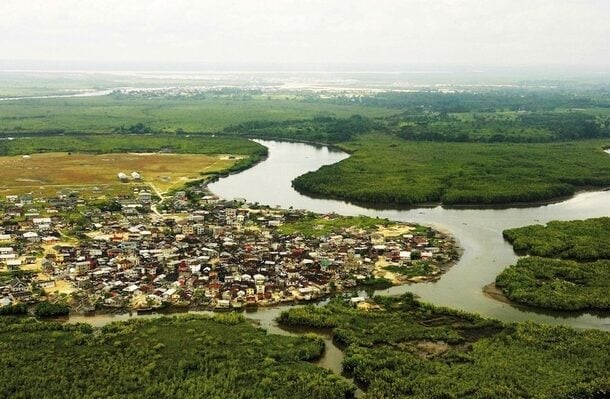
“The intricate network of rivers and creeks in the Niger Delta has historically served as operational highways, complicating military interventions and enabling guerrilla-style warfare across different eras,” he stressed.
He also pointed to the evolution of military responses, from colonial gunboat diplomacy to modern counterinsurgency operations involving air power and joint task forces.
However, he argued that strategies such as targeting leadership or deploying overwhelming force have not succeeded in ending the cycle of violence.
The scholar emphasized that the persistence of conflict in the region reflects a broader historical pattern, where “change births continuity, and continuity shapes change.”
He maintained that the Niger Delta remains a critical case study in military history, demonstrating how unresolved structural issues can perpetuate cycles of unrest across generations.
“The story of the Niger Delta underscores a timeless lesson: history does not end but continually re-emerges, with the present serving as a reenactment of the past,” he stressed.
We’ve got the edge. Get real-time reports, breaking scoops, and exclusive angles delivered straight to your phone. Don’t settle for stale news. Join LEADERSHIP NEWS on WhatsApp for 24/7 updates →
Join Our WhatsApp Channel