

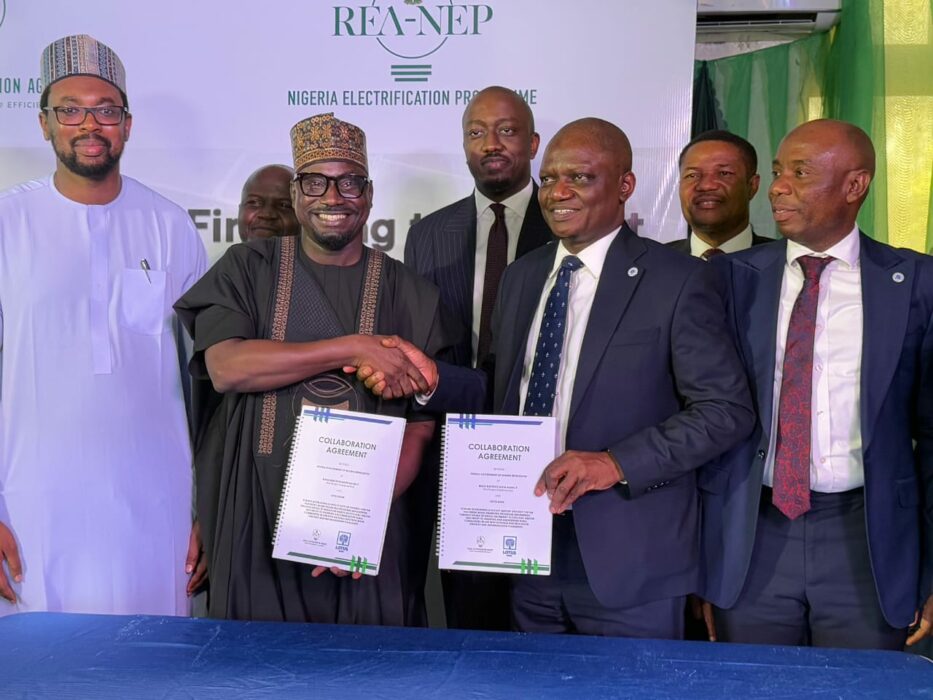
The Rural Electrification Agency (REA) has described the Memorandum of Understanding (MoU) with Lotus Bank, unlocking a whopping N100 billion revolving credit facility, as a bold step to shatter longstanding debt financing hurdles for renewable energy projects.
The agreement, signed on Monday in Abuja, targets mini-grid developers under the World Bank-backed Distributed Access to Renewable Energy Scale-up (DARES) program—a major expansion of the Nigeria Electrification Project (NEP).
This initiative aims to electrify unserved and underserved rural communities, powering households, public institutions, and businesses with clean, reliable energy.
REA’s managing director/CEO, Abba Abubakar Aliyu, hailed the partnership as a “significant milestone” during the signing ceremony.
“This partnership with Lotus Bank is a significant milestone in our commitment to promoting universal access to affordable and sustainable electricity,” Aliyu stated.
“By securing this N100 billion credit facility, we are directly addressing the debt financing bottleneck that has historically hindered project developers.
This ensures that reliable electricity can be delivered more efficiently to the rural communities that need it most, in line with our National Electrification Strategy.”
The facility offers developers up to N8 billion each, with tenures stretching to 18 months for procuring essential equipment. Lotus Bank will also provide up to 90 per cent counterpart funding for REA-approved projects under result-based financing, contingent on credit assessments.
This financial lifeline is poised to slash project risks, speed up timelines, and accelerate Nigeria’s shift to renewables.
Echoing Aliyu’s optimism, Lotus Bank’s managing director, Isiaka Ajani-Lawal, underscored the deal’s broader ripple effects.
“At Lotus Bank, we are proud to partner with the REA to support the growth of renewable energy infrastructure in Nigeria,” he said. “Our commitment of N100 billion is designed to foster financial inclusion in local communities while providing developers with the liquidity and advisory tools necessary for project success. This initiative is not just about power; it is about improving lives and supporting the MSMEs that drive our economy.”
To guarantee smooth rollout, REA will handle technical safeguards: pre-qualifying developers, verifying grant agreements, and deploying Independent Verification Agents (IVAs) for project connections. Lotus Bank adds financial muscle with a collections platform for sustainability and international trade tools for faster equipment delivery.
This collaboration fortifies Nigeria’s energy financing ecosystem, drawing private capital into rural electrification.
It aligns with REA’s sweeping mandate under the Electricity Act 2023, which includes flagship programs like the Rural Electrification Fund (REF), Solar Power Naija (SPN), Energising Economies Initiative (EEI), and the Africa Mini Grids Programme (AMP).
As the federal agency under the Ministry of Power, REA drives private-sector-led projects through feasibility studies, energy audits, and stakeholder engagements—catalyzing economic growth and quality-of-life gains in remote areas.
Lotus Bank, a top-tier Nigerian lender focused on MSMEs and ethical finance, positions this MoU as core to its mission of innovative solutions for citizens.Industry watchers anticipate the deal will bridge Nigeria’s energy access gap, where millions in rural zones still lack grid power, fostering MSME vitality and sustainable development.
We’ve got the edge. Get real-time reports, breaking scoops, and exclusive angles delivered straight to your phone. Don’t settle for stale news. Join LEADERSHIP NEWS on WhatsApp for 24/7 updates →

