

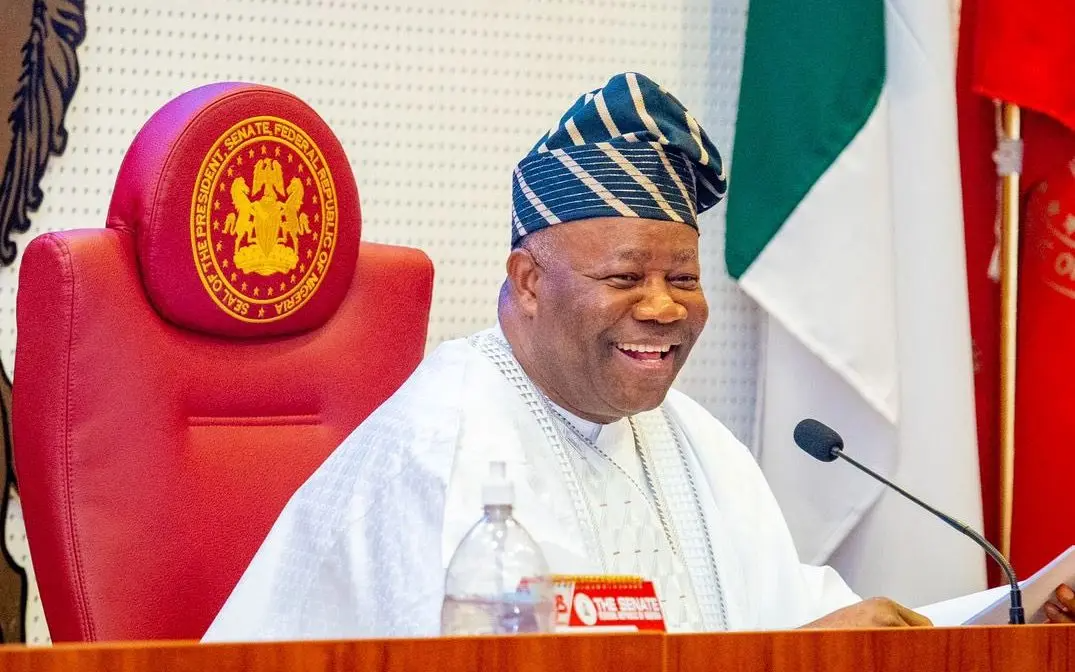
The Senate has pledged strict oversight and effective implementation of the proposed N58.47 trillion 2026 Appropriation Bill to ensure that budgetary allocations translate into tangible benefits for Nigerians.
The Senate President, Godswill Akpabio, gave the assurance yesterday during the public hearing and interactive session on the 2026 Appropriation Bill in Abuja.
He assured Nigerians that the National Assembly is committed to ensuring that the 2026 Appropriation Act delivers measurable outcomes that support economic recovery, stability, and national development.
Akpabio was represented at the occasion by the Deputy President of the Senate, Senator Barau Jibrin.
In his speech titled, “Turning Numbers into Outcomes: The 2026 Budget and the Work of Recovery,” the Senate President described budget hearings as critical moments of national reflection rather than routine legislative exercises.
“Budget hearings are not mere rituals of governance. They are moments of national self-examination, when a nation asks itself where it is, where it is going, and whether its resources align with its aspirations,” Akpabio said.
He noted that Nigeria is currently grappling with fiscal pressures, inflation, infrastructure deficits, unemployment concerns, and security challenges, stressing that these issues directly affect the daily lives of citizens across the country.
Despite the challenges, Akpabio expressed confidence in Nigeria’s resilience, urging stakeholders to see the current difficulties as an opportunity for reform and renewal rather than defeat.
“Our task is not simply to spend more, but to spend better; not merely to allocate funds, but to convert budgets into outcomes and appropriations into impact,” he stated.
He said the theme of the hearing underscored the need for fiscal discipline, tax reforms, macroeconomic stability, infrastructure delivery, and effective implementation, describing them as interconnected pillars necessary for sustainable growth and national recovery.
The Senate President commended the Senate Committee on Appropriations for opening the budget process to public scrutiny, describing the move as a demonstration of transparency and democratic accountability.
“Budgeting in a democracy is not done for the people alone, but with the people,” he said, while encouraging experts, stakeholders, and citizens to contribute constructively to the process.
Akpabio further described the budget as a moral document that reflects a nation’s priorities and values, noting that it shows what a country chooses to protect, promote, and preserve.
He reaffirmed the Senate’s commitment to its constitutional responsibilities of oversight and accountability, assuring Nigerians that the legislature would work closely with the Executive to ensure the timely passage and faithful implementation of the 2026 Budget.
“We will continue to support policies that stabilise the economy, unlock productivity, and improve the security and welfare of our people,” he said.
The Senate President called for informed dialogue, disciplined budgeting, and collective resolve to build a future of stability, opportunity, and renewed hope for Nigeria.
He wished participants at the hearing fruitful deliberations and prayed for a lasting impact from the 2026 budget process.
Also, the chairman of the Senate Committee on Appropriations, Senator Solomon Olamilekan (Ogun West) said the 2026 budget is designed to consolidate recent economic reforms, strengthen macroeconomic stability, and deliver shared prosperity, stressing that the National Assembly would not allow the budget process to remain a routine legislative exercise.
According to him, the Senate is determined to ensure that the budget moves beyond mere approvals to measurable outcomes that directly impact citizens’ lives.
He commended President Bola Tinubu for what he described as courageous and visionary leadership, noting that the 2026 Budget—tagged “Budget of Consolidation, Renewed Resilience and Shared Prosperity”—is aimed at locking in reform gains and strengthening economic buffers.
Adeola noted that reforms such as exchange rate unification, petroleum sector deregulation, tax reforms, and public finance restructuring have begun to yield positive results, including easing inflation, improved foreign reserves, exchange rate stability, increased FAAC allocations to states and local governments, and expanded infrastructure investments.
He disclosed that the budget is based on key macroeconomic assumptions, including an inflation rate of 16.5 per cent, an exchange rate of ₦1,400 to the dollar, crude oil production of 1.84 million barrels per day, and a benchmark oil price of $64.85 per barrel.
According to him, the Senate will rigorously scrutinise these assumptions and maintain sustained oversight throughout the fiscal year to ensure effective implementation.
Adeola revealed that the 2026 budget proposes total revenue of ₦33.19 trillion against aggregate expenditure of ₦58.47 trillion, resulting in a deficit of ₦25.27 trillion.
A breakdown of the proposed expenditure shows ₦15.90 trillion allocated to debt servicing, ₦15.25 trillion for recurrent (non-debt) expenditure, and ₦23.21 trillion for capital expenditure, reflecting the government’s strong emphasis on infrastructure development and productivity-enhancing investments.
On sectoral allocations, he said ₦5.41 trillion has been earmarked for defence and security, ₦3.56 trillion for infrastructure, ₦3.52 trillion for education, and ₦2.48 trillion for health, adding that effective utilisation of these funds would improve security, attract private investment, create jobs, and raise the standard of living.
Adeola also said the 2026 budget prioritises Nigerian-owned businesses through the Nigeria First Policy, which gives preference to indigenous companies and small and medium-scale enterprises in public procurement and government-funded projects.
Reflecting on the 2025 budget, he acknowledged challenges associated with delayed capital releases and assured that the Senate would enforce stricter coordination, improved cash management, and adherence to appropriation timelines to prevent a repeat.
He warned Ministries, Departments, and Agencies (MDAs) to properly defend their budget proposals, stressing that funds would be reallocated from MDAs that fail to justify their estimates to priority projects capable of delivering measurable impact.
Adeola expressed confidence that stakeholders’ inputs at the public hearing would shape the final 2026 Appropriation Act, urging all participants to engage constructively to ensure effective budget implementation and national development.
We’ve got the edge. Get real-time reports, breaking scoops, and exclusive angles delivered straight to your phone. Don’t settle for stale news. Join LEADERSHIP NEWS on WhatsApp for 24/7 updates →
Join Our WhatsApp Channel
