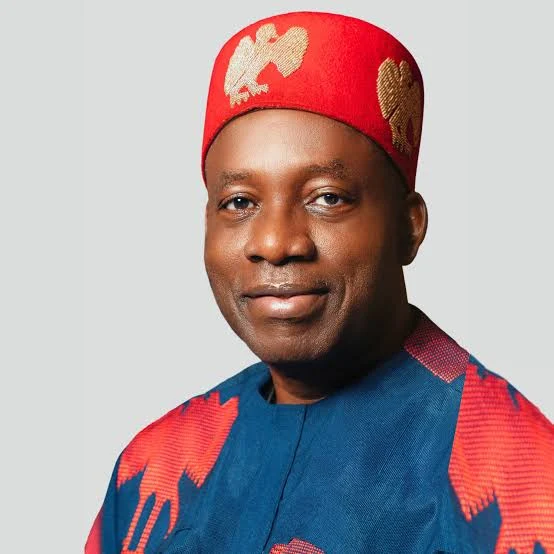
Anambra State governor, Professor Chukwuma Charles Soludo, has said Nigeria’s N68 trillion federal budget translates to just about N772 per Nigerian daily, warning that the country’s fiscal capacity remains too weak to fund the massive investments required for economic transformation.
Soludo argued that despite the huge figures attached to government budgets, Nigeria remained a resource-rich but financially poor country that needed substantially higher revenue and investment to accelerate development.
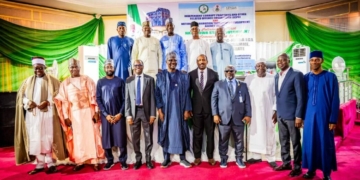
He stated this on Thursday in Abuja while delivering the keynote address at the presentation of a book titled Economic Diversification and Structural Transformation in Nigeria: Past, Present and Future, authored by a member of the House of Representatives, Abdulmumin Jibrin Kofa.
The event, held at the State House Conference Centre, was attended by President Bola Tinubu, who was represented by the Speaker of the House of Representatives, Tajudeen Abbas.
Using the Federal Government’s N68tn budget as an illustration, the former Central Bank of Nigeria governor said the amount, when divided among Nigeria’s population, amounted to approximately N772 per person daily, or about 57 cents.
He stressed that the calculation assumed the entire budgeted expenditure would be spent, adding that actual government spending could be lower.
“Forget the trillions. Nigeria is a resource-rich but financially very poor country.
“We need huge resources to jump-start structural transformation at the speed we need it. Four hundred million people in the next three decades won’t wait for organic change,” he said.
Soludo said Nigeria needed to become “one massive construction site” through coordinated investments by the Federal, state and local governments, noting that existing fiscal resources were inadequate for the country’s development ambitions.
“That N68 trillion budget is budgeted expenditure, not actual spending, because I believe actual spending is even smaller.
“Even if the entire N68 trillion were to be spent, it still comes down to approximately N772 per person per day. That is very, very minuscule,” he said.
The Anambra governor said Nigeria’s government revenue remained around 10 per cent of Gross Domestic Product (GDP), compared with approximately 18 per cent in Kenya and 16 per cent in Ghana.
He said the country’s limited revenue base reinforced the need for stronger revenue mobilisation, increased private-sector investment and a more aggressive economic development strategy.
Soludo warned that Nigeria’s ambition of becoming a $1tn economy would remain difficult to achieve without double-digit economic growth and massive investments exceeding 30 per cent of GDP.
He noted that although the Tinubu administration had rescued the economy from the brink of collapse and restored a measure of stability, the current growth rate of about four per cent was insufficient to significantly reduce poverty and accelerate industrialisation.
“The administration has done very well, rescued the economy. As I previously described it, the economy when this government came in was like a dead horse that was still standing.
“It sprayed some oxygen to it. Growth has begun to come back, and we are now on the right trajectory. But acceleration, speed and building to last become important considerations going forward,” he said.
The former CBN governor also identified the weakness of Nigeria’s manufacturing sector as a major obstacle to economic diversification, noting that manufacturing had remained at about eight per cent of GDP for 56 years.
He said Nigeria had moved from an agriculture-dominated economy to one driven largely by services without developing the industrial base needed to generate large-scale employment.
According to him, agriculture’s contribution to economic output declined from about 64 per cent around independence to approximately 23 per cent in 2025, while services now account for roughly 60 per cent.
He said industrialisation was essential to create jobs for Nigeria’s projected population of 400 million people in the coming decades.
On the sustainability of economic reforms, Soludo cautioned political leaders against abandoning long-term policies for short-term electoral gains ahead of the 2027 general elections.
“Eyes on the ball. We must avoid the temptation of short-term populism,” he said.
He argued that policy reversals and lack of continuity had undermined previous economic development programmes, urging political leaders to build consensus around reforms that could survive changes in government.
“It is said that statesmen worry about the next generation, but politicians worry about the next election.
“The real miracle of Nigeria will be for our politics, within the short term, to play the politics of the short term without sacrificing the long-term agenda,” he said.
Soludo also urged Nigerians to embrace locally manufactured products, arguing that stronger domestic demand would encourage investment, expand production and create employment.
“Imagine for a moment if all Nigerians only eat and wear made-in-Nigeria products. Imagine the millions of jobs and the foreign direct investment that will relocate to exploit the Nigerian market,” he said.
He disclosed that the Anambra State Governor’s Lodge in Awka predominantly served locally produced food and beverages, including palm wine, as part of his administration’s commitment to promoting Nigerian products.
Soludo, however, acknowledged the infrastructure projects being undertaken by the Tinubu administration, particularly the Lagos-Calabar Coastal Highway, saying they could help unlock economic corridors and connect industrial and commercial centres.
He urged the Federal Government to consider connecting Onitsha to the coastal highway and port infrastructure around Onne to improve maritime access for manufacturers and traders in the South-East.
The governor also called for greater investment in education, technical skills and workforce development to prepare Nigeria’s youthful population for emerging opportunities in the global economy.
He said sustainable economic transformation would require self-belief, national consciousness and collective commitment from government, businesses and citizens.
“What are you doing every day to create jobs, reduce poverty, improve diversification and transformation?” he asked.
We’ve got the edge. Get real-time reports, breaking scoops, and exclusive angles delivered straight to your phone. Don’t settle for stale news. Join LEADERSHIP NEWS on WhatsApp for 24/7 updates →
Join Our WhatsApp Channel