….Targets 1mbpd domestic refining capacity
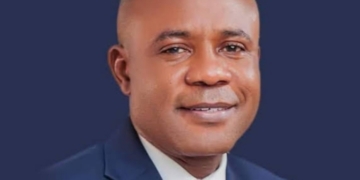
Nigeria’s downstream petroleum sector is showing signs of revival, as reflected by the over N6 trillion in fiscal savings within the first nine months of 2025, the chief executive of the Nigerian Midstream and Downstream Petroleum Regulatory Authority (NMDPRA), Saidu Mohammed, has said.
The regulator also said he was targeting over 1mbpd domestic refining capacity in the medium term, bolstered by Dangote Refinery and NNPCL rehabilitations
Speaking at the 2026 Nigerian International Energy Summit (NIES) in his keynote address, “Driving Nigeria’s Downstream Renaissance: Regulation, Investment, and Market Confidence,” Mohammed noted that in just a few years of implementing the new legal framework, Nigeria’s downstream sector had evolved into a fully liberalised market.
He added that the sector was no longer defined by scarcity, with “supply stability now the norm, driven by market fundamentals, and the environment required to encourage investment… taking shape.”
For decades, Nigeria’s downstream value chain was defined by persistent fuel scarcity, weak infrastructure, import dependency, poor safety records, and regulatory uncertainty.
According to Mohammed, those challenges are now being systematically dismantled under the Petroleum Industry Act (PIA) 2021 and the far-reaching economic reforms of President Bola Tinubu.
“In just a few years of implementing the new legal framework, Nigeria’s downstream sector has evolved into a fully liberalised market,” he said.
“The sector is no longer defined by scarcity and supply uncertainty. Supply stability is now the norm, pricing is increasingly driven by market fundamentals, and the environment required to encourage investment is taking shape.”
According to him, one of the most striking indicators of this transformation is the estimated over N6 trillion in fiscal savings recorded within the first nine months of 2025, largely attributed to the full deregulation of the downstream sector, harmonisation of the foreign exchange market, deeper utilisation of gas, and the trading of crude oil and petroleum products in naira.
These reforms have significantly reduced the economic losses historically associated with fuel imports.
“The cumulative impact of the full deregulation of the downstream sector; incentivization and deepening the use of gas; and the trading of crude and products in naira—along with the harmonisation of the forex market—has reduced the fiscal economic losses of importing petroleum products by over N6 trillion in the first nine months of 2025. We congratulate and celebrate Mr President and our ministers for these enduring legacies of leadership in the downstream energy sector, Mohammed said.
At the centre of Nigeria’s downstream resurgence stands the Dangote Petroleum Refinery, the world’s largest single-train refinery with an installed capacity of 650,000 barrels per day.
Mohammed described the facility as a critical stabiliser of domestic supply, noting that it currently meets a significant portion and in some cases, all of Nigeria’s demand for key petroleum products.
“The optimal operationalisation and future upscaling of the Dangote Refinery are essential to achieving Nigeria’s aspiration of becoming a regional and continental energy hub,” he said.
Beyond Dangote, the NMDPRA chief expressed optimism about Nigeria’s medium-term refining capacity outlook.
He disclosed that multiple licensed refineries are at various stages of development, while the ongoing rehabilitation of Nigerian National Petroleum Company Limited (NNPCL) refineries is expected to lift the country’s total installed refining capacity to well over one million barrels per day in the medium term.
The downstream transformation, Mohammed stressed, is also being reinforced by an evolving supply chain landscape.
Increased domestic refining, expanded gas-based alternative fuels, improved logistics, and growing private-sector participation are steadily reducing Nigeria’s long-standing dependence on imported petroleum products.
Gas, in particular, is emerging as a strategic pillar of the new energy mix. Mohammed said government and industry efforts under Nigeria’s “Decade of Gas” initiative are focused not just on increasing volumes, but on unlocking gas for industrial development, cleaner power generation, transportation fuels, and manufacturing linkages that can broaden economic impact and drive sustainable growth.
However, he cautioned that infrastructure alone cannot deliver a renaissance.
“Markets only flourish where rules are clear, institutions are credible, and investors trust the system,” Mohammed said, underscoring the central role of regulation in sustaining downstream reforms.
Under the PIA, the NMDPRA has shifted from discretionary controls to predictable, rule-based oversight covering licensing, tariffs, product quality, open access, and market conduct.
The Authority’s regulatory philosophy, he said, is anchored on enabling value rather than inhibiting it—creating a level playing field where competition, not administrative intervention, drives efficiency.
The downstream revival, Mohammed noted, cannot be funded solely by the public sector. It requires sustained flows of private capital, both local and international into refineries, depots, pipelines, retail networks, gas infrastructure, and emerging energy value chains.
To de-risk such investments, the regulator is prioritising licensing efficiency, commercially viable frameworks, and enhanced market transparency through credible data availability.
Ultimately, Mohammed emphasised that market confidence is the true currency of reform.
“Investors invest where contracts are respected. Operators expand where rules are stable. Consumers trust systems that are fair and predictable,” he said.
He concluded by calling for sustained collaboration among government, regulators, investors, operators, financiers, and consumers to consolidate the gains already made and ensure Nigeria’s midstream and downstream petroleum sector remains competitive, resilient, and attractive positioning the country as a leader in Africa’s evolving energy ecosystem.
We’ve got the edge. Get real-time reports, breaking scoops, and exclusive angles delivered straight to your phone. Don’t settle for stale news. Join LEADERSHIP NEWS on WhatsApp for 24/7 updates →
Join Our WhatsApp Channel