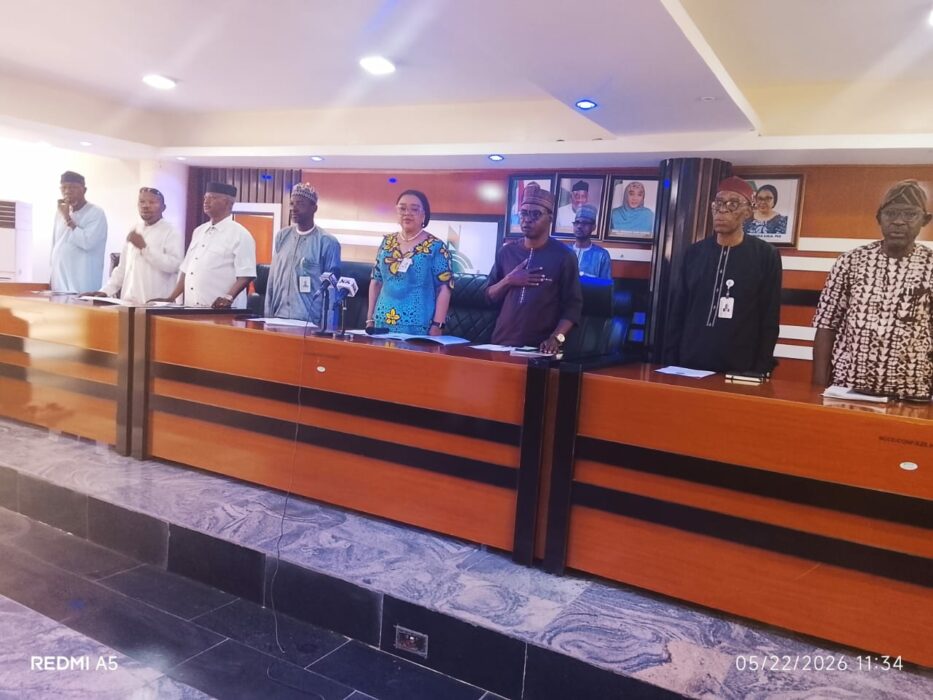
The Executive Secretary of the National Commission for Colleges of Education (NCCE), Dr Angela Ajala, has outlined plans for a major transformation of Nigeria’s Colleges of Education, with reforms aimed at boosting teacher education standards, widening access and improving institutional competitiveness.
Ajala who stated this while interacting with the media on the theme: “A New Dawn for Teacher Education in Nigeria” in Abuja on Thursday, said the commission is moving beyond regulation to focus on measurable classroom outcomes.
She said the commission was charting a new direction to make teacher education more responsive to modern realities while maintaining professional standards.
According to her, teacher education remains central to national development because no education system can rise above the quality of its teachers.
“If Nigeria wants better classrooms, Nigeria must prepare better teachers. If Nigeria wants better teachers, Nigeria must strengthen Colleges of Education,” she said.
Speaking on admission pathways, the NCCE boss revealed that discussions were ongoing on a more flexible admission framework for teacher education, particularly for NCE programmes, including conversations around UTME requirements.
She stressed that standards would not be compromised in the process.
“We want to remove administrative barriers, not professional standards.”
Ajala disclosed that NCCE was transitioning from being seen largely as a compliance regulator to becoming a development-focused agency concerned not only with accreditation reports and institutional requirements but also with learning outcomes in classrooms.
“We will not only measure inputs. We must begin to measure outcomes.
“Today’s teacher must be digitally competent, emotionally intelligent, entrepreneurial, inclusive, innovative and globally aware,” she said.
She stressed that the reform was not designed to weaken the identity of Colleges of Education but to strengthen it.
“It means a student who chooses a College of Education today is not choosing a lesser path,” she added.
She also disclosed that curriculum reforms were underway to align teacher preparation with modern realities, including artificial intelligence, digital literacy, entrepreneurship, competency-based learning, climate education and child protection.
According to her, the revised curriculum would prepare teachers for contemporary classrooms rather than outdated learning environments.
“Technology will not replace teachers. But teachers who understand technology will become more effective, more relevant and more prepared for the future,” she stated.
We’ve got the edge. Get real-time reports, breaking scoops, and exclusive angles delivered straight to your phone. Don’t settle for stale news. Join LEADERSHIP NEWS on WhatsApp for 24/7 updates →
Join Our WhatsApp Channel