
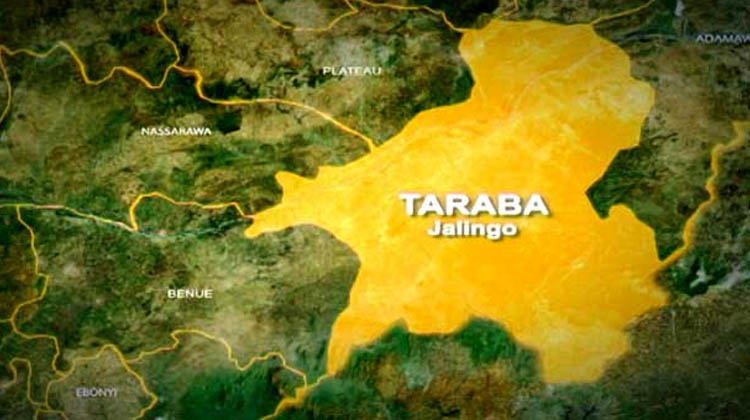
The National Environmental Standards and Regulations Enforcement Agency (NESREA) and the Taraba State Agro-Climatic Resilience in Semi-Arid Landscapes (ACReSAL) Project have forged a strategic alliance to strengthen environmental law enforcement, protect fragile ecosystems and scale up climate resilience interventions across the state.
The partnership, which will focus on improved data sharing, coordinated environmental action and stronger enforcement of regulations, emerged during a working visit by the Taraba State leadership of NESREA to the ACReSAL State Project Management Unit (SPMU) in Jalingo on Friday.
The Taraba State Coordinator of NESREA, Mr John Twasshue, said the growing impact of climate change and environmental degradation had made inter-agency collaboration imperative.
He said NESREA was seeking to complement ACReSAL’s ongoing interventions in environmental restoration, watershed management, sustainable land use and climate resilience.
“We are here to see how we can work together and complement the good work ACReSAL is doing in Taraba State.
“Environmental law enforcement is about protecting the environment, and through collaboration and data sharing, we can achieve greater results.”
Twasshue said NESREA, established in 2007, was mandated to enforce environmental standards and regulations, regulate activities and technologies capable of threatening environmental safety, and implement relevant international environmental agreements, including those related to air quality and ozone layer protection.
He said the proposed partnership would strengthen efforts to address environmental violations, improve compliance with existing laws and safeguard the state’s natural resources from the effects of climate change.
Earlier, the Taraba ACReSAL State Project Coordinator, Dr Yakubu Giwa Clement, said the project was ready to work closely with NESREA to advance environmental protection and sustainable development in the state.
Dr Clement clarified that ACReSAL was a multi-sectoral intervention covering the environment, water resources and agriculture, and dismissed the perception that the project was merely designed for the distribution of funds.
He said the project had significantly expanded its climate resilience and watershed restoration programmes, increasing its intervention areas from three to 10 micro-catchments across Taraba State.
According to him, the expansion was expected to strengthen ecosystem restoration, promote sustainable land and water management, and improve the resilience of communities vulnerable to climate-related risks.
Officials of the Legal, Environmental Safeguards, and Monitoring and Evaluation units of the ACReSAL SPMU also backed the partnership, stressing the need for stronger community participation and effective deployment of the project’s Grievance Redress Mechanism (GRM).
They said sustained engagement with communities and other stakeholders would be critical to resolving environmental concerns, promoting compliance and ensuring the sustainability of climate interventions.
We’ve got the edge. Get real-time reports, breaking scoops, and exclusive angles delivered straight to your phone. Don’t settle for stale news. Join LEADERSHIP NEWS on WhatsApp for 24/7 updates →
Join Our WhatsApp Channel