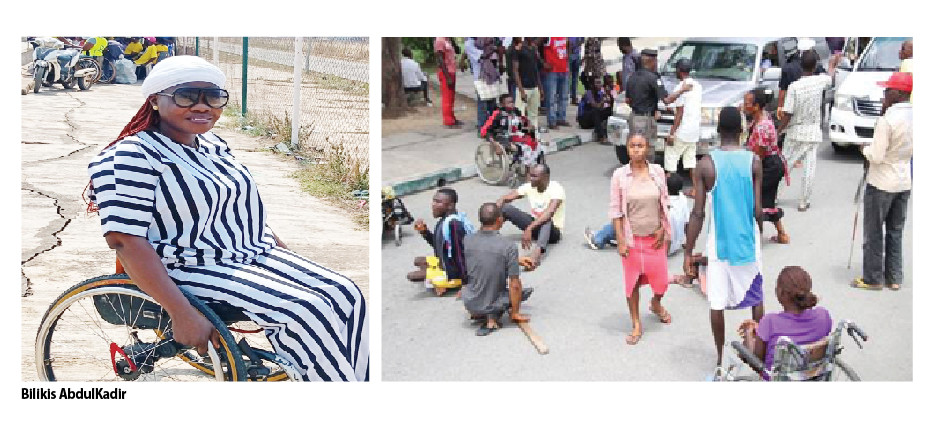
The Joint National Association of Persons with Disabilities has unveiled new data detailing the population of physically-challenged persons.
The data is expected to close the decades-long gaps that have prevented an inclusive and effective policy and intervention programmes for them.
The ‘Assumptive Disability Disaggregated Data’ totals the number of persons with disabilities to 45 million. To arrive at this figure, the association, with the aid of the National Population Commission (NPC), deployed the global assumption standard, which notes that persons with disabilities make up 15 per cent of any population.
Sourcing the data from the nation’s last census in 2006, it projected it to 2025. A laid-down projection, assigned to each cluster of persons with disabilities, enabled them to determine the number of persons with disabilities within each cluster, state and gender.
According to the unveiled data report, Kano has the highest number of persons with disabilities at approximately 2.5 million, followed by Lagos State at 2.1 million. Nigerians have more persons with physical disabilities, averaging a total of 8.2 million, followed by persons with hearing disabilities, totalling up to 7.7 million.
Also, men with disabilities outnumber women at a ratio of 17.6 million to 17.2 million, while on the other hand, women with disabilities face more disadvantages than men, which spans limited access to education, exclusion, gender-based violence, and cultural norms that silence their experiences.
The association believes that these data, which highlight the lived realities of persons with disabilities, will help ensure effective governance that tailors policies and interventions according to the specific needs of the clusters of persons with disabilities.
“For many years, the absence of credible, comprehensive and disaggregated data on Persons with Disabilities has remained one of the most critical challenges confronting stakeholders, policymakers and development partners in Nigeria,” said the special assistant to the President on Special Needs and Equal Opportunities, Hon. Mohammed Abba Isa.
He continued, “Without reliable data, even the best intentions toward inclusion cannot translate into measurable impact. Data is the foundation of effective planning, policy formulation, project implementation and the achievement of development objectives.
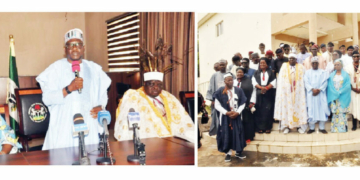
At a press conference and unveiling of the new data, the president of JONAPWD, Abdullahi A. Usman, who had lauded the data publication, also highlighted its deficiencies. Particularly in the area of the absence of data on children and youth with disabilities.
He further spotlighted the evolving nature of disabilities, which is shifting from the visible/physical disabilities to the invisible disabilities; from “young people with mental health conditions, psycho-social disabilities, autism and other less visible forms of impairment”.
He also observed a growing trend of acquired disability. These disabilities are incurred as a result of road accidents, environmental conditions, chronic illnesses and injuries, which demand a new approach, an improved data system, and a protective national response.
We’ve got the edge. Get real-time reports, breaking scoops, and exclusive angles delivered straight to your phone. Don’t settle for stale news. Join LEADERSHIP NEWS on WhatsApp for 24/7 updates →
Join Our WhatsApp Channel