
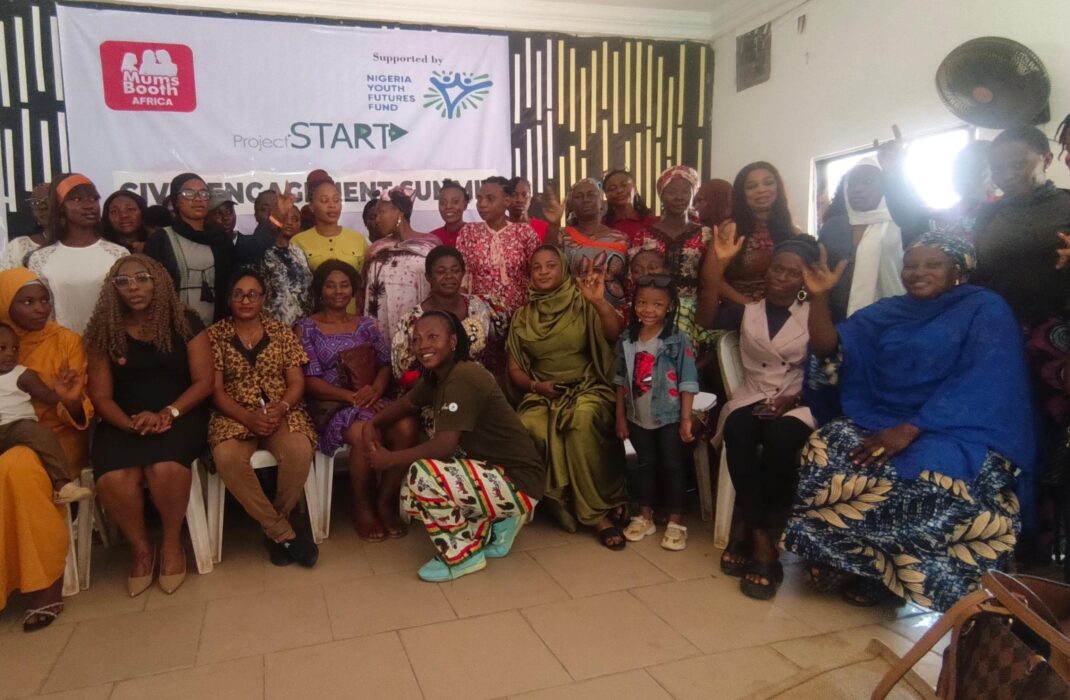
A non-governmental organization, Mumsbooth Empowerment Initiative has trained 142 young women on civic participation, governance and policy advocacy as part of efforts to strengthen women’s involvement in decision-making processes.
The training was organised under the initiative’s Her Voice, Her Rights: Inclusive Civic & Policy Action Hub, with support from the Nigeria Youth Futures Fund (NYFF).
Founder of Mumsbooth Empowerment Initiative, Martha Tawiyah, said the programme was designed to equip young women with the knowledge and confidence to participate actively in governance and influence policies affecting their communities.
“Our goal is to equip young women with the knowledge and confidence to participate actively in governance and influence policies that affect their communities,” she said.
Tawiyah said the workshop attracted 142 participants from nearly 200 registered applicants, reflecting growing interest among young women in civic engagement and public policy issues.
According to her, the programme builds on the organisation’s previous NYFF-supported Project START Youth Innovation and Civic Leadership Programme, which focused on developing leadership, entrepreneurship, innovation and civic engagement skills among young women in Abuja and Nasarawa State.
She explained that the new programme places greater emphasis on practical policy advocacy and the inclusion of women with disabilities in governance and decision-making.
“We are particularly concerned about ensuring that women with disabilities are included in civic participation and policy discussions. Their voices and experiences must be represented,” she said.
During the workshop, participants received training on women’s role in democratic processes, the Disability Rights Act 2018, civic technology, policy advocacy and strategies for engaging stakeholders and influencing policy decisions.
The participants were also divided into six working groups to encourage discussions, experience sharing and the development of community-based solutions.
Tawiyah said the training had enabled participants to identify issues affecting women and persons with disabilities in their communities, develop action plans and establish advocacy groups to sustain engagement beyond the workshop.
“Beyond the training, we want participants to take what they have learnt into their communities, identify challenges and engage relevant stakeholders to bring about positive change,” she said.
She added that the advocacy groups would provide platforms for community mobilisation, advocacy campaigns and engagement with policymakers and other relevant stakeholders.
We’ve got the edge. Get real-time reports, breaking scoops, and exclusive angles delivered straight to your phone. Don’t settle for stale news. Join LEADERSHIP NEWS on WhatsApp for 24/7 updates →
Join Our WhatsApp Channel