Nigeria has reduced its petrol import bill drastically to under N90 billion in the first quarter of 2026 following an increase in local refining of petroleum products the special adviser to the President on Oil and Gas, Olu Arowolo Verheijen, has announced.
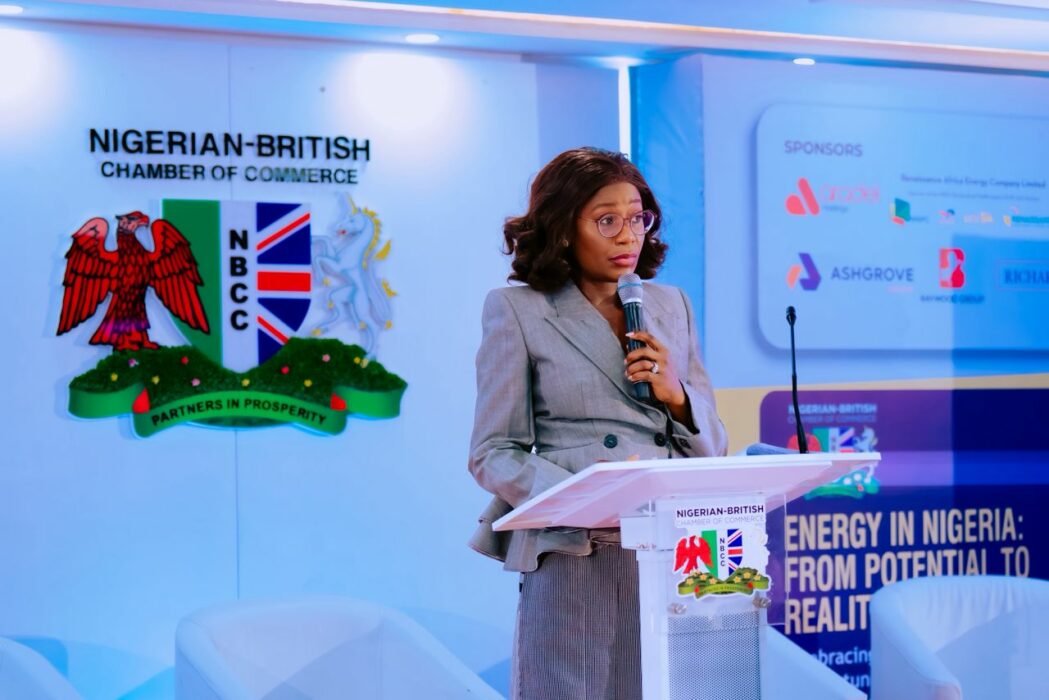
Speaking during the Nigerian‑British Chamber of Commerce (NBCC) Energy Day in Lagos, Verheijen said the administration’s reforms, including the removal of the fuel subsidy and exchange‑rate adjustments, were difficult but necessary and had helped restore fiscal credibility.
According to her, total federation revenue rose from about N12 trillion in 2023 to roughly N21 trillion in 2024 after those measures, and she insisted deregulation had not led to the petrol shortages many had feared.
The adviser said local refining had risen from “effectively zero in 2023” to about 48 million litres per day, and she added that, for the first time in a generation, the majority of petrol consumed in Nigeria was now refined domestically.
She said this shift had reduced the country’s demand for foreign exchange tied to fuel imports, noting petrol import bills fell from about N2.3 trillion in the first quarter of 2025 to under N90 billion a year later.
“Fewer dollars spent on fuel means less pressure on the naira,” she said, arguing that energy security and currency stability were linked and should be pursued together.
Verheijen said the government’s next priority had been to restore production and investor confidence. She said crude oil and condensate production averaged 1.64 million barrels per day in 2025 — up by roughly 400,000 barrels per day since 2023 — and described this as the highest onshore level in two decades. She told the audience that improved pipeline uptime and a sharp reduction in illegal refining had supported the recovery.
She said more than $4 billion in international oil company onshore divestments had been concluded, deepening indigenous participation while majors refocused on deepwater and integrated gas projects.
“Every additional barrel matters — for revenue, for jobs, and for the strength of the federation,” she said.
On attracting capital, the adviser said targeted presidential directives and regulatory changes had shortened contracting timelines and improved clarity and competitiveness for investors.
She said contracting that once took 36 months now took around 14 months, and that the government was driving toward a target of six months.
She told attendees that Nigeria’s share of African upstream Final Investment Decisions had risen from about four percent in the years to 2023 to roughly 40 per cent across 2024 and 2025, with about $10 billion committed and a visible pipeline of around $50 billion.
Highlighting specific projects, she said stalled developments such as Bonga North, Ubeta and HI gas projects were moving again, and that new non‑associated gas developments would help anchor long‑term supply for LNG exports and domestic uses.
According to the SA, gas was not merely a transition fuel for Nigeria but a development fuel that could power electricity generation, fertiliser and petrochemicals, clean cooking, CNG transport and manufacturing. She said proven gas reserves now stood at over 215 trillion cubic feet, and that gross gas production had risen from about 6.83 billion standard cubic feet per day in 2023 to about 7.63 billion today.
“But the goal is not simply to produce more gas,” she said.
“It is to ensure Nigerian gas becomes Nigerian power, Nigerian products, Nigerian jobs and Nigerian exports. A nation does not grow wealthy by owning resources. It grows wealthy by converting them into value.”
Verheijen also described steps to restore commercial viability across the gas‑to‑power chain. She outlined the Presidential Power Sector Debt Reduction Programme, saying the Federal Executive Council had approved a bond facility of up to N4 trillion to settle verified generation and gas‑company arrears. She said generation companies had signed full and final settlement agreements worth about N2.28 trillion, the N501 billion Series 1 bond had been issued and oversubscribed, and payments to generation and gas companies were now underway. She added that a second series of N729 billion would follow to complete the first phase.
“This is not a bailout. It is a strategic reset,” she said, explaining that the programme was designed to clear verified arrears, restore liquidity and give operators the footing to invest with confidence. “Government obligations must be honoured if private capital is to return,” she added.
On the consumer side, Verheijen said the national metering rate had risen to about fifty‑seven percent, with hundreds of thousands of new meters deployed each year. She said two distinct programmes — the Presidential Metering Initiative and a World Bank‑supported programme — were together set to deploy several million additional meters in the years ahead. She said metering would protect consumers, reduce estimated billing and build the commercial discipline required to attract investment.
She said tariff reform was being implemented pragmatically, with about 45 per cent of the market now on cost‑reflective tariffs linked to service quality, while a subsidised segment had been redesigned to better protect vulnerable households. She said the redesign had already reduced the projected subsidy burden by over a trillion naira.
Verheijen said energy policy choices affected the price of food, the cost of transport, the survival of small businesses, the strength of the naira and jobs for young Nigerians. “Energy reform is not an elite conversation. It is a national development conversation,” she said.
She urged private and international partners, particularly from the United Kingdom, to move beyond goodwill to concrete financing, skills transfer and measurable outcomes.
Verheijen said the UK brought finance, legal structuring, insurance, engineering and institutional capital, while Nigeria offered resources, demand, scale and reform momentum.
“The opportunity is to connect these strengths around bankable projects — and to move partnership beyond goodwill into financing structures, skills transfer and measurable outcomes,” she told the chamber.
She said the administration had laid the foundation and that the next phase must convert financial stabilisation into improved service delivery, expanded access and reliable power to support Nigeria’s industrial ambitions.
“We laid the foundation. The work now is to build on it — together,” she said, urging sustained political and institutional commitment to see reforms through.
Verheijen called for joint action to translate the country’s resource endowment and reform momentum into tangible benefits for Nigerians. “Let us move from promise to performance. From resources to revenue. From gas to power. From power to productivity. From potential to reality,” she said.
We’ve got the edge. Get real-time reports, breaking scoops, and exclusive angles delivered straight to your phone. Don’t settle for stale news. Join LEADERSHIP NEWS on WhatsApp for 24/7 updates →
Join Our WhatsApp Channel