Nigeria loses an estimated $2.3 billion annually, equivalent to about two per cent of its Gross Domestic Product (GDP), because of gender gaps in agricultural productivity, the United Nations has said.
The agency said Nigerian women were already playing critical roles across the agricultural value chain but their economic contribution remained constrained by limited access to land, finance, technology, extension services, markets, productive assets and leadership opportunities.
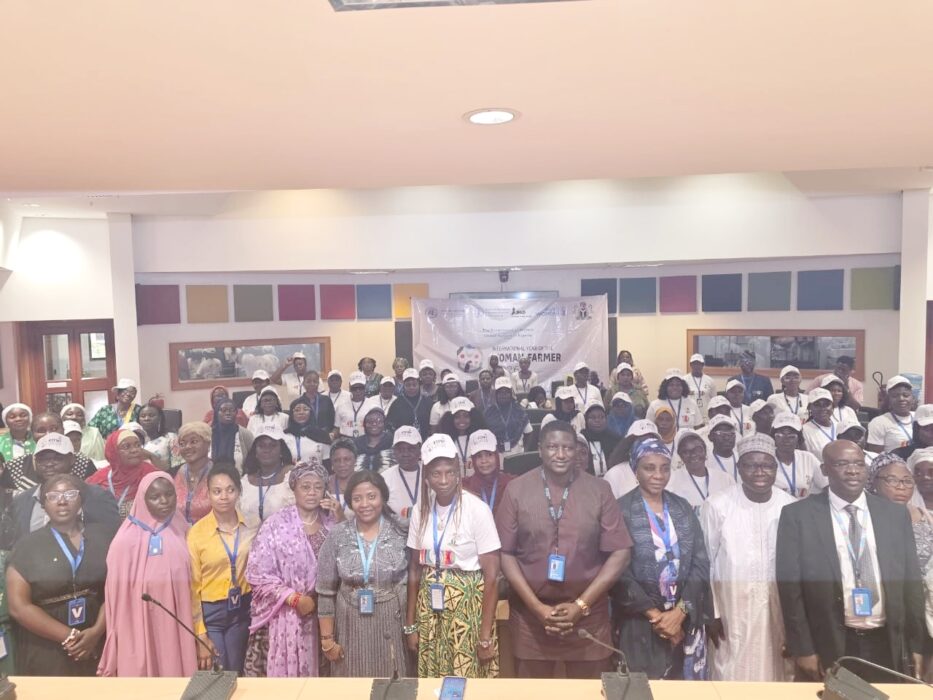
The Food and Agriculture Organisation of the United Nations (FAO), World Food Programme (WFP) and International Fund for Agricultural Development (IFAD) gave the assessment in Abuja at a high-level meeting and panel discussion to mark the International Year of the Woman Farmer 2026.
According to FAO, agriculture contributes between 22 and 25 per cent of Nigeria’s GDP, while more than 70 per cent of rural households depend on the sector for all or part of their income and food security. It added that women account for an estimated 37 per cent of labour in crop production alone.
FAO senior programme officer, office of emergency and resilience, Jimmy Owani, said women were central to Nigeria’s agrifood system, contributing as farmers, livestock keepers, fishers, processors, traders, entrepreneurs and innovators,
He said greater access to finance, technology, productive assets and markets would be critical to enabling women-led enterprises to expand and contribute more significantly to Nigeria’s agricultural transformation.
He said, “Estimates suggest that the gender gap in agricultural productivity costs Nigeria approximately USD 2.3 billion annually, equivalent to about 2 percent of GDP.
Women must be recognized not only as contributors to agrifood systems, but also as decision-makers, innovators, investors and leaders.”
Globally, women constitute about 41 per cent of the agrifood workforce. according to FAO, which said eliminating gender gaps in agricultural productivity and wages could add nearly $1 trillion to the global economy and reduce food insecurity.
The International Fund for Agricultural Development (IFAD) said it had reached at least 96,827 women through its three programmes in Nigeria — the Value Chain Development Programme (VCDP), Livelihood Improvement Family Enterprises for Niger Delta (LIFE-ND) and Special Agro-Industrial Processing Zones (SAPZ).
Under VCDP, IFAD said 87,888 women were members of supported rural producer organisations, while 36,572 had received training in crop production technologies and 50,613 had accessed advisory services.
It added that LIFE-ND had trained 17,201 women, while SAPZ had trained 5,815 women in improved crop production practices.
Country programme coordinator representing the country director of IFAD Nigeria, Chioma Adiele-Okpara said its programmes were also addressing financial inclusion, with 11,003 women accessing savings, 9,568 accessing credit, 11,382 accessing insurance and 14,654 receiving financial literacy training under LIFE-ND.
She further said more than 20,000 women across the three programmes had received targeted nutrition support, while nearly 60,000 female household members supported by VCDP had received assistance to cope with climate change impacts.
“We must invest in women’s productive capacity, their enterprises, their organisations, their innovations and their leadership.
We must ensure that women are not simply included in agricultural programmes but are positioned as equal partners and decision-makers in transforming Nigeria’s agrifood systems.
Let this international year be remembered not only for how we recognised women farmers, but for what we did differently because we recognised them,” Adiele-Okpara said.
The World Food Programme (WFP) said conflict and insecurity, climate shocks and rising production costs were placing additional pressure on farming households, particularly in northern Nigeria, where it has worked with communities to strengthen agricultural livelihoods.
Deputy country director, WFP, Edouard Thiam said 128,000 women had been a major part of its interventions over the past five years, covering agricultural inputs, equipment, storage, irrigation, market linkages and resilience hubs.
The programme also disclosed that more than 70 per cent of jobs created through its activities had gone to young women, with increased agricultural production generating economic opportunities for traders, transporters and processors beyond the farm.
Thiam said WFP local procurement strategy was also designed to ensure that investment in food production remained within Nigeria by purchasing food from local farmers and businesses where possible.
He added, “Women already make a significant contribution to agriculture in Nigeria. Our opportunity is to strengthen that contribution through higher production, stronger incomes and greater value within Nigeria’s agricultural economy.
Investing in women farmers is not separate from investing in Nigerian agriculture. It is part of the same ambition to generate greater prosperity.”
The development partners and farmer associations called for sustained investment in women’s productive capacity, enterprises, organisations, innovations and leadership, stressing that women should be treated as equal partners rather than beneficiaries of agricultural programmes.
We’ve got the edge. Get real-time reports, breaking scoops, and exclusive angles delivered straight to your phone. Don’t settle for stale news. Join LEADERSHIP NEWS on WhatsApp for 24/7 updates →
Join Our WhatsApp Channel