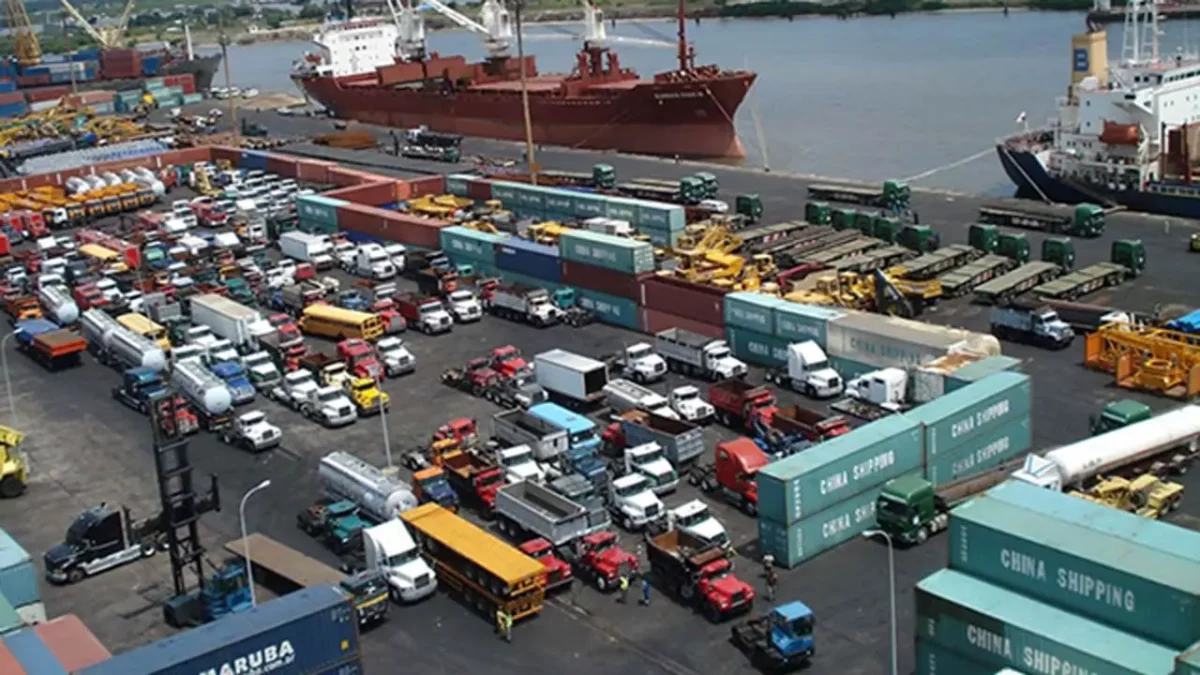
Nigerian seaports are currently missing from the 2025 global Top 100 ranking, with only four African ports making it into Lloyd’s List.
According to a recent ranking released by Lloyd’s Register, Port of Tanger Med, Morocco, Egypt follows with Port Said and Alexandria and Togo’s Lomé Port.
The reports stated that Morocco’s Tanger Med remains the continent’s strongest performer, ranking 17th globally after handling over 10.2 million TEUs in 2024 – an 18.9 per cent surge that reinforces its role as a major transhipment gateway.
Egypt followed with Port Said at 53rd position, although its 3.9 million TEUs represented a slight decline due to disruptions in the Red Sea. Alexandria showed stronger momentum, climbing to 2.2 million TEUs and posting one of the region’s fastest throughput gains.
Togo’s Lomé Port completes Africa’s presence, ranking 92nd with more than 2 million TEUs, maintaining its growing influence in West Africa’s shipping corridors.
Maritime experts have attributed Nigeria’s absence to infrastructure and logistical constraints.
They further argued that enhanced investment in infrastructure, automation, and connectivity is essential for Africa to boost maritime trade competitiveness.
African ports face infrastructure and logistical limitations, contributing to lagging global container handling capacity. This reveals the continent’s ongoing struggle to expand its maritime capacity despite rising trade volumes.
The findings highlight the continent’s ongoing infrastructure and logistical constraints despite notable improvements in select terminals.
Lloyd’s List’s latest assessment shows that global container traffic is rebounding strongly. Worldwide throughput reached 743.6 million twenty-foot equivalent units (TEU) in 2024, an 8.1 per cent increase from a year earlier, signalling recovery from several years of suppressed volumes driven by pandemic-era disruptions and geopolitical tensions.
Asia continues to dominate global trade flows, with Chinese ports responsible for over 40 per cent of total container throughput.
North America and Europe also gained momentum, supported by shifting supply chains, stronger consumer spending and strategic inventory replenishment.
The continent’s shipping performance continues to suffer severe global and regional disruptions.
Lloyd’s List’s latest assessment shows that global container traffic is rebounding strongly, with worldwide throughput hitting 743.6 million twenty-foot equivalent units (TEU) in 2024
The ongoing security crisis in the Red Sea has rerouted major shipping lines away from key African gateways, causing delays, higher insurance costs, and reduced vessel calls to Eastern and Northern African ports.
Meanwhile, major Western carriers have scaled back operations on some West African routes due to lower freight demand and capacity constraints.
At a structural level, limited port automation, capacity bottlenecks, slow cargo clearance processes and a lack of rail connectivity continue to dampen competitiveness. Many African economies remain heavily import-dependent, offering less incentive for large-scale transhipment investments.
However, speaking on the development, a maritime analyst, Emmanuel Onyema, said ageing berths, limited container yards, inadequate dredging and terminal space create queues and long dwell times that deter carriers.
Onyema also identifies that poor hinterland connectivity, fueled by weak or unreliable road/rail links to industrial and consumption centres, forces cargo to sit in port longer or be trucked inefficiently, thereby increasing time-in-port and transport costs.
“The Lekki Deep Sea Port example underscores that a new port alone won’t work without rail/road links. Also, fragmented documentation and manual processes create delays; where single-window automation is missing or partial, turnaround is slower.
Conversely, where automation has been implemented it has cut processing time dramatically,” Onyema stated.
Also speaking, Chinedu Ogbonna, said even though West Africa is a large trade market, port inefficiencies make Nigerian ports relatively unattractive to shippers and investors.
“Infrastructure creates capacity, automation converts capacity to reliable performance, and connectivity ensures goods flow to and from the ports efficiently.
Without all three, new docks or cranes alone will not restore Nigeria’s competitiveness or stop “absence” from regional maritime value chains.
“Also, those absences don’t come from lack of demand; West Africa is a large trade market, but they come from inefficiencies that make Nigerian ports relatively unattractive to shippers and investors, Ogbonna stated.
We’ve got the edge. Get real-time reports, breaking scoops, and exclusive angles delivered straight to your phone. Don’t settle for stale news. Join LEADERSHIP NEWS on WhatsApp for 24/7 updates →
Join Our WhatsApp Channel