Nigeria’s Excess Crude Account (ECA), once a strategic fiscal buffer designed to cushion the economy against oil price volatility, remains alarmingly underfunded despite a significant rally in global oil prices that surpassed the national budget benchmark.
The balance in the account stands at a meagre $473,754.57.
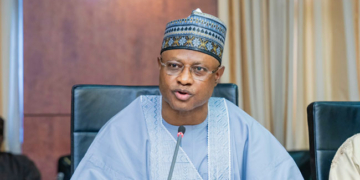
The Accountant-General of the Federation, Shamseldeen Ogunjimi, disclosed the figure during the 149th National Economic Council (NEC) meeting chaired by Vice President Kashim Shettima on Thursday at the Presidential Villa in Abuja.
The current administration under President Bola Tinubu has not made any known remittances into the ECA since assuming office in May 2023.
This is despite international oil prices averaging over $80 per barrel—well above the $77.96 benchmark set in the 2024 Appropriation Act.
Established in 2004 by former President Olusegun Obasanjo, the ECA was conceived as a stabilisation mechanism to store oil revenues in excess of budgetary projections. At its peak, the account held over $20 billion during the tenure of President Obasanjo. His successor, Goodluck Jonathan, left the fund at $2.47 billion in 2015.
However, under former President Muhammadu Buhari, the account was heavily depleted—falling from $2.47 billion to its current level, with $473,754.57 being the residual sum inherited by the Tinubu administration.
The reasons for the withdrawals have often been opaque, ranging from national security expenditures to infrastructure projects — many of which were not backed by transparent audit trails or legislative approval.
The failure to save during periods of oil boom is not new in Nigeria, but the current situation is drawing renewed scrutiny, especially at a time when the country is grappling with inflation, high debt servicing costs and exchange rate volatility.
Analysts argue that with oil prices consistently trading above the budgeted benchmark since the start of 2024, the federal government missed a critical opportunity to rebuild the ECA.
The decision not to remit surplus oil revenues into the fund could expose the country to severe macroeconomic shocks, particularly in a global landscape increasingly prone to geopolitical and economic turbulence.
“What’s worrying is that this government is repeating the same fiscal indiscipline that has plagued successive administrations,” said Dr Chika Onyekwena, an economist at the Centre for the Study of the Economies of Africa (CSEA). “We have a mechanism to save, but it’s not being used even when oil prices are favorable. It’s short-sighted and risky.”
Nigeria’s over-reliance on crude oil for over 70 percent of its export earnings and more than 50 percent of government revenues makes it acutely vulnerable to external shocks. The ECA, if effectively managed, provides a cushion against such volatility.
Without such savings, the government may be forced to resort to external borrowing or printing money to fund critical needs in the event of a downturn in oil prices or other external shocks, such as a global recession or a resurgence of pandemic-related disruptions.
“What happens when there’s another oil price crash or an unforeseen global event like COVID-19?” asked Dr Sarah Ibe, a fiscal policy expert. “Without a buffer like the ECA, Nigeria would be exposed to exchange rate shocks, inflationary pressures and a further rise in borrowing, which is already at unsustainable levels.”
As of Q1 2025, Nigeria’s public debt is estimated at N97 trillion, with over 90 percent of revenue dedicated to servicing debts — a situation that leaves little room for fiscal maneuvering.
Another recurring concern is the lack of transparency in the management of oil revenues and the ECA itself. The fiscal rule that governs the ECA — saving excess earnings from oil revenues — has often been ignored or circumvented. In many instances, state governors have pushed for the withdrawal of funds from the ECA to augment monthly allocations, undermining its long-term purpose.
Critics argue that without a constitutional framework to protect the ECA from political manipulation, the fund will continue to be treated as a stopgap rather than a strategic savings mechanism.
“The Excess Crude Account is an orphaned fund. No one is truly accountable for its management and that’s a structural problem,” said lead director at the Centre for Social Justice, Eze Onyekpere. “We need legal safeguards and a culture of fiscal responsibility to protect our macroeconomic stability.”
International rating agencies and investors closely monitor a country’s fiscal buffers as indicators of macroeconomic resilience. The failure to replenish the ECA sends negative signals about Nigeria’s commitment to prudent fiscal management and may affect its sovereign credit rating.
With Nigeria already facing low investor confidence due to foreign exchange volatility, persistent inflation, policy inconsistencies and the absence of a robust stabilisation fund could further dent the country’s attractiveness to international capital.
“Global investors look at how you manage your windfalls,” said a finance and energy analyst, Rolake Akinkugbe-Filani. “When you squander opportunities to save, it raises red flags about your long-term stability.”
Despite public concerns and media scrutiny, the federal government has not provided a satisfactory explanation for the continued dormancy of the ECA.
Vice President Shettima, who chaired the latest NEC meeting where the balance was revealed, did not address the issue publicly.
Attempts to get an official response from the Federal Ministry of Finance were unsuccessful as of the time of filing this report as the director of information in the ministry, Mohammed Manga refused to respond to our enquiries.
On social media and in public commentaries, Nigerians have expressed dismay over the government’s apparent unwillingness to restore the fund. Many view the issue as part of a broader pattern of fiscal irresponsibility and lack of accountability in the management of the nation’s wealth.
The current state of Nigeria’s Excess Crude Account is emblematic of deeper structural issues in the country’s public finance management.
The failure to save at a time of oil boom not only deprives the nation of a vital shock absorber but also raises critical questions about the Tinubu administration’s commitment to fiscal prudence.
As oil prices remain volatile and global uncertainties persist, Nigeria may soon find itself confronting a crisis without the safety net it once had unless bold reforms are undertaken to institutionalise savings and enforce accountability in the management of its oil revenues.
We’ve got the edge. Get real-time reports, breaking scoops, and exclusive angles delivered straight to your phone. Don’t settle for stale news. Join LEADERSHIP NEWS on WhatsApp for 24/7 updates →
Join Our WhatsApp Channel