Stakeholders in Nigeria’s science and innovation ecosystem have called for problem-solving research and innovation, highlighting the country’s urgent need for scientific breakthroughs to address national development challenges.
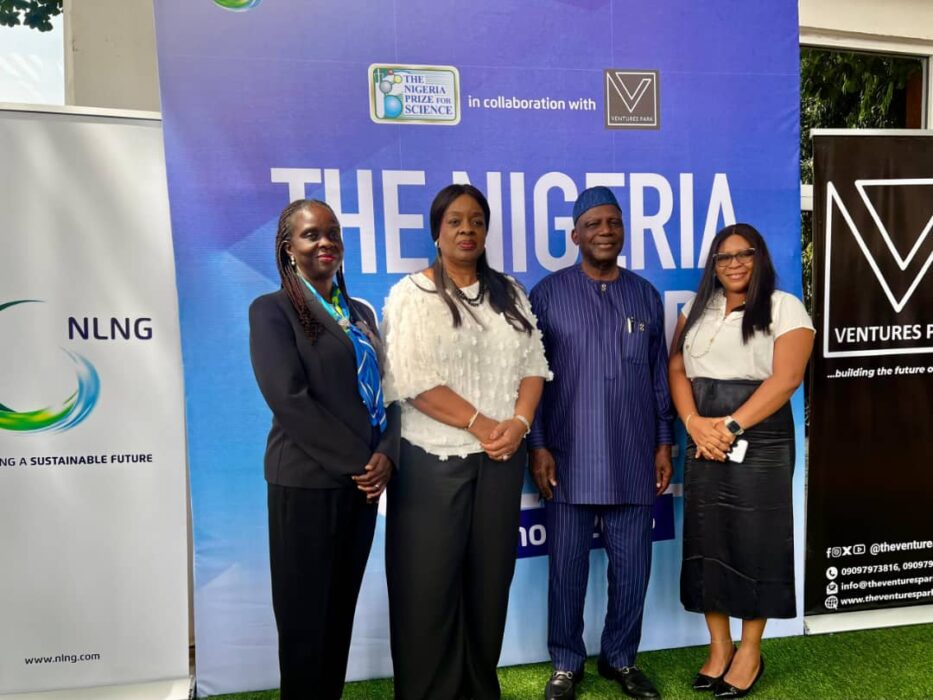
Speaking during the 2026 Nigeria Prize for Science (NPS) Roadshow, organised by NPS in partnership with Ventures Park, in Abuja, chairman of the Advisory Board for Science, Professor Bart Nnaji, said Nigeria was at a defining moment where innovation must move from being a luxury to a necessity, as the country grapples with food insecurity, industrial decline, public health challenges and the accelerating effects of climate change.
He said science and technology remain central to securing Nigeria’s future, stressing that knowledge must translate into solutions that improve lives and livelihoods. He described the Nigeria Prize for Science as a national rallying point for researchers and innovators whose work can reshape technological advancement and societal wellbeing.
Established in 2004 by Nigeria LNG Limited (NLNG), the Nigeria Prize for Science was created to stimulate interest in scientific research and encourage the development of solutions to pressing social problems in areas such as agriculture, energy, healthcare and environmental protection.
Nnaji explained that the Prize is strictly evaluative, recognising only innovations that demonstrate measurable impact, scalability and long-term value. He disclosed that 112 submissions were received for the 2025 cycle, all of which underwent rigorous, multi-layered assessment covering academic quality, innovation, impact, commercialisation potential, soundness and patent strength.
However, he said that no entry met the required benchmark for the 2025 award.
“When a year produces no winner, it is not because there is no intelligence in Nigeria or even in the broader world; it is because the Advisory Board chooses not to lower the bar. This is how credibility is preserved. Scientific recognition must be earned,” he said.
He urged participants not to view the outcome as discouraging, but as an opportunity for refinement, noting that many major scientific breakthroughs were achieved only after repeated revisions and persistence.
While acknowledging growth in Nigeria’s scientific ecosystem, particularly in data science, materials engineering, genetics, medical devices, bio-innovation and energy storage, he stressed the need for more practical and commercially viable outcomes.
Nnaji also identified a significant gap between research and commercialisation, calling for stronger collaboration between universities and industry, improved peer-review culture and more interdisciplinary research capable of addressing complex national problems.
In her welcome address, General Manager, External Relations and Sustainable Development at NLNG, Dr. Sophia Horsfall, described the roadshow as a call to action for Nigerian scientists, researchers and innovators to take advantage of the Nigeria Prize for Science as a platform for national and global recognition.
She said for over two decades, the Prize has celebrated Nigerian scientists whose work goes beyond theory to deliver real-world solutions in healthcare, energy, agriculture, climate change, artificial intelligence and other critical sectors.
Horsfall noted that science plays a decisive role in shaping national competitiveness, job creation, infrastructure development and environmental sustainability, aligning with NLNG’s vision of improving lives sustainably.
She explained that Abuja was chosen as the starting point of the roadshow because of its symbolic role as Nigeria’s centre of unity and policy, and the presence of researchers working on projects with strong development potential.
Also speaking at the close of the event, Manager, Corporate Communication and Sustainable Development at NLNG, Anne-Marie Palmer-Ikuku, thanked participants, partners and stakeholders for their engagement, describing the discussions as proof of Nigeria’s vast innovation potential.
She called for broader participation in future editions of the Prize, urging researchers, universities and innovation hubs to mobilise their best ideas and pursue deeper collaboration. Palmer-Ikuku said the Nigeria Prize for Science is entering a new phase aimed at inspiring bold thinking, relevance and sustainability in scientific research.
She encouraged scientists to spread awareness about the Prize, emphasising that while standards remain high, the process is credible and Nigerian science deserves global recognition.
We’ve got the edge. Get real-time reports, breaking scoops, and exclusive angles delivered straight to your phone. Don’t settle for stale news. Join LEADERSHIP NEWS on WhatsApp for 24/7 updates →
Join Our WhatsApp Channel