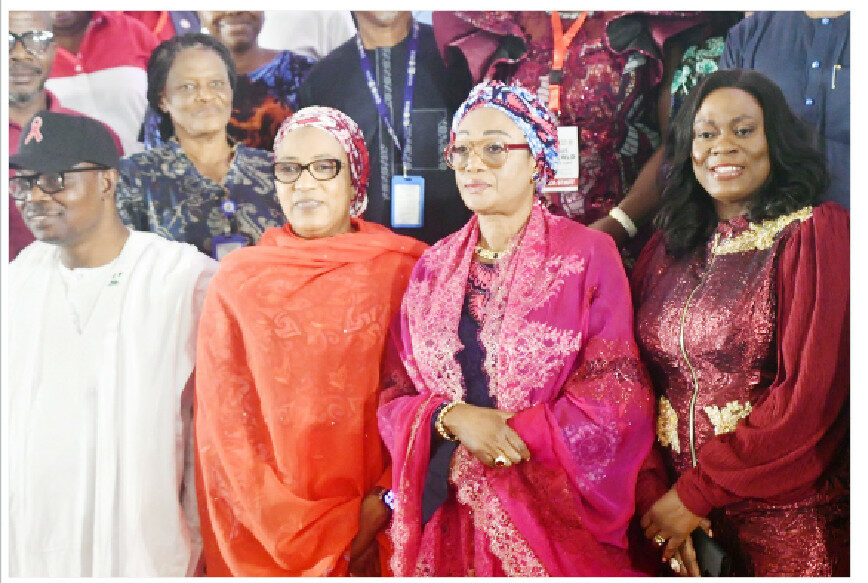
Minister of State for Health and Social Welfare, Dr Iziaq Salako, has said Nigeria has recorded major milestones in its fight against HIV/AIDS and is now closer than ever to eliminating the disease as a public health threat by 2030.
In his opening address at the 2025 World AIDS Day commemoration in Abuja, Salako said the country has not only sustained progress despite global disruptions but has exceeded critical UNAIDS benchmarks.
He announced that 98 per cent of Nigerians living with HIV who know their status are now on life-saving antiretroviral therapy, surpassing the global target, while 95 per cent of those on treatment have achieved viral suppression. Nigeria, he added, is also close to ensuring that 95 per cent of all people living with HIV know their status.
The minister commended President Bola Ahmed Tinubu’s administration for maintaining strong commitment to HIV prevention and care despite global economic pressures, declining donor funding, and supply chain disruptions.
“Under President Bola Ahmed Tinubu, Nigeria has remained steadfast in protecting past gains and making further progress,” he said.
He also hailed First Lady Senator Oluremi Tinubu, describing her as the country’s “Chief Public Health Champion” whose decades-long involvement in HIV advocacy continues to strengthen the national response.
“As First Lady of Lagos, as a Distinguished Senator, and now as mother of the nation, Her Excellency has consistently championed HIV prevention and care through the New Era Foundation, the Free to Shine Campaign, and the Renewed Hope Initiative,” Salako said.
Salako highlighted major advancements in HIV prevention, including expanded access to pre-exposure prophylaxis (PrEP), new long-acting formulations, and broader outreach to adolescents and high-risk groups.
He also announced that persons living with HIV now have access to annual liver and kidney function tests through expanded health insurance coverage.
In an effort to improve data integrity and efficiency, Nigeria has also strengthened real-time monitoring systems and moved towards an integrated service model that merges HIV care with TB, malaria, nutrition, and maternal and child health services.
“This integrated approach ensures children and adolescents can access multiple essential services during a single visit, reducing missed opportunities and improving outcomes,” he said.
In a major policy shift, the minister confirmed that the National Council on Health has reduced the age of consent for voluntary HIV testing from 18 to 14 years.
He said the decision aligns with global best practices and will enable more adolescents to get tested early, access care sooner, and reduce community transmission.
The Council also approved the institutionalization of the National Clinical Mentorship Programme, which state ministries of health are expected to fund and implement.
While celebrating progress, Salako noted ongoing challenges, including new infections among young people, stigma, and unequal access to services in some communities.
“These gaps remind us that ending AIDS is possible, but only if we work together with renewed determination,” he said.
He urged state governments, development partners, civil society groups, and the private sector to deepen collaboration and scale up innovation to keep Nigeria on track ahead of the 2030 target.
Salako emphasised that the fight against HIV/AIDS transcends healthcare.
“Ending HIV/AIDS is about justice, dignity, and the future of our children and young people,” he said.
We’ve got the edge. Get real-time reports, breaking scoops, and exclusive angles delivered straight to your phone. Don’t settle for stale news. Join LEADERSHIP NEWS on WhatsApp for 24/7 updates →
Join Our WhatsApp Channel