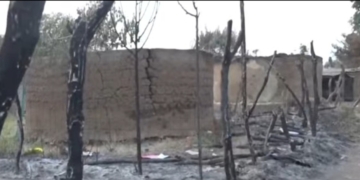
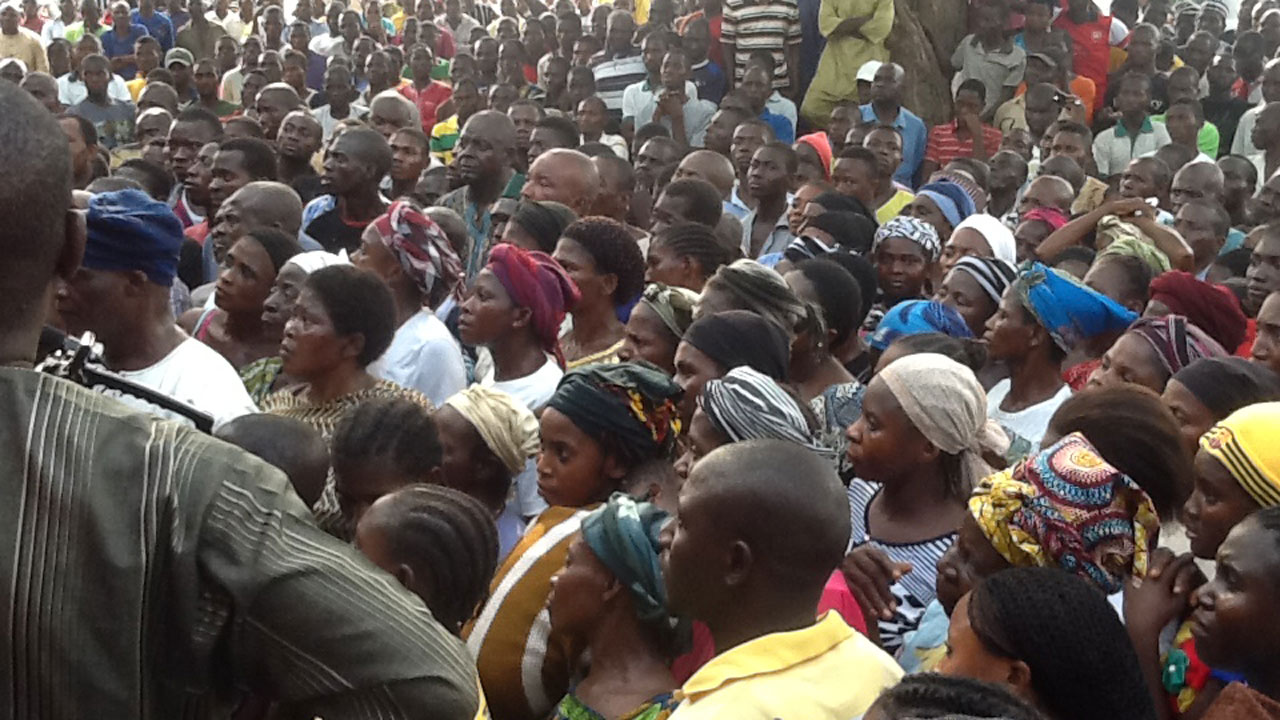
Nigeria’s growing internal displacement crisis, now affecting more than 3.7 million people, took centre stage at a high-level conference organised by the Office of the Vice President, the United Nations, the UK’s Foreign, Commonwealth and Development Office (FCDO) and Tropical General Investments (TGI) Group.
Speaking in Lagos at the start of the two-day event themed Securing Futures: Market-based Solutions for Internal Displacement, Vice President Kashim Shettima, represented by the minister of Defence, Gen. Christopher Musa, said, “The scale of displacement reflects a shared conviction that this challenge requires coordinated thinking, collective action and sustained investment”.
He asserted that Nigeria must move from managing displacement to unlocking opportunity and building durable stability.
He described internal displacement as one of the nation’s most critical development challenges, noting that millions across the North East, North West, North Central and other regions have been forced from their homes by conflict, climate shocks and economic disruption.
“These figures represent more than data points. They are citizens with capabilities, experience and aspirations,” he said.
Nigeria today hosts over 3.5 million forcibly displaced persons, placing it among the countries with the largest displaced populations in Africa. In addition, 2.6 million people have returned to their communities but remain in fragile conditions, while more than 2.5 million displaced persons are currently living within host communities, putting pressure on already scarce resources.
Shettima said the federal Government is aligning its response with the Renewed National Development Plan 2026–2030, whose pillars include economic diversification, productivity, human capital development, national competitiveness and climate resilience, with security remaining a cross-cutting enabler of growth.
“For too long, displacement has been treated only as a humanitarian emergency, but long-term stability cannot be built on relief alone. This conference marks a deliberate shift towards durable, market-based solutions that restore dignity through economic inclusion,” he said.
The Vice-President noted that displaced Nigerians are already active in informal markets running small businesses, supplying labour and rebuilding local value chains. “When displaced persons earn sustainable incomes, they support their families with dignity, reduce dependence and become contributors to the national economy,” he said.
The United Nations Resident and Humanitarian Coordinator in Nigeria, Mohammed Fall, while speaking on the scale of the crisis, said, “Displacement is about the loss of home, broken routines, interrupted education, fragile health, and sometimes lost dignity.”
He disclosed that over 3.7 million Nigerians are currently displaced, while 2.6 million have returned home but still struggle to rebuild their lives.
Fall further said that host communities are also under strain, noting that over 2.5 million displaced persons are being absorbed by families and communities that share land, water, classrooms and livelihoods. “Women carry the heaviest burden. Girls lose school years. Young men lose their livelihoods, yet they continue to rise with courage,” he said.
We’ve got the edge. Get real-time reports, breaking scoops, and exclusive angles delivered straight to your phone. Don’t settle for stale news. Join LEADERSHIP NEWS on WhatsApp for 24/7 updates →
Join Our WhatsApp Channel