The Federal Government of Nigeria and the World Bank Group have opened talks on a new Country Partnership Framework (CPF) designed to drive inclusive economic growth, create jobs, and deepen private sector participation across Nigeria.
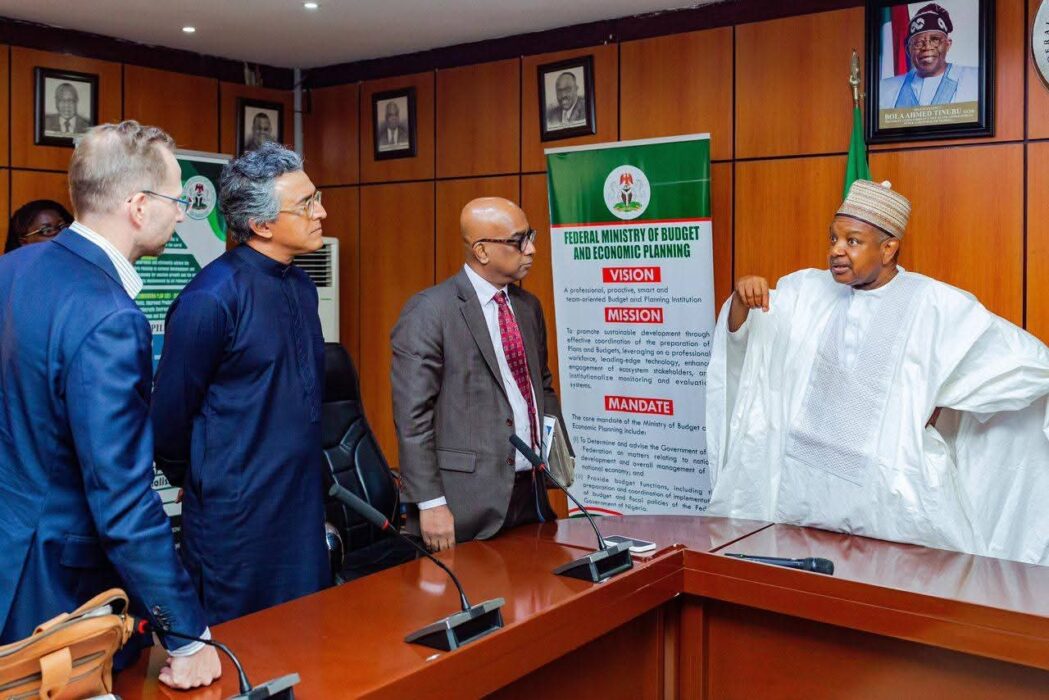
At a high-level consultative meeting held on Monday, December 8, 2025, in Abuja, the Minister of Budget and Economic Planning, Senator Abubakar Atiku Bagudu, described the CPF as a “golden opportunity” to align with Nigeria’s forthcoming 2026–2030 National Development Plan.
According to him, the new framework is expected to decentralise planning and channel resources more effectively toward state and local governments, a shift he said will help translate national priorities into community-level impact.
“We have invested in strong brainstorming sessions to interrogate Nigeria’s cooperative federalism and reveal opportunities for deeper collaboration across federal, state, and local governments,” Bagudu said.
He added that the approach would help “enhance outcomes, particularly in creating jobs, increasing incomes, and supporting human capital development.”
The minister noted that the government’s fiscal strategy aims to “derisk private capital” by using federal transfers and development funds to attract private investments into renewable energy, agriculture, and infrastructure.
“Our Renewed Hope ward-based development plan is designed to ensure that governance structures at the ward level are fully engaged in identifying economic opportunities and efficiently utilizing resources,” he said.
“We are determined to transform potential sources of conflict into avenues for growth, while supporting climate resilience and sustainable livelihoods for our communities.”
He cited sectors such as livestock, fisheries, and agriculture as examples where well-managed programs could turn competition over resources into cooperation and income generation.
Bagudu also stressed the need for greater transparency and efficient resource use, saying the Ministry is working with all three tiers of government to guarantee “irreducible minimum” investments in infrastructure and security. He emphasized the role of domestic capital markets in channeling idle funds into productive investments that would spur economic growth.
On his part, World Bank Country Director for Nigeria, Mr. Mathew Verghis, reaffirmed the Bank’s commitment to supporting Nigeria’s development priorities through the new CPF.
“The new Country Partnership Framework will focus on job creation, private capital mobilization, human capital development, and resilience,” Verghis said.
“Our strategy is to scale up state-focused projects and leverage private sector engagement to double the impact of initiatives in energy, broadband, agriculture, and small and medium enterprises.”
Both sides agreed that the CPF marks a transformative phase in Nigeria’s partnership with the World Bank, combining decentralized planning, enhanced human capital, private sector mobilization, and inclusive governance to deliver measurable results.
Bagudu concluded that the Ministry remained committed to ensuring the CPF strengthens local development, maximizes resource efficiency, and supports the nation’s long-term economic and social objectives.
We’ve got the edge. Get real-time reports, breaking scoops, and exclusive angles delivered straight to your phone. Don’t settle for stale news. Join LEADERSHIP NEWS on WhatsApp for 24/7 updates →
Join Our WhatsApp Channel