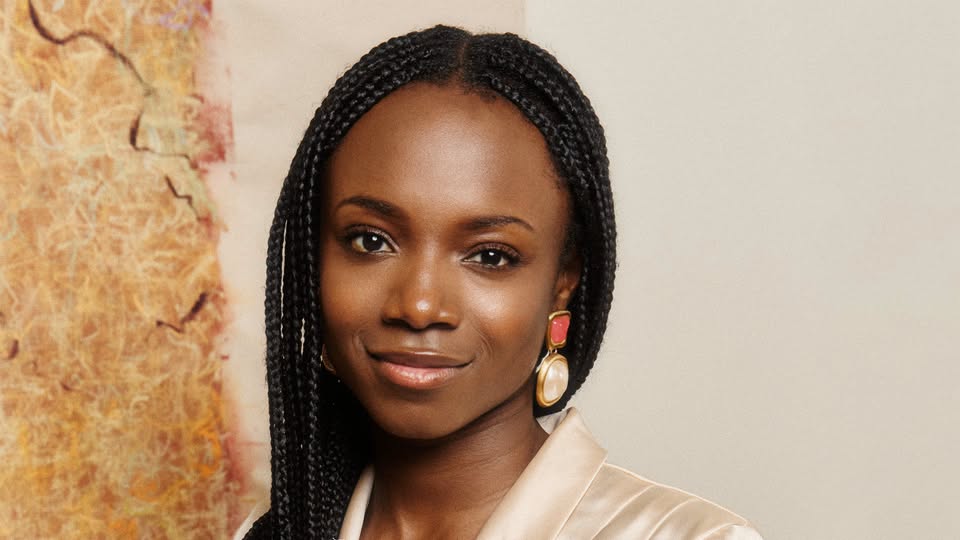
Nigerian-American engineer and Harvard University graduate, Yinka Ogunbiyi, has developed HaloBraid, the world’s first braid-assist robot, an innovation designed to reduce the physical demands of hair braiding while significantly cutting appointment times for salons.
The breakthrough has attracted strong investor interest, with the startup raising $7 million in a seed funding round led by Seven Seven Six, the venture capital firm founded by Reddit co-founder Alexis Ohanian. The round also received backing from AlleyCorp and Bling Capital.
The company has also recorded strong commercial demand ahead of launch, with more than 7,000 professional salons already on its waiting list.
The achievement was spotlighted by the United States Mission in Nigeria, which praised Ogunbiyi’s innovation in a post on X on Friday.
“Nigerian-American engineer & Harvard grad Yinka Ogunbiyi built HaloBraid, the world’s first braid-assist robot, easing strain on stylists & saving salons time. $7M raised, 7,000+ salons waitlisted. American innovation, global impact. #AmericanExcellence in action,” the mission wrote.
Ogunbiyi, who holds a joint Master of Science and Master of Business Administration degree from Harvard’s School of Engineering and Applied Sciences and Harvard Business School, previously worked on developing smart kitchen appliances and Internet of Things (IoT) devices before turning her attention to the beauty industry.
According to the company, the idea for HaloBraid was born during the COVID-19 pandemic after Ogunbiyi spent four days installing her own knotless braids at home. The experience exposed what she described as a major gap in innovation within the global hair-braiding industry.
She subsequently partnered with co-founder David Afolabi to develop a robotic solution capable of improving efficiency without replacing professional hairstylists.
Unlike fully automated systems, HaloBraid functions as a collaborative robot (cobot) designed to work alongside braiders rather than replace them. The device handles the repetitive down-shaft braiding movements, which account for most of the time spent during knotless braid appointments, while stylists remain responsible for sectioning the hair, creating the foundation braid, and completing the final styling.
Explaining the company’s approach, Ogunbiyi said the technology is intended to support, not replace, professional braiders.
“I don’t think anything will get lost from the experience. If anything, it enriches it. Technology simply assists with the repetitive movements that consume the most time and place the greatest strain on the body,” she said.
According to HaloBraid, the system can reduce the duration of standard knotless braid appointments by nearly 50 per cent, allowing salons to serve more clients without compromising the quality of the finished style.
Beyond improving productivity, the company says the robot addresses longstanding occupational health challenges faced by hairstylists, many of whom experience repetitive strain injuries, including carpal tunnel syndrome, arthritis, and chronic back pain, after years of continuous braiding.
By taking over the most physically demanding aspect of the braiding process, HaloBraid aims to extend the careers of professional stylists while improving their overall well-being.
The company also cited consumer research indicating that 95 percent of Black women surveyed said they would wear protective hairstyles more frequently if salon appointments were shorter and less time-consuming
We’ve got the edge. Get real-time reports, breaking scoops, and exclusive angles delivered straight to your phone. Don’t settle for stale news. Join LEADERSHIP NEWS on WhatsApp for 24/7 updates →
Join Our WhatsApp Channel