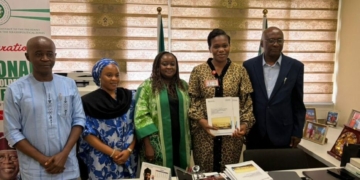
A Nigerian doctoral researcher at Cornell University, Omobolanle Joseph Akinniyi, has called for a reshaping of national and global understanding of women’s contributions to nation-building through groundbreaking academic work that connects historical insight to contemporary political relevance.
Akinniyi, a PhD candidate in African History, made the call in a chat with journalists on Tuesday.
He disclosed that his research which focuses on the strategic and often overlooked roles played by Biafran women during the Nigerian Civil War (1967–1970)—showed them not merely as victims of conflict, but as strategists, intelligence operatives, economic organisers, diplomats, and community leaders, whose work proved indispensable to the survival of the Biafran State.
The research work titled ‘Beyond Victimhood: Biafran Women’s Transnational Activism during the Nigeria-Biafra War, 1967–1970’, was presented at the 68th annual meeting of the African Studies Association, Atlanta, GA, November 20-22, 2025.
“By documenting how women drove intelligence networks, coordinated wartime logistics, managed refugee systems and negotiated community survival during the civil war, women’s participation in nation-building has deep historical roots,” he began.
His research work challenged longstanding narratives that sideline women in political history.
According to him, “the study of nationalism is incomplete if women’s political actions—mostly unofficial—do not complement official politics.”
Akinniyi, through his work argued that Nigerian women have always been architects of political development, not peripheral participants, providing a powerful framework for current discussions on women’s involvement in governance, particularly as the country moves toward the 2027 elections.
His research provides a compelling narrative for contemporary female political aspirants: their leadership is not new, but part of a long tradition of competence and resilience.
“This historical grounding helps counter stereotypes of inexperience often used to undermine female candidates. Instead, it positions them as continuing a legacy of political, economic, and security leadership,” he added.
With Nigeria facing pressing political, security, and economic challenges, Akinniyi, through his research offers timely lessons by urging policymakers, development experts, and the media to recognize that enhancing women’s political participation is not simply symbolic—it is strategically essential.
“From the civil war era to today, women have consistently stepped forward to stabilize communities, advance democratic ideals, and shape national identity. Yet, institutions have often failed to match this leadership with adequate representation.
“As the 2027 elections draw near, Nigeria’s progress depends on acknowledging women as central architects of its present and future—not as token participants, but as proven leaders,” he added.
Akinniyi’s academic journey also illustrated the growing influence of Nigerian scholarship on global discourse. A top graduate of the University of Lagos, he is currently a Sage Fellow at Cornell University, with his research supported by leading institutions including the Bradley Foundation, the Hoover Institution at Stanford University, and Cornell internal funders.
In 2024, he served as a Junior Visiting Scholar at Oxford University’s Nuffield College, further underscoring the international relevance of his work.
These accomplishments highlight not only personal excellence but the capacity of Nigerian intellectuals to produce research that transforms both global understanding and domestic policy.
We’ve got the edge. Get real-time reports, breaking scoops, and exclusive angles delivered straight to your phone. Don’t settle for stale news. Join LEADERSHIP NEWS on WhatsApp for 24/7 updates →
Join Our WhatsApp Channel