BANGKOK, THAILAND—The federal government has stressed the need for social support systems to cushion the impact of economic reforms, saying vulnerable Nigerians must be able to survive present hardship to benefit from the promised gains of the policies.
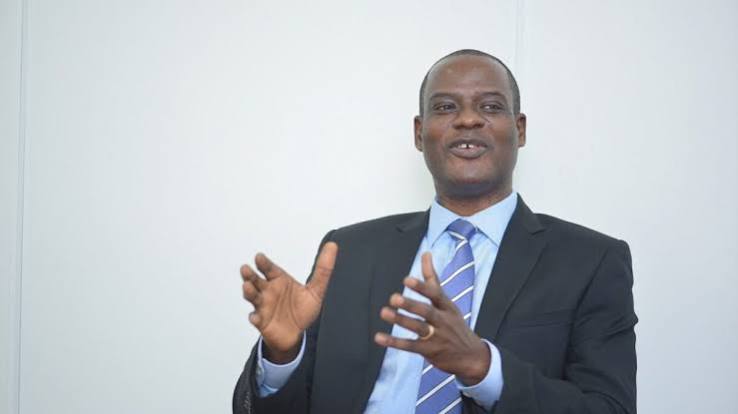
Minister of Finance and Economy and Coordinating Minister of the Economy, Taiwo Oyedele, said many Nigerians live in poverty, making it necessary for the government to provide support for citizens while implementing policies aimed at strengthening the economy.
Speaking during a panel session on Africa’s Golden Future at the ongoing International Monetary Fund (IMF) and World Bank 2026 Annual Meetings in Bangkok, Thailand, Oyedele said the government must consider how vulnerable citizens would cope with the immediate effects of reforms.
Oyedele said the government had to consider the consequences of implementing reforms halfway, warning that citizens could bear the costs without receiving the intended benefits. “You should have the end in mind, and if you start your reforms and you do it halfway, you deliver the pain, and the gains are not guaranteed,” he said.
Explaining the sequencing of the reforms, he identified fuel subsidy removal and foreign exchange liberalisation as two major measures whose order of implementation was critical.
“The first one was subsidy removal on fuel products, and many people had not paid attention to the fact that the biggest component of that subsidy wasn’t the fuel product itself; it was the foreign exchange. So, if we had done forex flotation before fuel, it would have been impossible,” he said.
Oyedele explained that fuel prices rose following subsidy removal before the foreign exchange reform triggered another increase. “So, by doing fuel first, the price went up by maybe 100 per cent and then two weeks later, that was quick, by the way, was the forex reform, and then it went up again,” he said.
He added that the government had to retain some subsidy for a few months as part of the sequencing process. On tax reform, the minister said the government faced the challenge of low public trust despite its intention to provide relief through the changes.
“The third most significant reform was tax reform. Tax reform wasn’t meant to be painful. It was bringing relief, but level of trust was quite low, and it was controversial. It was difficult, but we pulled it off,” he said.
He said the government had continued to communicate the rationale behind the reforms, adding that their sustainability depended on institutionalising the measures and ensuring policy consistency.
“So, most of the reforms we did in Nigeria are either enacted into law or embedded into institutions because you need to be able to do that for sustainability, and the last one is you must stay the course,” he said.
The minister also stressed that reforms needed to be supported by planning, scenario analysis and clear communication to prepare for possible setbacks. He said the government had to explain the alternative to reform to citizens who were experiencing immediate difficulties.
“People can easily tell that because of the reform, life is harder. But you need to show them without the reform, it will be hardest, and it doesn’t mean they will believe you the first time. But you keep saying it, Bear in mind, particularly in Africa, many of our citizens live in poverty. Many of them are not well educated. When people are hungry, and they are angry, they cannot be rational,” he said.
He stressed that social support systems were necessary to help citizens meet their immediate needs while the government pursued its economic objectives. “So, how do you keep these people being able to survive? Because for them, they have to be alive to see tomorrow that you are promising, and this is where the support system becomes very important,” he said.
Giving an account of the government’s interventions, Oyedele said cash transfers had reached more than 10 million households, while an education fund had supported over 1.5 million students. “Cash transfers in Nigeria we’ve done over 10 million households. We also did with education fund to over 1.5 students, enabling not only for them to continue with their education, but for their parents and their guardian to have the sources of fund for other important things that they have to do,” he said.
Meanwhile, Oyedele said Nigeria was working to align its economic policies and remove barriers that could prevent businesses from benefiting from the African Continental Free Trade Area (AfCFTA) the agreement offered an opportunity to transform the continent’s 54 countries into a single market, but stressed that its benefits would depend on governments addressing barriers to trade.
“Unfortunately, that’s the current reality. So we have a lot of small countries, and what AfCFTA is trying to do is to turn 54 countries into one market, so that way it’s easy for us to scale. But that will not happen until we remove the barriers, and many of them are actually non tariffs,” he said.
Oyedele said Nigeria was developing an economic policy framework with an international dimension that would incorporate its regional treaty commitments and guide the relationship between domestic economic policies and regional trade.
He said the framework would address different aspects of the economy, including the strategic use of tariffs and the need to ensure that trade, fiscal and monetary policies were consistent.
“For example, if you need to do a bit of protection using tariff, it has to be strategic. For how long? How do you face it out so that you are also because at the end of the day, if you don’t manage this carefully, what you do you’re just imposing taxes on your own citizens to pay for the inefficiency that you could have prevented,” he said.
The minister identified Nigeria’s National Single Window initiative as one of the measures being pursued to make trade across the country’s borders more seamless. “The national single window is one, so that the experience at the border is seamless. We’re not there yet, but it’s a journey,” he said.
He added that technology was being used to drive the process, although implementation remained ongoing. Oyedele said the objective was to make trade within Africa more competitive and reduce the difficulties businesses face when moving goods across borders.
“I think if we start with the baseline that Africa today needs to be internally competitive, and what I mean by that is, it should not be easier for someone in Lagos, Rwanda, Nairobi, Johannesburg should not be easier to buy from China than it is to buy from Africa,” he said.
He said removing barriers would require clear standards, supporting infrastructure and better coordination among African countries.
The minister identified energy, critical logistics infrastructure, agro processing and storage as areas requiring investment to support regional commerce.
He also cited coastal highways, super highways and port infrastructure among the projects being developed in Nigeria, alongside efforts to improve human capital through education, skills and access to opportunities.
“The journey is even though the Nigerian market is big, the African market is bigger, and one of the leaders on the continent, we believe we have to lead by example by doing the right things,” he said.
Oyedele further acknowledged the difficulties associated with movement across African borders, saying Nigerians and other Africans needed easier movement to facilitate trade and economic cooperation.
“One of the areas where even Nigeria needs to work on is even just people moving around, and many people complain about this, including Aliko Dangote, having to get more visas than an American visiting Africa, so we have to first acknowledge that these problems are there, and that’s one way to us solving it,” he said.
President of the African Development Bank, Sidi Ould Tah, also emphasised the need to translate regional integration commitments into practical outcomes, noting that infrastructure and other barriers continued to constrain trade across the continent.
He said the bank devoted more than 60 per cent of its financing to infrastructure and was working with African countries and regional institutions to support implementation of AfCFTA.
Ould Tah said the bank’s regional financing arrangement could enable eligible countries to contribute 10 per cent of the cost of qualifying regional projects, with 90 per cent financed through the regional envelope, provided the projects involved more than two African countries.
He said the approach was intended to encourage governments to support infrastructure that connects markets across national borders, rather than focus exclusively on domestic projects.
The discussions highlighted the importance of combining social protection with reforms, while improving trade facilitation and infrastructure to enable African countries to expand production, attract investment and translate economic growth into better living standards.
We’ve got the edge. Get real-time reports, breaking scoops, and exclusive angles delivered straight to your phone. Don’t settle for stale news. Join LEADERSHIP NEWS on WhatsApp for 24/7 updates →
Join Our WhatsApp Channel