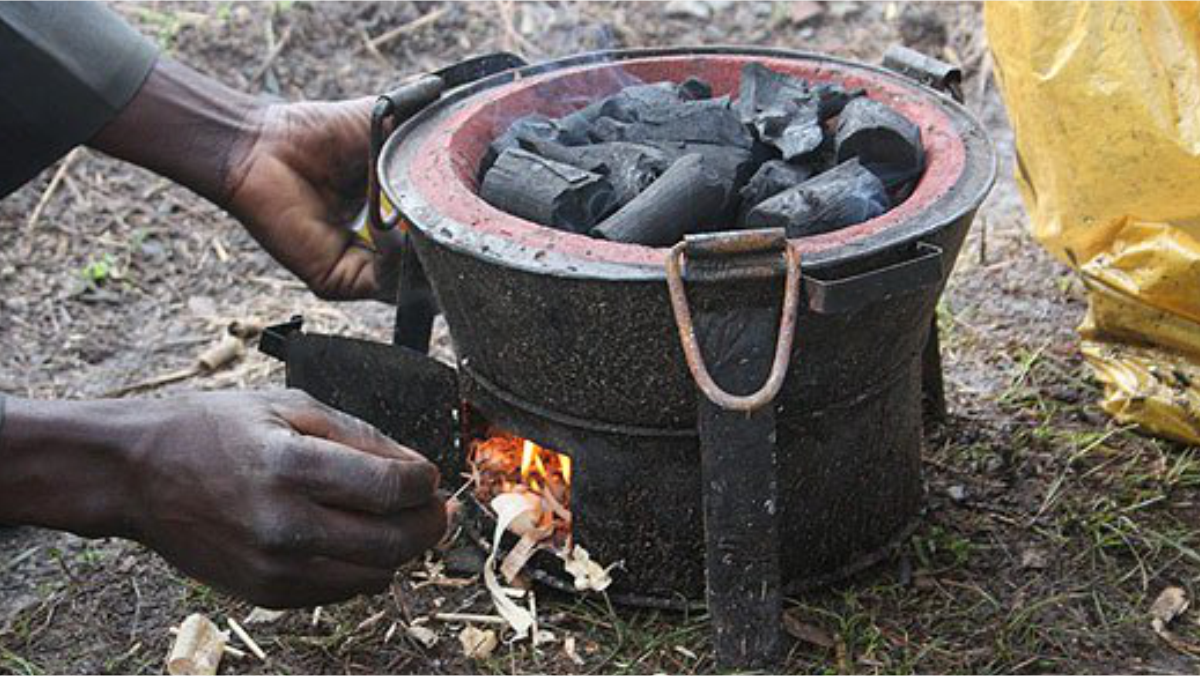
“Our ‘Joko’ charcoal stoves are a must-have for everyone. Easy to use; cook faster; use less charcoal and super durable.
“Because of its wall insulation, it concentrates all the generated heat onto the food that is cooking for even, and faster cooking.
“The big size sells for N21500, while the small size sells for N15,000, We are not taking online orders for now only store pickups”.
These and many more are what you find available at website of online store of a popular brand that sells locally-fabricated kitchen appliances.
Many of these brands use different catchphrases and advertising strategies as they hustle for customers in the fast growing charcoal stove market.
From using sponsored advertising campaigns online, the word of mouth and referrals, the advent of charcoal stoves and its acceptability among Nigerians cannot be underestimated.
Due to rising kerosene and cooking gas prices, a Mararaba resident, Hauwa Ladan says she has shifted to charcoal stoves and firewood as primary cooking fuels.
She finds charcoal stoves economical and faster for family meals, and has recommended it to friends and neighbours.
Ladan highlights the considerable impact of high cost of cooking gas, saying that it leaves huge holes in household expenditure in Nigeria.
“Nigerians should go back to charcoal. They believe gas cooks faster, whereas charcoal is better!
“There’s no cooking pot you place on charcoal that will go black. It’s only firewood that stains cooking pots’’, Mrs. Elizabeth Moyegun’’, told a national daily recently.
The recent blame game by the Nigerian Association of Liquefied Petroleum Gas Marketers (NALPGAM) and LPG terminal owners for the high cooking gas prices underscores the complexities in the supply chain.
Industry watchers say such disputes may reveal challenges in distribution, storage, or pricing strategies.
Addressing these issues is crucial to stabilise and potentially lower cooking gas prices for consumers, the NALPGAM says.
President of the NALPGAM, Oladapo Olatunbosun, insists that liquefied petroleum gas, popularly called cooking gas, has risen to at least N1,300 per kilogramme.
Although charcoal and firewood may come handy in this period of expensive cooking gas, experts warn that it comes at a huge cost to the environment.
They come in the shape of deforestation, air pollution, degradation of ecosystems and other potential consequences.
According to a United Nations data, between 2005-2010, Nigeria experienced an annual loss of over 2 million hectares of forest, primarily due to agricultural expansion, logging, and infrastructure development.
Nigeria is a major consumer of fossil fuel for cooking, with over 120 million Nigerians relying on firewood and charcoal for their cooking needs, according to the International Energy Agency.
A report by National Bureau of Statistics (NBS), says cooking gas prices surged by 38 per cent, hitting ₦16,250 per 12.5kg cylinder in January 2024.
The NBS says there was a 3.55 per cent month-on-month increase in the average retail price for refilling a 5kg cylinder.
This surge in prices is accompanied by a 37 per cent increase in the price of 1kg of gas, which rose to ₦1,300 from ₦950 during the same period, the agency said.
Dr Temitope Oyetunji, a family health doctor in Abuja, said the use of firewood has dual impact on both users and the environment.
According to Oyetunji, the smoke from burning firewood poses health risks, leading to respiratory and heart diseases when inhaled.
He emphasised that the emitted smoke particles contribute to environmental pollution, impacting the ozone layer.
“The consistent use of firewood and other fossil fuels creates polluted air, affecting several Sustainable Development Goals (SDGs).
“They include SDG3 (Good Health and Well-being), SDG 7 (Affordable and clean energy), SDG 11 (sustainable cities and communities), and SDG 13 (climate action)”.
The World Health Organisation (WHO) points at fossil fuels, as major contributors to harmful emissions, significantly impact global health.
The WHO says 99 percent of the world’s population breathes air exceeding the organisation’s recommended quality limits, thereby posing threats to health.
Consequently, the WHO stresses the urgent need to reduce fossil fuel usage and implement tangible measures to alleviate air pollution.
Analysts say encouraging sustainable alternatives and efficient use of cooking gas could mitigate these environmental impacts and promote a healthier balance between energy needs and environmental conservation.
According to them, promoting sustainable practices, such as reforestation, efficient use of wood, and alternative energy sources, is essential to mitigate these environmental consequences.
An Environmentalist, Mr Newton Jibunoh, underscored the detrimental impact of tree felling for firewood in Nigeria, emphasising that it led to loss of biodiversity.
Jibunoh highlighted that deforestation significantly diminishes habitats for diverse plant and animal species, resulting in a notable decline in overall biodiversity.
According to him, the crucial role trees play in preventing soil erosion cannot be ignored, saying that their removal, as seen in the quest for firewood, can lead to diminished soil fertility and an increase in erosion rates.
He drew attention to the role of trees in absorbing carbon dioxide, noting that widespread removal of trees for firewood contributes to elevated levels of greenhouse gases, thereby exacerbating the challenges posed by climate change.
“The significance of trees in regulating water cycles cannot be underestimated, deforestation disrupts local hydrological patterns, potentially affecting water availability in the region.
“Many communities rely on forests for resources, as deforestation intensifies, these communities experience adverse effects on their livelihoods and cultural practices”.
Experts advocate a shift to sustainable cooking practices in Nigeria by addressing the escalating costs of traditional fuels like gas.
They opine that fostering collaboration and addressing supply chain issues could stabilise and lower cooking gas prices, benefiting both the economy and the environment.
They also propose reforestation and alternative energy adoption to mitigate environmental impacts.
Culled from NAN
We’ve got the edge. Get real-time reports, breaking scoops, and exclusive angles delivered straight to your phone. Don’t settle for stale news. Join LEADERSHIP NEWS on WhatsApp for 24/7 updates →
Join Our WhatsApp Channel