
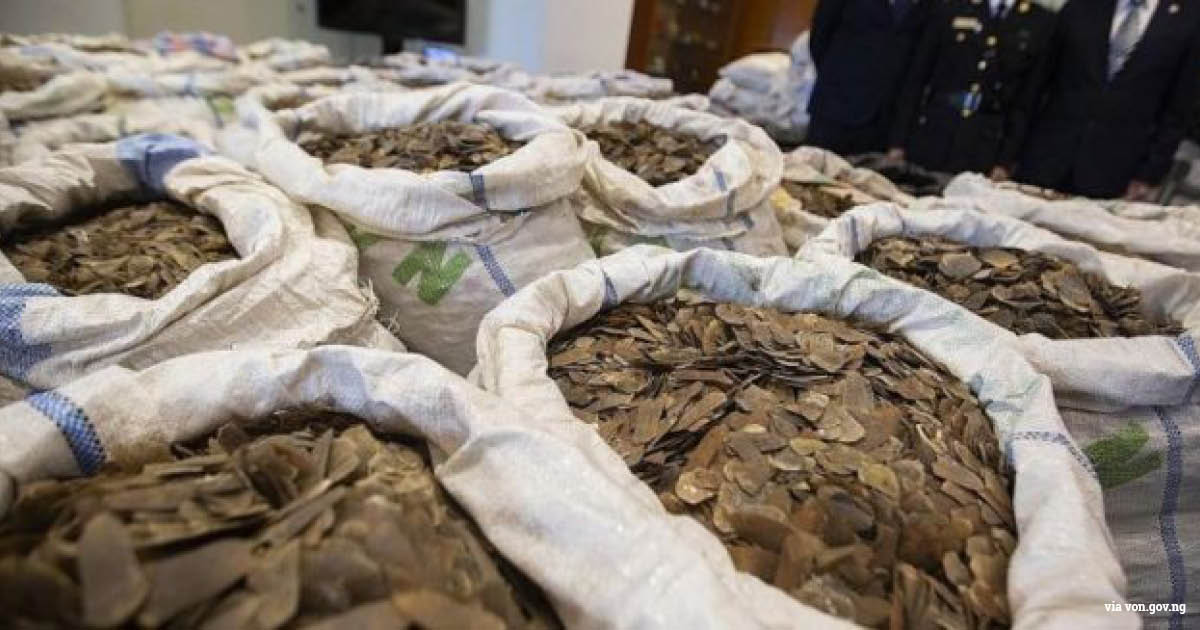
A wave of citizen action and inter-agency collaboration is reshaping Nigeria’s fight against wildlife crime, as the National Environmental Standards and Regulations Enforcement Agency (NESREA) records fresh victories in the rescue and handover of endangered pangolins in Kano and Akwa Ibom states.
Director General of NESREA, Prof. Innocent Barikor, described the separate incidents as powerful evidence of growing public awareness and resistance against illegal wildlife trade, noting that ordinary Nigerians are increasingly choosing conservation over profit.
In Akwa Ibom State, a local hunter, Imo Etim, stumbled on two pangolins caught in his traps set for grass-cutters but made a decisive and commendable choice. Instead of selling the animals, he alerted conservation experts, leading to their transfer to NESREA officials through the Pangolin Conservation Guild Nigeria (PCGN). Though one of the pangolins died, both were formally handed over to the National Park Service.
In Kano, a coordinated crackdown by officers of the Nigerian Customs Service led to the interception of three pangolins, two alive and one dead, suspected to be linked to illegal wildlife trafficking. The animals were subsequently transferred to NESREA officials and moved to the Kano Zoological Garden under the care of the Kano State Zoological and Wildlife Management Agency (KAZOWMA).
Barikor hailed both developments as a turning point in Nigeria’s conservation efforts, stressing that public vigilance and institutional synergy are beginning to yield tangible results.
“What we are seeing is a shift in mindset. In Akwa Ibom, the hunter chose the law over illegal gain. That is a major win. In Kano, the seamless collaboration among enforcement agencies shows that traffickers are running out of hiding places,” he said.
The NESREA boss warned that wildlife trafficking, whether conducted physically or through digital platforms, remains a serious criminal offence under Nigeria’s endangered species laws and the National Environmental Regulations 2025.
He emphasized that authorities are intensifying surveillance, including online monitoring, to track and prosecute offenders exploiting social media and other digital channels for illegal wildlife trade.
Reaffirming the agency’s resolve, Barikor urged Nigerians to sustain the momentum by reporting wildlife crimes, insisting that collective action remains critical to safeguarding endangered species like pangolins from extinction.
The latest rescues underscore a growing national awakening, one that signals hope for Nigeria’s wildlife and a tougher environment for traffickers.
We’ve got the edge. Get real-time reports, breaking scoops, and exclusive angles delivered straight to your phone. Don’t settle for stale news. Join LEADERSHIP NEWS on WhatsApp for 24/7 updates →
Join Our WhatsApp Channel