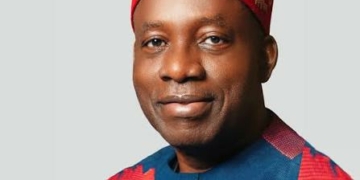
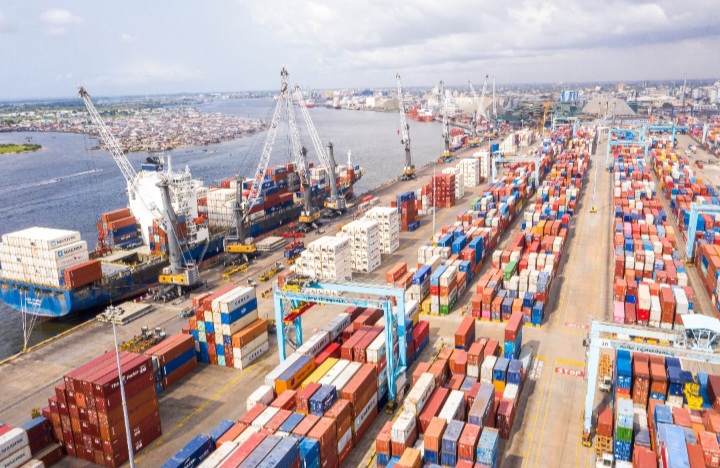
Nigeria loses an estimated $8bn to $9bn annually in freight earnings to foreign shipping companies, exposing the country’s failure to build a strong indigenous shipping industry despite having Africa’s largest economy and ship-owning fleet, a maritime industry leader, Captain Ladi Olubowale, has said.
Olubowale, the immediate past President of the Africa Shipowners Association (ASA) and Group Managing Director of Seamate Maritime Services Limited, said Nigeria’s prolonged inability to establish a functional national shipping carrier and disburse funds meant to support indigenous shipowners had continued to deny the country substantial economic benefits.
Investigations Fail To Substantiate Claims Against Late Cambridge Professor
NIMASA Tightens Cabotage Enforcement To Protect Local Shipowners, Detains Four Vessels
NIMASA Automates Ship Registry To Boost Nigerian Flag Competitiveness
He spoke against the backdrop of the recent launch of the Sierra Leone Ocean Shipping Company (SLOSCo) by President Julius Maada Bio, describing the development as a wake-up call for Nigeria and other African countries seeking to retain more of their international trade earnings.
According to him, Sierra Leone’s decision to establish a national shipping line demonstrates what African governments can achieve through deliberate planning, effective legislation and strategic partnerships.
Congratulating the Sierra Leonean government, Olubowale said the country had given West Africa reason for optimism by taking concrete steps towards controlling the transportation of its international trade.
“Let me begin by warmly congratulating President Bio, the Government and people of Sierra Leone on this landmark achievement. Particular credit is due to the Minister of Transport and Aviation, Ambassador Alhaji Fanday Turay, the leadership and staff of the Sierra Leone National Shipping Agency, and the members of Parliament who ratified the agreement that made SLOSCo possible.
“They have shown vision and resolve, and they have given the whole of West Africa reason for optimism,” he said.
Olubowale, however, warned that the success of a national shipping line depended on sound commercial strategy, operational discipline and sustained government commitment rather than the ceremony surrounding its launch.
“In my years in African shipping, including as President of the Africa Shipowners Association, I have watched many national shipping ventures launched with ceremony. Some became fleets. Most became footnotes.
“The difference was never the size of the country or the scale of the ribbon-cutting. It was strategy, discipline and the will to see a plan through to the end.
“That is why SLOSCo matters to Nigeria. And it is why it should matter to every African government that still treats shipping as someone else’s business,” he said.
He explained that Sierra Leone’s initiative followed a structured process involving legislation, partnership and parliamentary approval.
According to him, Parliament passed the Sierra Leone National Shipping Agency Act in 2025, transforming the former national shipping company, established in 1972, into a new agency authorised to act as the country’s national carrier for international trade.
He said Parliament subsequently ratified a joint venture agreement between the agency and China’s Zhejiang Xiehai Group in August 2026, paving the way for the establishment of SLOSCo.
Olubowale said Nigeria needed to draw lessons from the process, stressing that policy announcements must translate into operational vessels and measurable economic benefits.
The maritime expert said Africa continued to surrender significant economic value by relying heavily on foreign-owned vessels to transport its imports and exports.
He noted that although Nigeria was Africa’s largest ship-owning nation, according to the United Nations Conference on Trade and Development (UNCTAD), Nigerian-owned vessels accounted for only slightly more than half of one per cent of the global merchant fleet by value.
He said industry estimates put Nigeria’s annual loss in freight earnings to foreign shipping companies at between $8bn and $9bn.
“The gap they are trying to close is enormous. Africa is home to almost a fifth of humanity, yet its share of the world’s merchant fleet is tiny.
“This is not just a question of national pride. It is a question of who controls Africa’s trade,” he said.
Olubowale warned that the African Continental Free Trade Area (AfCFTA) could deliver less than its full economic potential if African countries continued to depend on foreign shipping companies to move goods between their markets.
He argued that cargo moving between Lagos, Freetown, Accra, Abidjan and other African commercial centres should increasingly be carried by African-owned vessels rather than routed through shipping networks controlled by companies outside the continent.
He added that fluctuations in international freight rates could increase the cost of imports and place additional pressure on African businesses and consumers, with local economies having limited control over the shipping capacity serving their markets.
Olubowale recalled that Nigeria once operated the Nigerian National Shipping Line (NNSL), which maintained a fleet of about 30 ocean-going vessels and trained a generation of Nigerian seafarers.
He said the collapse of the national carrier had cost the country significant freight earnings, employment opportunities and maritime expertise.
Although the Federal Government had renewed efforts to establish a national shipping line, he said Nigeria needed to move beyond announcements and secure the partnerships, financing and operational framework required to make the project viable.
In April 2026, the Minister of Marine and Blue Economy, Adegboyega Oyetola, announced progress towards establishing a national carrier, with interest reportedly expressed by international port and logistics operators DP World and AD Ports Group.
Olubowale welcomed the reported interest but cautioned that Nigerians had heard similar promises under previous administrations without seeing a functional national carrier emerge.
“Until a vessel flies the flag of a Nigerian national carrier, the announcement remains an announcement,” he said.
He added that Nigeria was not starting from scratch, citing the country’s indigenous shipowners, the Lekki Deep Sea Port and improvements in maritime security as important assets that could support the development of a national shipping line.
He noted that UNCTAD had counted 291 vessels in Nigeria’s indigenous fleet, giving the country a foundation upon which to build a stronger national and regional shipping industry.
Olubowale also cited the Federal Government’s Deep Blue Project and the reported absence of piracy incidents in Nigeria’s territorial waters for four years, as stated by the minister, as developments that could strengthen investor confidence in the country’s maritime sector.
He said the challenge was to translate these advantages into a commercially sustainable fleet capable of competing in international shipping.
The former ASA president identified the prolonged delay in disbursing the Cabotage Vessel Financing Fund (CVFF) as a major obstacle to the growth of indigenous shipping.
Established under the Coastal and Inland Shipping (Cabotage) Act of 2003, the fund was designed to provide indigenous shipowners with access to affordable, long-term financing for vessel acquisition.
It is financed through a two per cent surcharge on contracts involving coastal trade in Nigeria.
Olubowale said that despite more than two decades of the fund’s existence, successive administrations had failed to translate its original objective into substantial financing for ship acquisition.
He estimated that the fund had accumulated about $700m by 2025, while noting that the present administration had taken steps towards disbursement.
According to him, an application portal opened in January 2026, and the number of participating lending banks increased from five to 12, while an initial $25m was made available for the process.
He said President Bola Tinubu approved disbursement in September 2026, but the pace of processing applications remained a concern.
“By the minister’s own account in September, NIMASA had received 92 applications. Of these, 20 had been passed to the lending banks, and only one had been reviewed and forwarded for final approval,” he said.
Olubowale noted that the minister had again directed the Nigerian Maritime Administration and Safety Agency (NIMASA) and participating banks to accelerate the process.
“Twenty-three years after the law was passed, Nigerian shipowners are still waiting for vessels the fund was meant to buy,” he said.
He argued that the slow disbursement raised questions about Nigeria’s capacity to establish and sustain a national shipping line, which would depend on a healthy base of indigenous shipowners, trained Nigerian seafarers, local ship-repair facilities and banks willing to finance maritime assets.
According to him, the CVFF was designed to help build that foundation, and its effective deployment could expand the country’s vessel-owning capacity while creating jobs and retaining more freight earnings locally.
Olubowale said the shortage of ocean-going vessels had also undermined efforts to develop Nigerian maritime professionals.
He explained that thousands of young Nigerians had received training in nautical science and marine engineering through the Nigerian Seafarers Development Programme, but many struggled to obtain the sea time required to complete their professional certification.
He attributed the challenge partly to the limited number of vessels available to provide practical training opportunities.
The Ijaw Youth Council recently said more than 100 cadets sponsored over a decade ago were still waiting to complete their certification, he added.
“Every vessel the CVFF finances, and every ship a national carrier puts to sea, is a classroom for these young officers. Without the ships, the training is money spent on a promise,” he said.
He urged the Federal Government to establish binding timelines for CVFF disbursement and ensure transparency by publishing approved beneficiaries, amounts disbursed and vessels acquired.
Olubowale also called for the national carrier to be managed as a commercially driven enterprise insulated from political interference.
“The NNSL did not fail because Nigerians could not run ships. It failed because politics was allowed to run the company,” he said.
Beyond establishing a national carrier, Olubowale urged Nigeria to explore a West African shipping alliance that would enable regional operators to pool resources and compete more effectively with major global shipping companies.
He said Nigeria’s large cargo volumes could complement the emerging shipping capacity of smaller coastal countries, including Sierra Leone, creating opportunities for shared routes, vessel-sharing agreements and feeder services.
Under the proposed arrangement, African-owned vessels could connect major commercial centres such as Lagos, Freetown, Accra, Abidjan and Dakar, helping to retain more freight revenue within the region.
“Here is where Nigeria could lead rather than follow. Instead of every coastal state building a small national carrier that struggles alone against global giants, West Africa should build a shipping alliance,” he said.
He urged Nigeria to open discussions with SLOSCo and other regional carriers on joint operations under the Economic Community of West African States (ECOWAS).
Olubowale also proposed a regional maritime financing facility backed by development banks to support ship acquisition across West Africa, alongside shared training berths that would allow cadets from participating countries to gain sea-time experience on vessels operated under the alliance.
He said such cooperation would help address the financing and operational constraints facing smaller African shipping companies while creating a larger market for regionally owned vessels.
“No single West African country can match Maersk or MSC. Together, they can at least make sure African cargo on African routes pays African shipowners,” he said.
We’ve got the edge. Get real-time reports, breaking scoops, and exclusive angles delivered straight to your phone. Don’t settle for stale news. Join LEADERSHIP NEWS on WhatsApp for 24/7 updates →
Join Our WhatsApp Channel