
Nigeria’s 2025 budget stands at $36.7 billion, making it one of the lowest in Africa despite ongoing fiscal reforms aimed at increasing government revenue and economic resilience, the Centre for the Promotion of Private Enterprise (CPPE) has reported.
In its latest policy brief, ‘Nigeria’s Fiscal and Tax Reforms,’ CPPE highlighted that while measures such as removing the fuel subsidy and boosting exchange rate unification have expanded fiscal space and boosted revenue inflows, Nigeria’s spending capacity still falls far behind major African economies.
Comparatively, South Africa’s budget is $141 billion, Algeria’s $126 billion, Egypt’s $91 billion, and Morocco’s $73 billion, signalling Nigeria’s limited fiscal capacity to fund transformative investments in infrastructure, human capital, and social welfare despite being Africa’s most populous country and one of the largest economies.
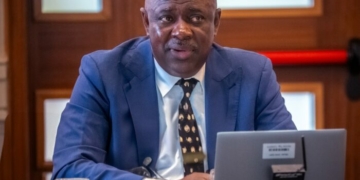
CPPE CEO Dr Muda Yusuf explained that although reforms had strengthened revenue through improved VAT and Company Income Tax collections, inflation and currency depreciation had eroded these gains in real terms.
He emphasised the need for realistic assessment and transparent communication of fiscal outcomes. “High inflation and exchange rate challenges have tempered the real impact of nominal revenue growth. It is crucial to evaluate fiscal performance realistically to avoid overstating reform successes,” Dr Yusuf said.
While state governments have experienced improved allocations and internally generated revenues, the CPPE urged enhanced accountability, efficient spending, and investment alignment with local economic priorities to sustain progress.
The organisation recommended that government spending focus on infrastructure, productivity, food security, security, and human capital development, eliminating waste and linking outlays to measurable results.
CPPE also called for flexible tax reform implementation. Though current measures ease burdens on producers and low-income earners, recent increases in capital gains tax and personal income tax adjustments have raised private sector concerns.
Revisiting the contentious 5 per cent fuel levy for road maintenance, Yusuf affirmed its fiscal logic but stressed careful implementation, considering economic and social welfare realities.
“Despite strong nominal revenue growth, high inflation and exchange rate pressures have moderated the real fiscal impact. It is therefore important to measure fiscal performance realistically and communicate outcomes transparently,” Dr. Yusuf said.
The CPPE also pointed to improved fiscal fortunes at the state level, with subnational governments recording higher allocations and internally generated revenue. However, it urged States to strengthen accountability, enhance spending efficiency, and align investments with local economic needs to sustain momentum.
On spending priorities, the organisation advised government at all levels to focus on infrastructure, productivity enhancement, food security, security, and human capital development, while eliminating waste and linking expenditure to measurable outcomes.
The think-tank further called for flexibility in implementing tax reforms, noting that, while recent measures provide relief for producers and low-income earners, the increase in capital gains tax from 10 to 30 per cent and certain personal income tax adjustments have raised concerns within the private sector.
Yusuf also revisited the long-standing debate over the 5 per cent fuel levy for road maintenance, describing its fiscal rationale as clear but warning that implementation must consider current economic conditions and social welfare implications. He outlined key policy recommendations, including broadening the revenue base, improving tax efficiency, reinforcing fiscal discipline, and maintaining continuous stakeholder dialogue.
“Nigeria’s fiscal and tax reforms have delivered important progress. The next phase must focus on deepening revenue diversification, enhancing spending efficiency, and aligning fiscal outcomes with real economic performance. With prudent management and social sensitivity, these reforms can lay the foundation for a more resilient and inclusive economy,” Yusuf concluded.
We’ve got the edge. Get real-time reports, breaking scoops, and exclusive angles delivered straight to your phone. Don’t settle for stale news. Join LEADERSHIP NEWS on WhatsApp for 24/7 updates →
Join Our WhatsApp Channel